

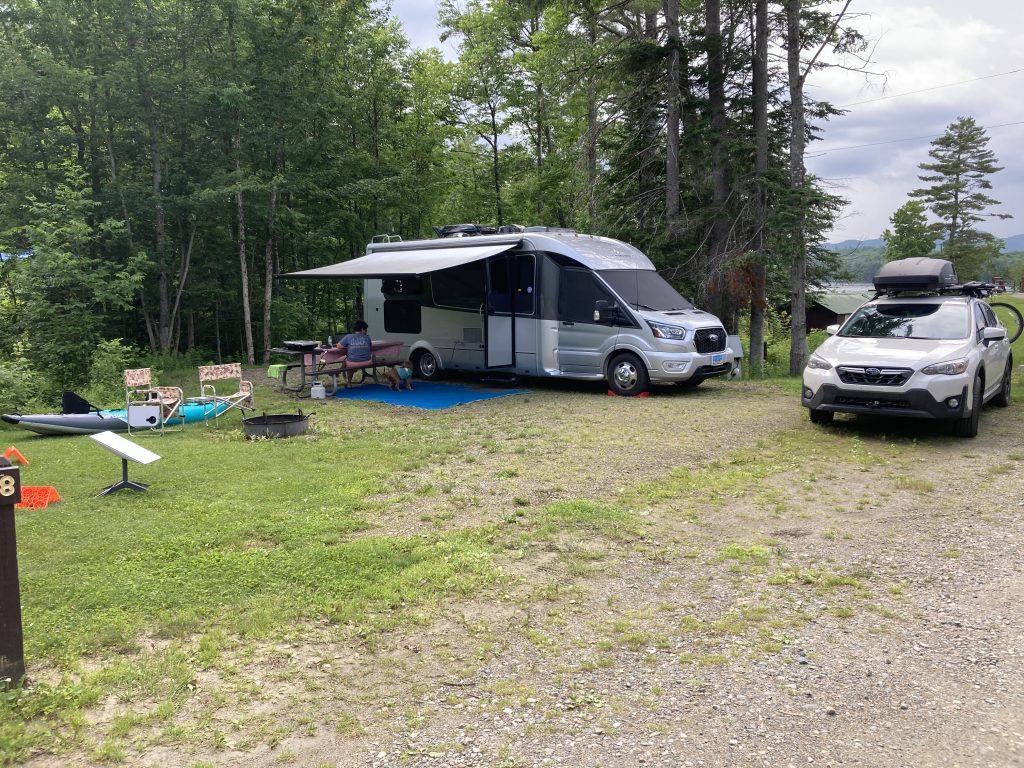

Editor’s Note: This post is written by a member of LTV’s sponsored content team, The Leisure Explorers. Do you own a Leisure Travel Van and enjoy writing? Learn more about joining the team.
RV safety and security include many different aspects of RVing, from simply wearing your seatbelts and checking tire air pressure to installing security cameras and knowing your surroundings. I have broken this piece up into two sections. First, I will talk about general RV safety, followed by different security ideas and tips.
After traveling almost three years full-time in our Wonder Rear Lounge “Voyager”, my first observation is that we have rarely felt unsafe. We have overnighted in a variety of locations from Maine to California, friends’ driveways, boondocking locations, truck stops, National, State, and Community parks, and commercial campgrounds, including prominent city locations, as well as highly remote, find-only-by-GPS-coordinates kind of places.
Most of the people we meet are like us, just out living. Some, like ourselves, are explorers, others are disconnecting from the “real” world for a few days of rest and relaxation in the great outdoors, and others choose or have circumstances led them to live full-time in their RVs. It has been our experience that whatever a person’s reasons, crime of any type towards another RVer is not on their to-do lists.
I want to compare our RV experience with that of skiing. We purchase expensive equipment and clothing specifically for the sport. Then, when we arrive at the lodge, we leave our skis and poles outside. We enter the lodge, put on our warm clothes, and buckle up our boots. We might eat a snack or use the facilities before we stuff our shoes, bags, and extra clothing in an unsecured cubicle. Finally, we are ready to go back outside to retrieve our skis exactly where we had left them!
Fire Safety

As I did some research for this piece, I was surprised by the estimated average number of RV fires annually. I decided to start here. From 2018 to 2020, 4200 RV fires were reported annually to United States fire departments. As a result of the fires, there were an estimated 15 deaths, 125 injuries, and $60,300,000 in property loss. I was shocked to see this information.
Above and below, I have included informational brochures I found online. Although they are similar, each addresses some important information differently. Pay attention when cooking; do not leave any fire source unattended. Ensure you have an appropriate fire extinguisher that has not expired and know how to use it. Read the manual, but contact your local fire department for help if you’re still apprehensive. You will most likely find wonderful, caring people who will help you.
More basic fire safety. If you smoke, do not do it in bed or your favorite recliner where you could fall asleep. Never leave lit candles unsupervised when you have pets or children. As crucial as inside fire safety is, be aware of outside grills and campfires. We have visited many campgrounds where the fire pits, in my opinion, were entirely too close to the RV.
Ensure your RV has a properly working smoke detector and a carbon monoxide detector. Our LTV comes with these devices hardwired, and I regularly test both! Especially, the smoke detector is in the perfect location to sense everything I cook on our cooktop. I’m positive that if you have ever stayed in a campground, you have experienced a neighbor somewhere in the park trying to silence their smoke detector, because they are cooking dinner!

Make A Checklist
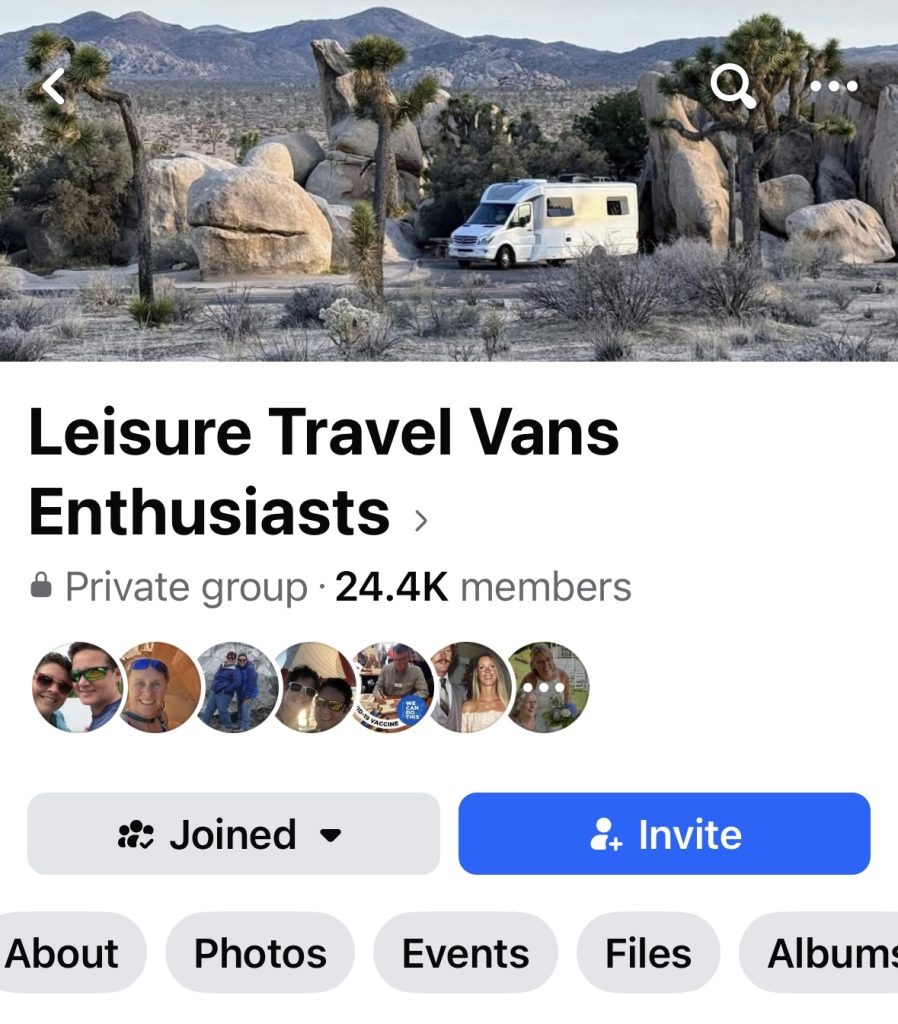
Below is a screenshot of a very helpful Facebook page. I want to bring attention to the files section of this group. I will explain how to use these sections if you are unfamiliar with them. Open Facebook, select the menu from the bottom of your screen, then groups. When you choose LTV Enthusiasts, you should be looking at the page above. Please hover over the row and slide it to the left to see the files category. Once here, tap on files and be wowed by the enormous amount of information people have stored here for us to use. Checklists, maintenance schedules, manuals, parts lists, and PDFs for close to everything are all available with one additional click.
A checklist is a handy tool. Using a list is the easiest and most effective way to implement a new process. We each travel with our unique belongings, in our own style, accommodating ourselves. However, I would guess many of us use the same to-do lists when we load our RVs, set up our camp, and break down camp. Securing items in the RV, unhooking water and power, and checking tire pressure are just a few of the many tasks Jess and I complete each time before we move.
I do not have a written list, but I do have a specific mental list. When we first started our travels, we worked together and completed the same task in the same order every setup and every breakdown. Now, after hundreds of moves, it’s precision like the best-made watches. Jess typically breaks down or sets up the inside of the RV, and I take care of the outside. However, either of us is adept at both jobs. And we always do a final look over before we set out on the road.
Practice Safety
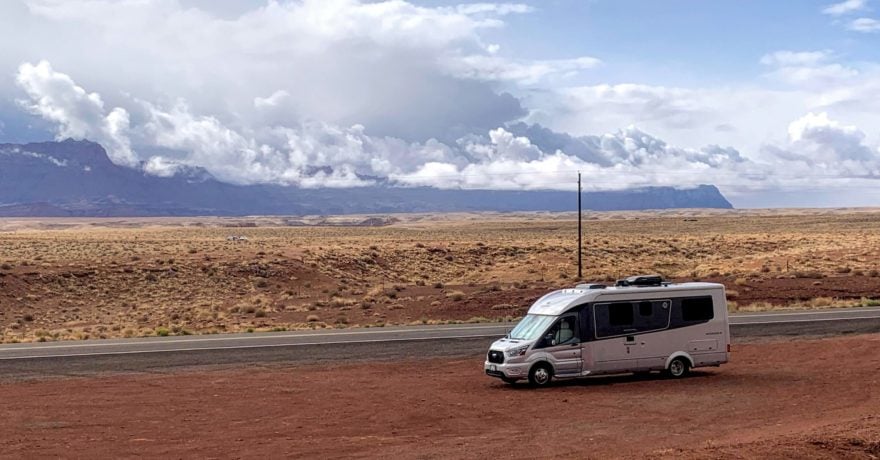
This was one of our favorite boondocking locations in Colorado. We were in the shadow of the amazing Blanca Peak just outside of Great Sand Dunes National Park. It was early on in our RVing adventure. We were unsure how we felt about leaving our beloved “Voyager” behind in the middle of nowhere, while we explored with our tow vehicle. We took all the precautions we could think of.

This boondocking location was listed on a couple of apps. Campendium often has reviews of different sites, as well as safety and cell phone information. The area was far enough off the main road not to be seen, but not in an area with limited sight, making us feel comfortable. We could easily see anyone approaching long before they’d arrive. We stowed our outside gear, pulled the shades, and locked the doors. Then, just for good measure, I threw a pair of shoes outside the door.
One of the wonderful things about the LTV is that most people do not realize we can tow. If they see an LTV, they probably assume someone is home. Additionally, we have a Starlink. Even hundreds of miles off the main road, where there may be no cell phone signal, we have a connection to the world. Our visible Starlink is almost like a “this home is Protected By” sign. Additionally, we keep all of our external cabinets locked and maintain a neat campsite.
Know Your RV
Knowing your RV encompasses many ideas: the basics, how much you weigh, and how tall your RV is, including any alterations you may have made. Because we choose to tow, we also need to understand our LTV’s hitch and towing capabilities. However, it’s not just about these particular basics; it’s also about your LTV’s driving capabilities on mountain passes, city traffic, or foul weather.
We love our Wonder. How it drives, its steadiness in wind, and power ascending and descending the toughest mountain passes. However, we were not entirely comfortable in the beginning. Even though I had a commercial driver’s license, this was a different vehicle. Using and getting used to the tow-mode, which comes standard in our Wonder, took some practice. The more challenging the terrain we explored, the more comfortable we became. Today, I feel as comfortable going down the road towing as I do driving in the tow vehicle.
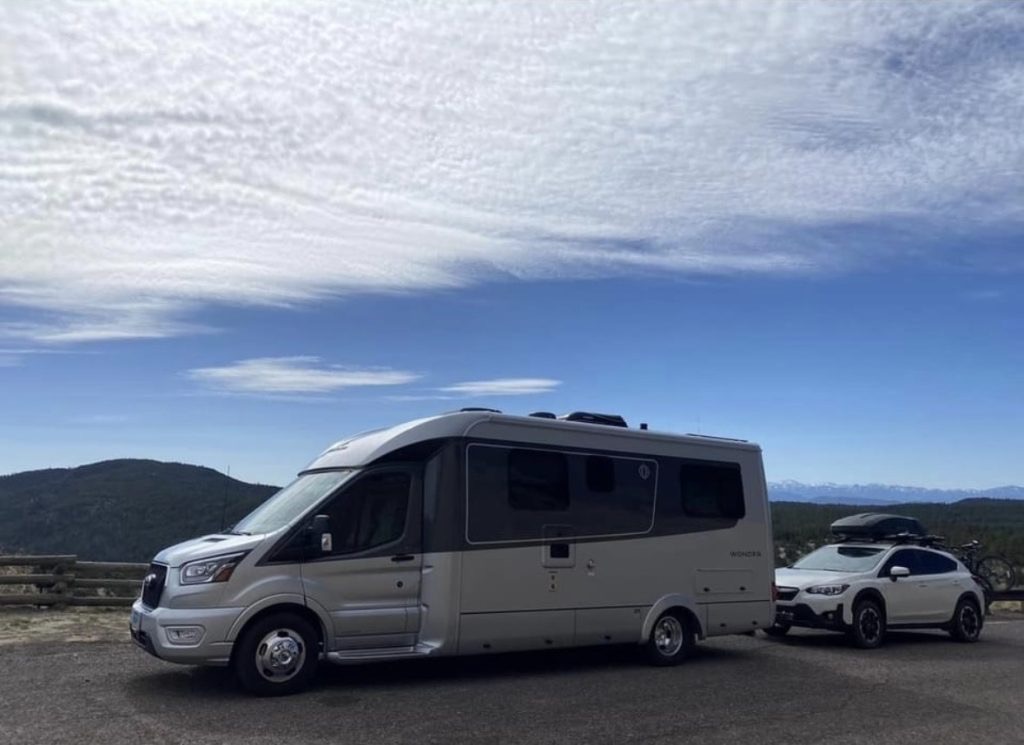
LTVs are nimble and easily allow us to drive in the most heavily trafficked city streets. However, you may not be comfortable. This is important to know when planning your routes. Stay within your comfort zone and gradually expand your boundaries if you wish. Because we tow, and the Subaru is impossible to see behind the LTV, we chose to install a full-time rear-view camera. This camera allows us to see everything happening behind us and ensures that changing lanes and merging are easier.
As for weather, Jess and I have lived in Maine most of our lives. Therefore, we are comfortable driving in snow and know enough to stay home in icy conditions. We have only been caught in one snowstorm, and our Voyager handled it with no problems. Wind is typically our most persistent challenge.
Drive Responsibly
This sounds like such an easy statement, but what does it entail? Start with wearing seatbelts. Do not drive impaired, sleepy, or distracted. With the history and experience of a commercial driver, I see many people unnecessarily putting themselves in danger by driving too fast for conditions or traffic volume, texting, not using directionals, running red lights, tailgating, and not anticipating problems.
When I was young, my father taught me how to drive all his construction vehicles, from dump trucks to excavators and everything in between. One of the first lessons I learned when driving a loaded dump truck was that cars do stupid things around you. I feel the same when I’m driving Voyager. Other cars tend to cut in front of us or pull out of side streets without leaving us enough space. I’m not sure what they are thinking, maybe that we will be slow, or they will not be able to see from behind us. But understanding these tendencies has saved us more than once.
I also learned to be an active driver, which means knowing my outs in heavy traffic and not putting myself in risky situations. A simple idea is to be prepared for swirling winds when passing a tractor-trailer on an interstate and minimize the time traveling beside the truck. The most dangerous part of a pass is time traveling side by side because there is no out in the event of an accident. When I pass, I maintain space between my vehicle and others. I am always aware of other vehicles’ positions. Knowing I have space in a lane on one side of me could make all the difference in the event of an accident in front of us.
Be Kind
Let people merge! Move over for disabled vehicles or safety vehicles. Give people space. Do not tailgate. Be patient. Kindness goes a long way towards helping people stay safe when on the road or at your favorite camping spot. Voyager is our home as well as our transportation. Because we choose to travel and live full-time in our LTV, it has made me more aware of the importance another RV driving down the road has to someone. This could be their home and contain all of their belongings. What would happen if they were involved in an accident? I give other RVs plenty of space.
Being kind on the road or in an RV park is like good Karma. Hopefully, as the kindness piles up, it will help us be safe. We try to assist others who need or ask for help. We’ve often been asked for backup pointers or mechanical questions–we always do our best to assist.
Be Prepared For Changing Weather
Weather is one of the more challenging aspects of RVing, which we did not initially consider. Weather is dangerous: snow, tornadoes, fog, flooding, hail, rain, and yes, even the sun. The only thing worse than traveling east on an east/west highway at sunrise is traveling west on that same highway at sunset. Because we planned to be in the Southwest in the winter months and travel north in the summer months, we figured we would be safe.
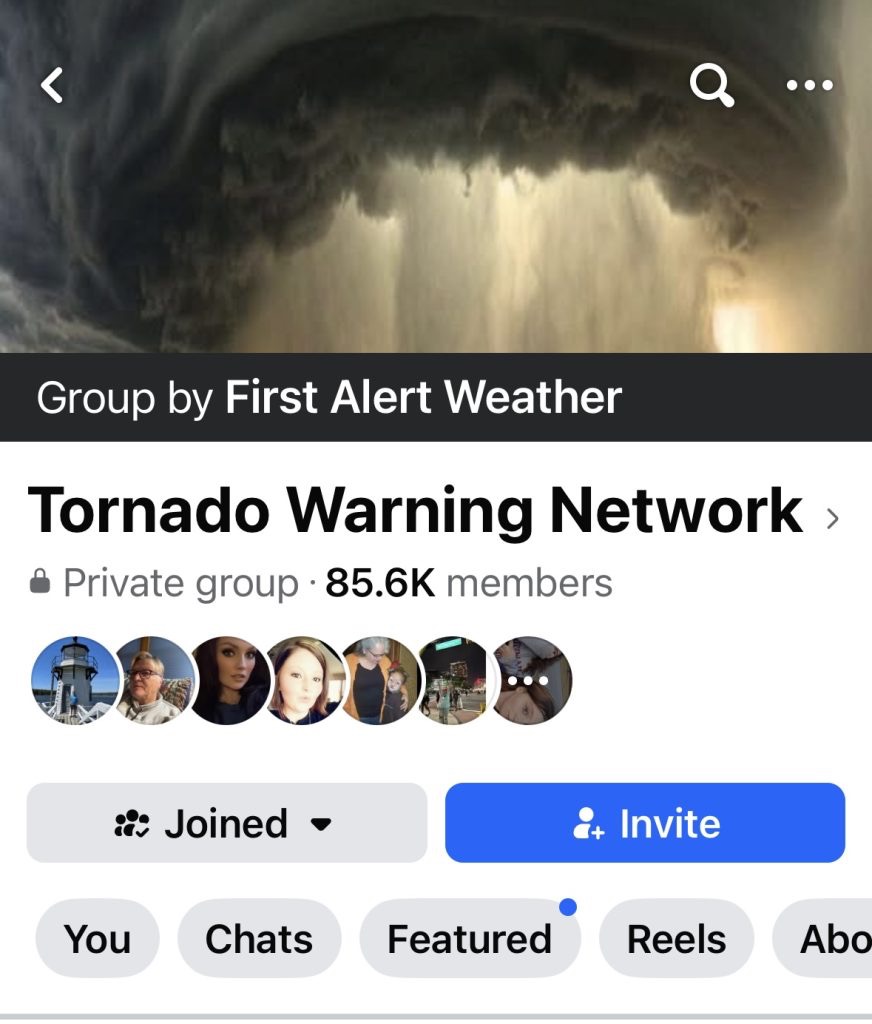
We were mistaken. During our first month in “Voyager”, we experienced a 28-degree overnight, hail, and a tornado through a small town where we had been just a few hours before. We quickly realized how much was at stake and how much could go wrong. We downloaded several weather apps and learned how to use them. The Tornado Warning Network Facebook group is our favorite source of up-to-date information. The group posts long-range forecasts, in addition to areas suspected to experience severe weather.
On many occasions, we have changed our travel plans because of weather forecasts. Staying safe and protecting our home is the most important job we have. Being aware and flexible about changing plans helps us stay safe. It’s often as easy as staying one more day or leaving a day early to travel during a favorable weather window.
Safety Person
Do you have a safety person? Is there at least one person who always knows where you are? This safety person can be anyone, a friend or relative, who knows your location and when you will check in next. After several news stories of missing hikers surfaced, we thought maybe someone should know where we are. We travel full-time together all over the place, and no one expects us anywhere at any time. Therefore, we realized no one would ever be coming to look for us if we had an accident or became lost.
My mother had been avidly following our journey, finding our locations on the map and seeing our pictures on social media. I began sending her our travel plans, campsite locations, including our coordinates if boondocking, and dates we would be at each location. Additionally, when we set out on the road to move to another site, I’ll call her and let her know we are on the road and when we expect to arrive. Typically, when we arrive and after we set up, I’ll snap a picture and send it to her as a text. Then she knows we have arrived and exactly where we are.
Likewise, when hiking a challenging hike or driving way off the beaten path. I’ll send a quick text with trail or road details and an expected ETA. I am as accurate as possible in estimating time, always adding extra time to my window. When we complete our hike, I’ll send a message. Sometimes I forget, and I’ll receive a text after my pre-designated time asking if we made it. This very simple communication could be the difference between life and death. Someone would be looking for us if we’d become stranded or had an accident.
Maintenance
Preventive maintenance is just that: completing regular maintenance that helps keep you and your RV safe. Tires, brakes, belts, and batteries are some of the most common parts to wear out on your RV, but there are many more. It is important to follow the vehicle’s recommended service schedule and address any concerns with a technician as they arise.
Over- or under-inflated tires are a primary cause of RV tire blowouts. Checking tire pressures before a trip helps avoid this. Ensuring headlights and directional markers are working is also essential. A standard pre-trip inspection should become part of your travel knowledge and routine. When I tested for my commercial driver’s license, I had to demonstrate how to perform a vehicle inspection to the instructor properly. I walked around the vehicle explaining everything I was looking at and why.
It’s amazing what you notice when you’re really looking at the RV on a regular basis. You remember to grease things and check bolts and connectors. You recognize changes that may indicate a problem before they become a breakdown.
If you’re not sure what to do for a pre-trip inspection, check out the Leisure Travel Enthusiasts file section; there are several lists. Other RVers are also a great resource and can help you learn. I find that just reading the posts and comments on the Leisure Travel Enthusiasts page often helps me become aware of potential maintenance and safety problems.
Have A Breakdown Plan
What is your plan if the inevitable happens? Do you have a roadside assistance plan? What if there is no cell phone service? I feel like we cheat in this category. We drive the LTV and pull our car. If all goes bad and we break down in a remote area without cell service, we at least have an additional vehicle. Also, we can run on gas or jump-start a battery with a separate car.
Many services are available, and you should choose a service level that best suits your needs. I am somewhat knowledgeable, but do not want to change an inside dual wheel tire on the side of the highway. Therefore, carrying a spare tire has not been a priority. I will have to wait for a tire service technician. In a worst-case scenario where a suitable replacement tire is unavailable, I might need to use my car and make alternate arrangements.
Safety Kits
I recommend three specific safety kits: an emergency roadside kit, a first aid kit, and a to-go kit. The emergency roadside kit is required in all commercial vehicles. It typically includes a standard first aid kit, fire extinguisher, fuses, and safety triangles. We have also included a window break tool and a seatbelt cutter in both of our vehicles.
We have several med kits with various supplies in each vehicle, as well as a specific hiking-sized kit. We have custom-made our kits using our years of hiking experience and Jess’s history as a nurse. Our kits contain the basics like various-sized band-aids and antibiotic ointments. Additional items such as emergency blankets and tourniquets are placed in the appropriate kits. Purchasing a standard medical kit is suitable for most situations. But, enhancing yours for your specific needs is always recommended.
A to-go kit is an emergency kit. An item you grab when you are evacuating your RV. This could be for a variety of reasons. An accident, fire, flood, tornado, or other natural disaster, and only if it is safe to do so. It could contain essential documents, which would be difficult to replace. A couple of days’ worth of medications to get you through. A flashlight and a first aid kit, possibly an extra phone charger, written phone numbers, in case you lose your phone, a small amount of cash, and whatever items you deem essential to help you put your life back together.
RV Security & Tips
RV security is a mindset. In my opinion, RVing occasionally or full-time is no more or less dangerous than living life in your stick-and-brick home. That said, being aware and proactive is the best deterrent I can recommend. Have a plan in place and ask questions. Do research and learn from others’ advice. Do not be afraid to make a change if circumstances feel unsafe. The best defense is always a great offense.
Prior to RVing full-time, my only experience camping was in a tent. We backpacked and car-camped. Both options required us to stuff everything we needed into a pack, which we carried into the wilderness or into the car. We’d set up our campsite and climb into a tent to sleep, with only a thin layer of fabric and a zipper between us and the outside world.
Sometimes, backpacking involves sharing space in open shelters with strangers. This is very common, especially on long trails. Lying out your sleeping bag between several strangers may seem unsafe, but most hikers are very social, and typically, before bedtime, everyone has become a new acquaintance and maybe even a friend. Our experiences helped us learn to be aware. We also heavily emphasize communication and do not judge books by their covers. We have truly met some of our favorite people in the woods.
Pick A Safe Location
Commercial RV Parks, County, State, and National Parks, boondocking, and the occasional parking lot spot all present different risk factors. However, with proper planning, I believe a stay at any can be done safely. Our first stay in a major city park was an experience. The sounds of sirens and helicopters overhead reminded us we were in a big city, but we still felt safe.
We chose a park with a 24-hour security gate. Only registered RVers were allowed to enter, and they had to present proper IDs. Visitors had set time limits and were not allowed after a designated time of day. In addition, the park had amazing lighting and roving security patrols throughout the night. We slept like babies.
Boondocking and Parking lots present additional challenges. Fortunately, there is much information online relating to the security of individual locations. There are apps like The Dyrt and Roadtrippers, which contain information and sometimes reviews about specific boondocking spots. Before staying in a parking lot location, always check the rules in the community. It is usually possible to access safety information when researching. We read reviews and follow the recommendations of others we trust.
Ultimately, do we feel safe where we are? We once arrived at a community park, and it just didn’t feel right. There was another park a little further down the road, and we decided to move. We had a wonderful evening! Use your intuition.
Know Your Surroundings
Because we travel full-time, I often joke with people that we never know where we are. Although that is true, we do take our surroundings seriously. Are there natural hazards, such as flash flood risk, fire hazard, tornado, or hail risk? Being weather aware and fire aware with apps like Weather, MyRadar, Wunderground, and Watch Duty provides real-time information, while we are on the road. One of our most valuable Facebook groups is the Tornado Warning Network, which I previously mentioned. Real-time weather updates are invaluable on the road.
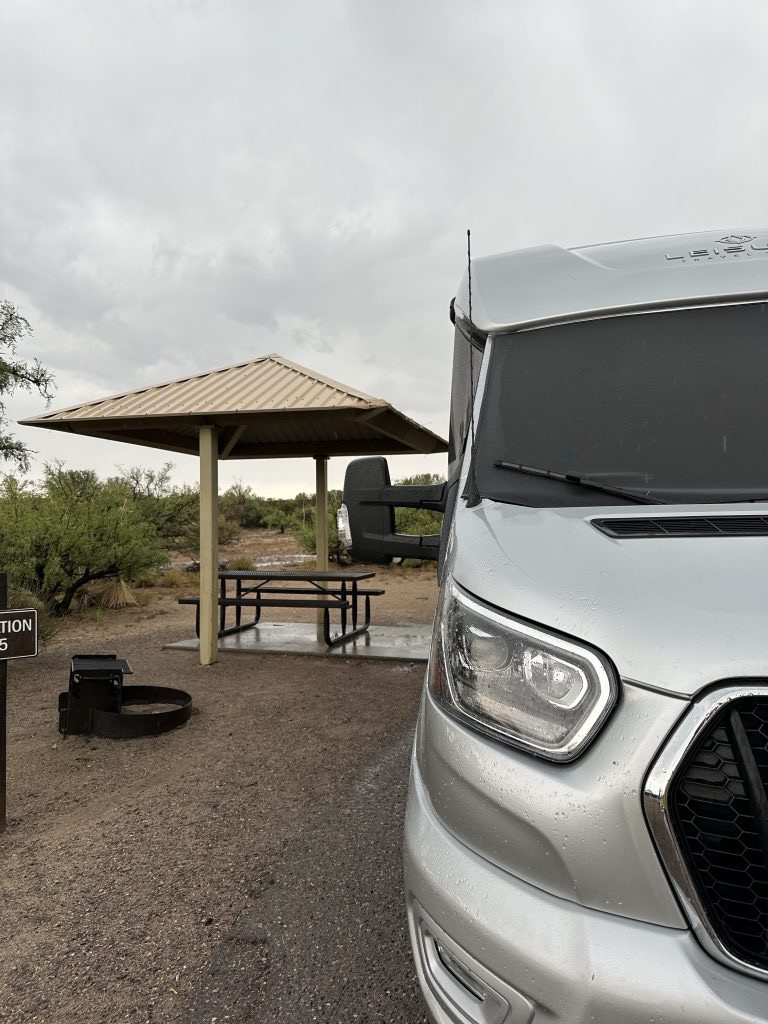
Last year, a one-night stay at a New Mexico park almost became very complicated for us. We arrived, set up, and were getting ready to make dinner when the skies darkened and it began to rain. Rain had not been in the forecast, but the temperature had climbed into the high 90s, and storms were popping up. I grabbed my phone and checked the radar. We were in the bullseye of a small red colored storm.
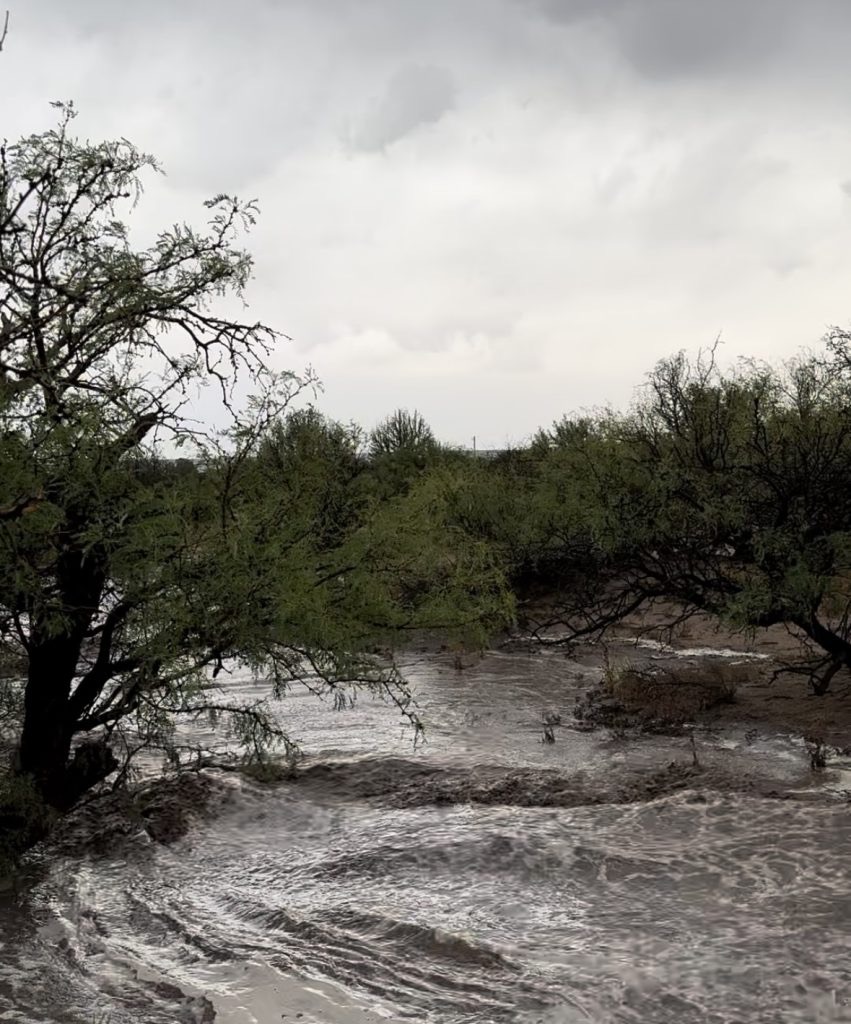
Before we had time to react, the storm was on top of us. There was small hail, pounding rains, and wind blasts so big the RV shook from side to side. As quickly as it approached, it left, and then we heard the water. Where the landscape had been dry just a few minutes before, now a violent river was forming just behind our RV site. The river stayed about ten feet from our RV. We were lucky. Several RV sites were inundated with water, and many people lost tents and screen shelters. I would never have guessed we were in a location with a flash flood risk. I now look at sites differently and try to anticipate these types of events.
Meet The Neighbors
We are not bashful in any place we stay. Say “hello” to people, and meet your neighbors. You do not need to become best friends, but being familiar with a person can create a bond. This bond is a powerful deterrent and provides safety for all. No one you know, even casually, will disturb or steal your belongings. They may even speak out on your behalf if they notice others near your site.
An additional fringe benefit is becoming part of a community, even for a short time. We have met so many people throughout our travels in this manner, and several have become wonderful friends. Maintaining these new relationships is much easier with all of today’s technologies and social media apps. We love seeing friends along the road, and impromptu meet-ups bring a special added benefit to our travels.
Theft Deterrent
Being safe, I feel, is as simple in an RV as it is in your home. You’ll most likely lock your doors and windows when you leave your home. Do the same in your RV. I always keep my compartments locked, unless I load or unload them. Any exterior equipment, such as coolers or grills, can easily be locked with a cable.
We always keep our bicycles locked together and locked to a fixed object. Our bikes are inexpensive and not e-bikes. If they were more valuable, I might want to have a cover. Covers provide another level of safety. No one knows precisely what’s under the cover.
Another simple deterrent is the LTV itself. The LTV has the advantage of being driven everywhere. Being home is a natural theft deterrent, even if you tow a vehicle like we do. Unless someone notices we left with the car, most would think we’re home. We also leave a set of shoes outside all the time, so it could be very difficult to determine if we are home.
Keys
Now that everything is locked up, what happens if you lose your keys? Yes, you need a plan for that. One of the first things we purchased for the RV was an inexpensive magnetic key lock box. I’m sure you have seen them in the checkout lines of your local hardware store. Unfortunately, I cannot tell you the best place to hide this magnetic box, which would defeat the purpose of having it.
However, I can recommend some important things to think about. Do you have more than one vehicle? Do you have separate keys for cargo carriers or paddle locks? Where will duplicates be stored? It would be unfortunate to have an additional set of RV keys in your tow vehicle, but then not be able to unlock those doors either. Ensure you plan accounts for any scenario in each vehicle.
Security Cameras
There is a lot of information on many RVing sites that provide security camera recommendations. We chose a Furrion all-time rear-facing camera to help us “see” our tow vehicle. The particular camera we purchased can show us input from four separate cameras. At this point, we do not feel a need to add additional cameras.
I am also aware that many people use ring cameras while on the road when they have WiFi. Some simply put up a label that says something along the lines of, “This vehicle is under video surveillance.” Another effective, simple idea is solar lighting and/or motion lighting. These readily available, often inexpensive products are highly effective deterrents.
Final Thoughts
As I compiled this information and thought about the many things we have seamlessly integrated into our full-time RV life, I became aware of some common ideas. Be decisive. Indecision is one of the most dangerous traits. Regardless of the situation, staying in limbo leads to nowhere. Bad weather is coming. Decide what you believe to be the safest plan, then execute the plan.
Use your intuition. If something does not feel right, trust your gut and move on. Err on the side of caution. There is always tomorrow. Be aware of your surroundings. Repetition and thoroughness are wonderful things. Be respectful of others’ time and space. Relax and enjoy. Get to know your neighbors. Create bonds.
Live Simple. Live Happy.
Comments