


Editor’s Note: This post is written by a member of LTV’s sponsored content team, The Leisure Explorers. Do you own a Leisure Travel Van and enjoy writing? Learn more about joining the team.
We visited the Andersonville National Historic Site, a former American Civil War prisoner-of-war (POW) camp in Georgia, in May 2019. We had decided to do some exploring of Georgia, South Carolina, North Carolina, Virginia, West Virginia, Maryland, Pennsylvania, New York, Massachusetts, Vermont, New Hampshire, and Montreal, Canada, while on our way to meet up with seven fellow Leisure Travel Van owners in Quebec to start a caravan tour of the Maritimes. This epic adventure lasted over seven months in our Leisure Travel Van.
In our last post entitled “Ocmulgee National Monument/Historical Park,” I stated that the Maritimes tour lasted three weeks. That was a typo. The caravan tour of the Maritimes started in Quebec on August 6, 2019, and ended in Nova Scotia on September 16, 2019, a total of 51 days or about seven weeks. Our tour of the Maritimes was cut short due to a hurricane that caused much damage, and consequently, some RV parks and national parks were forced to close. Our caravan had to deviate slightly from our itinerary to avoid the hurricane. I will leave that travel story for another time.
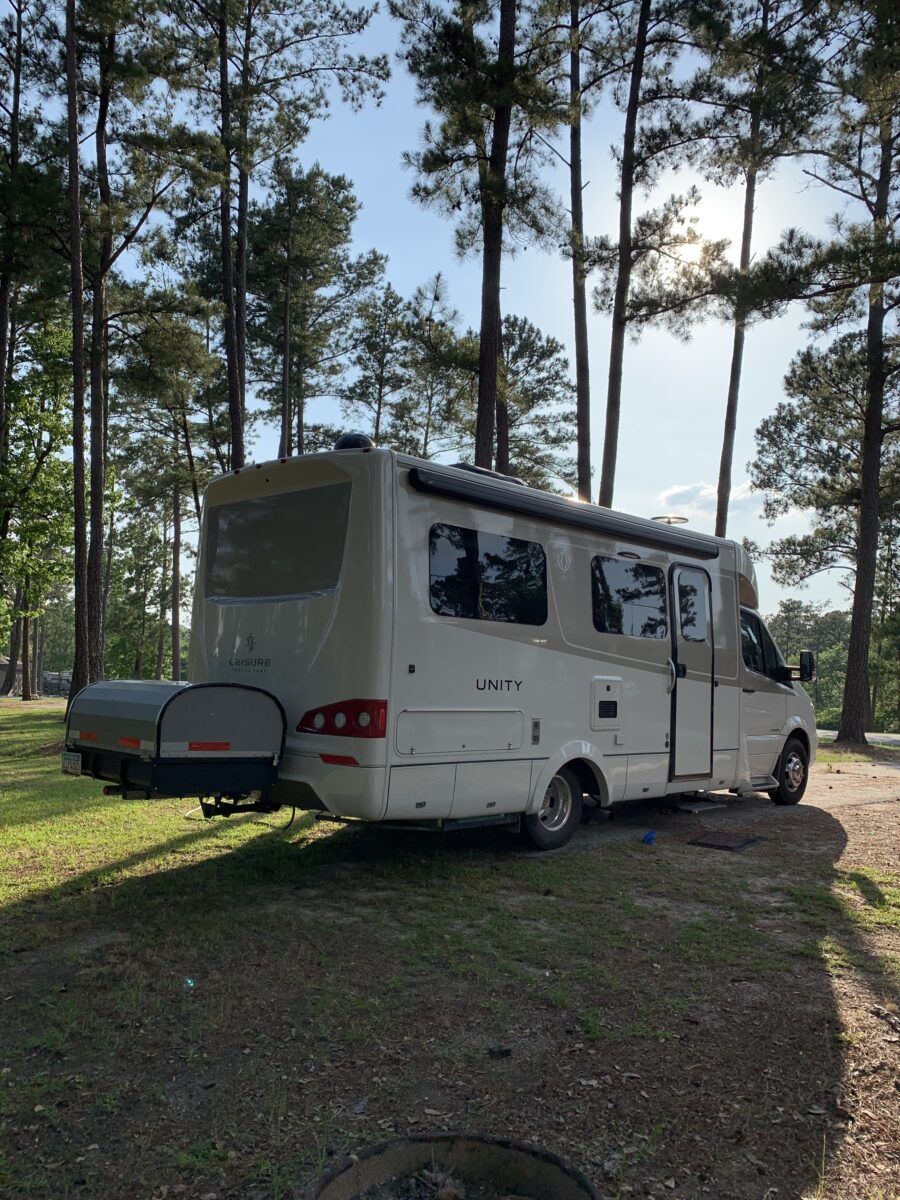
This part of our story is about our visit to the Civil War POW camp at Andersonville, Georgia. After we visited Andersonville, we camped at Lake Tobesofkee Claystone Park in Macon, Georgia. The next day, we continued on to the Ocmulgee National Monument/Historical Park and then on to Stone Mountain just outside Atlanta.
The Tragic Story of Andersonville POW Camp
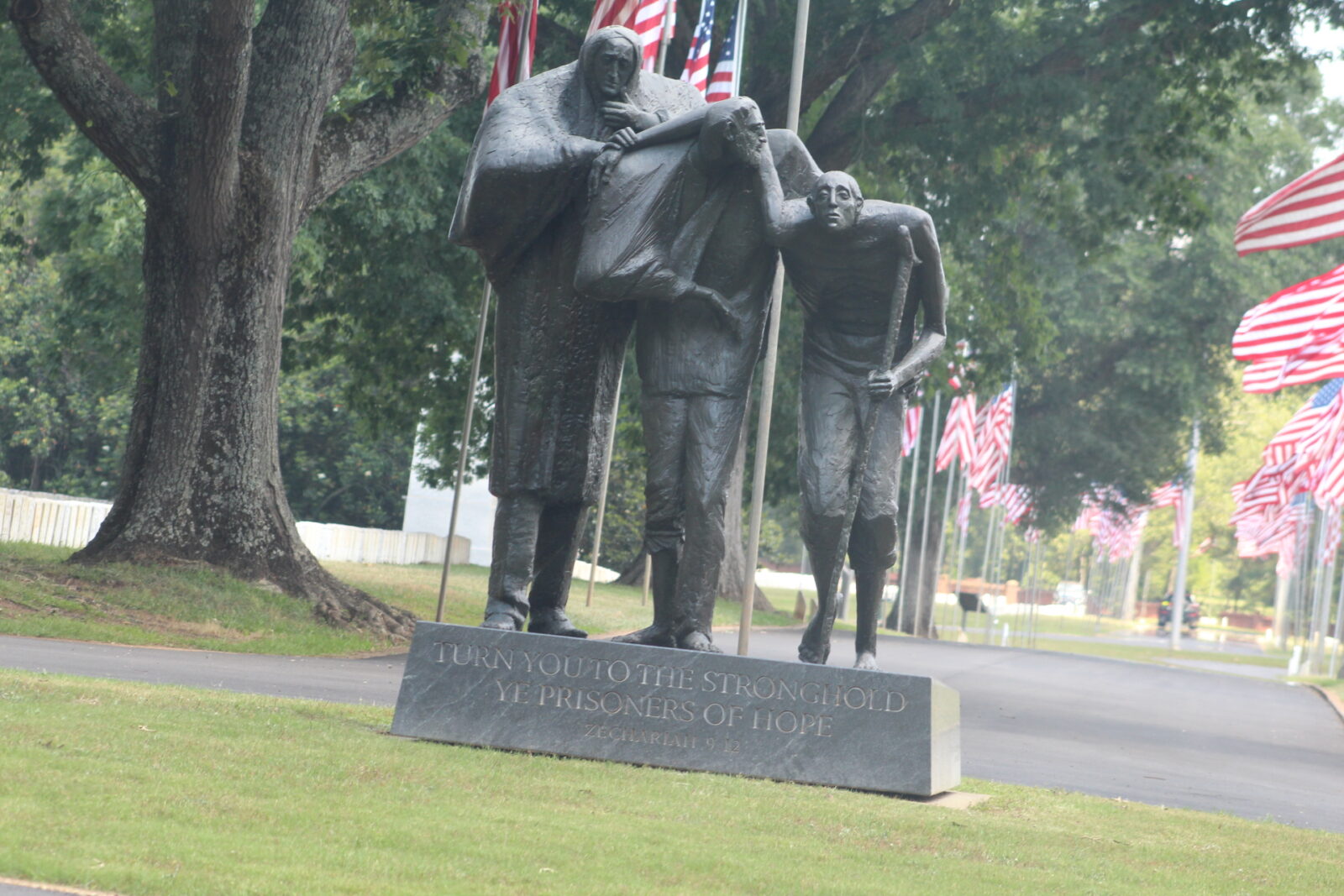
Andersonville is a very sobering place, a bitter reminder of what people are capable of doing to one another. Someone once said, “If we don’t learn from history, we will repeat it.” This is a place that every generation of Americans should visit.
The official name of Andersonville is Camp Sumter. There were 45,000 federal prisoners held captive here from February 1864 until May 1865. During these 14 months, 13,000 of these prisoners died of disease, malnutrition, exposure, and poor sanitary conditions. Originally, the camp was designed to hold 13,000 prisoners. However, by June of 1864, just four months since it opened, the prison population had grown to over 26,000.
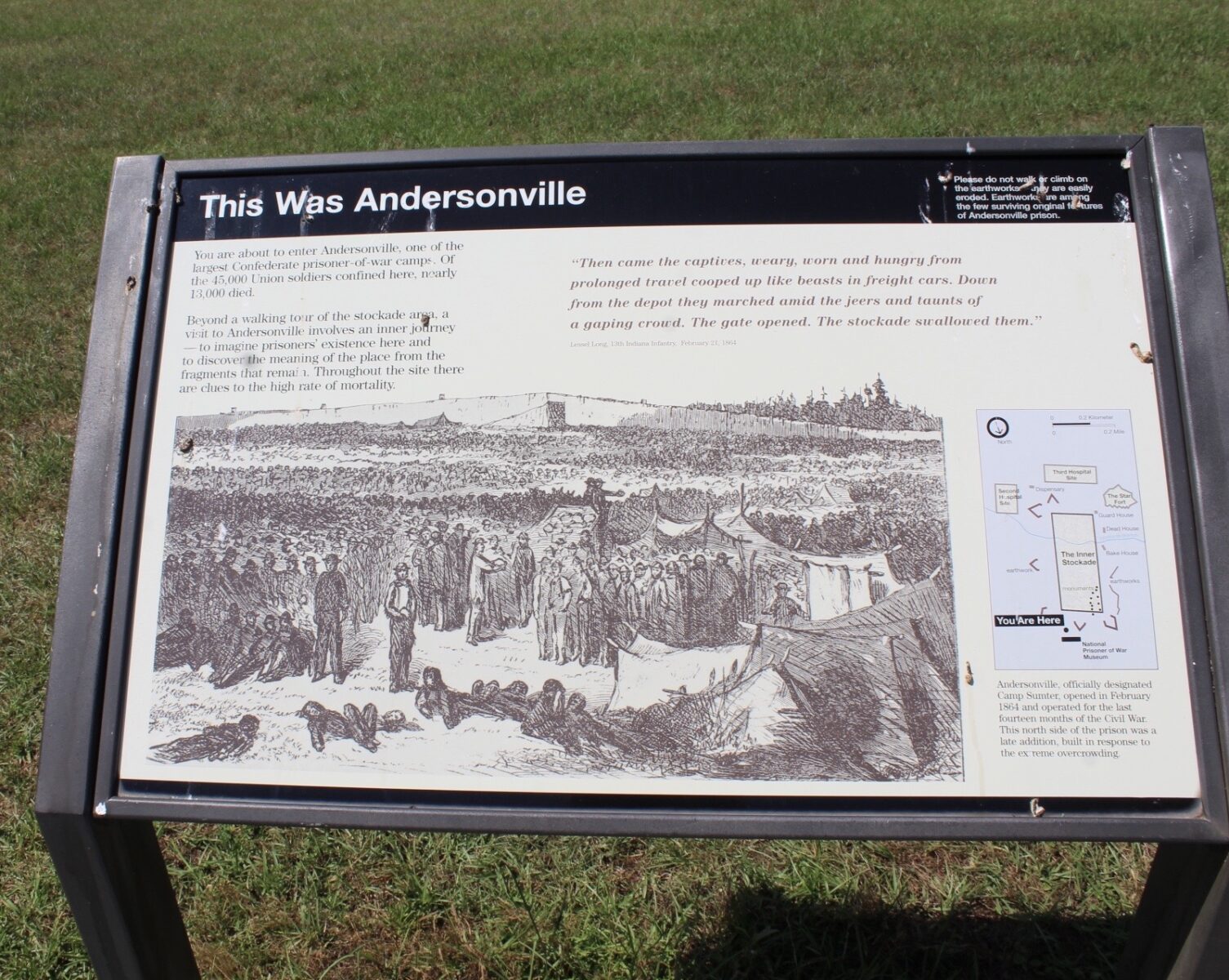
The prison grounds were expanded from their original size in an effort to accommodate the large numbers of prisoners. However, it was still too small to hold the thousands of Union soldiers who would eventually be held here. The largest number held at any one time was more than 32,000 in August 1864. In the first few months, 400 new prisoners were arriving every day. As prisoners died, new prisoners took their place.
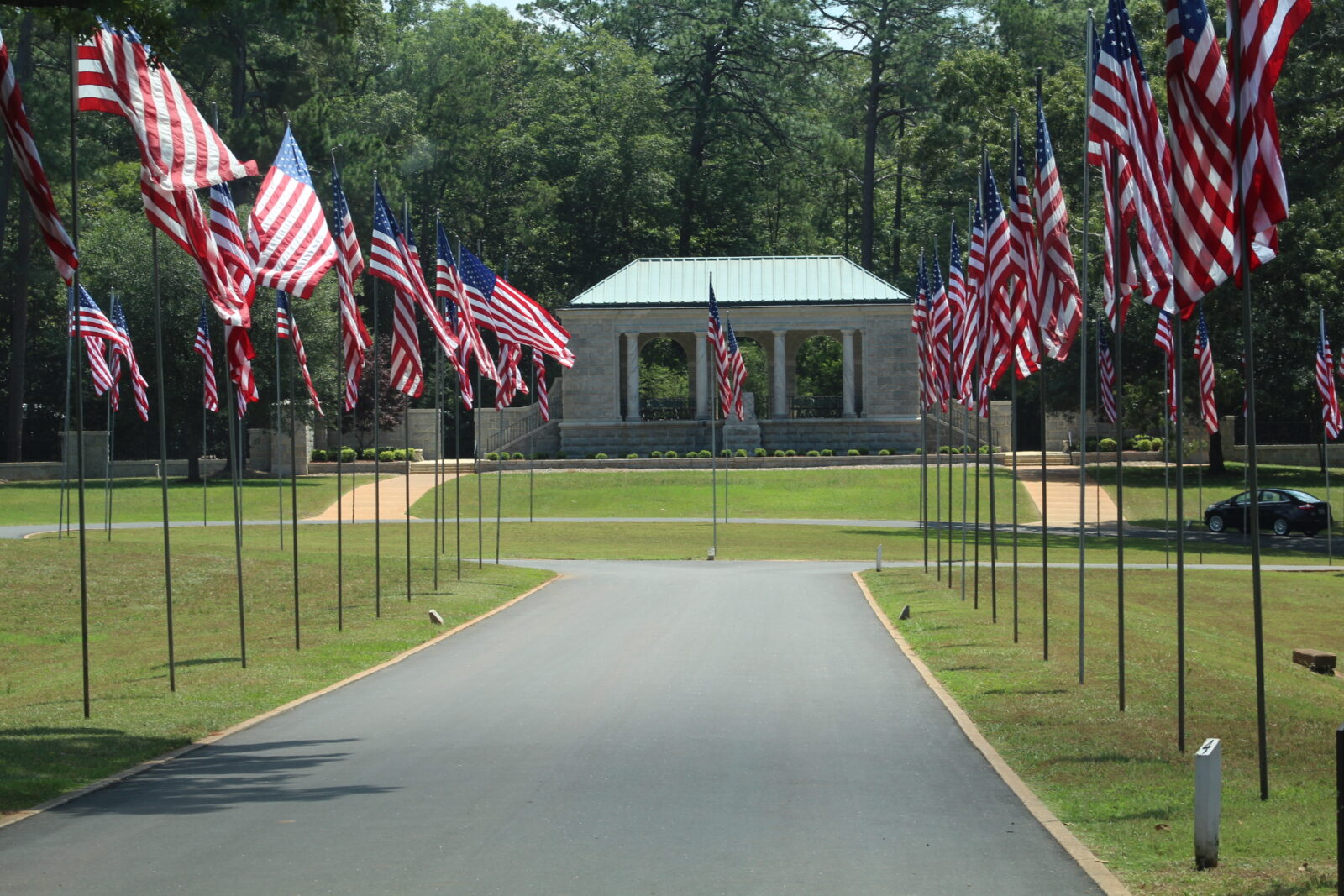
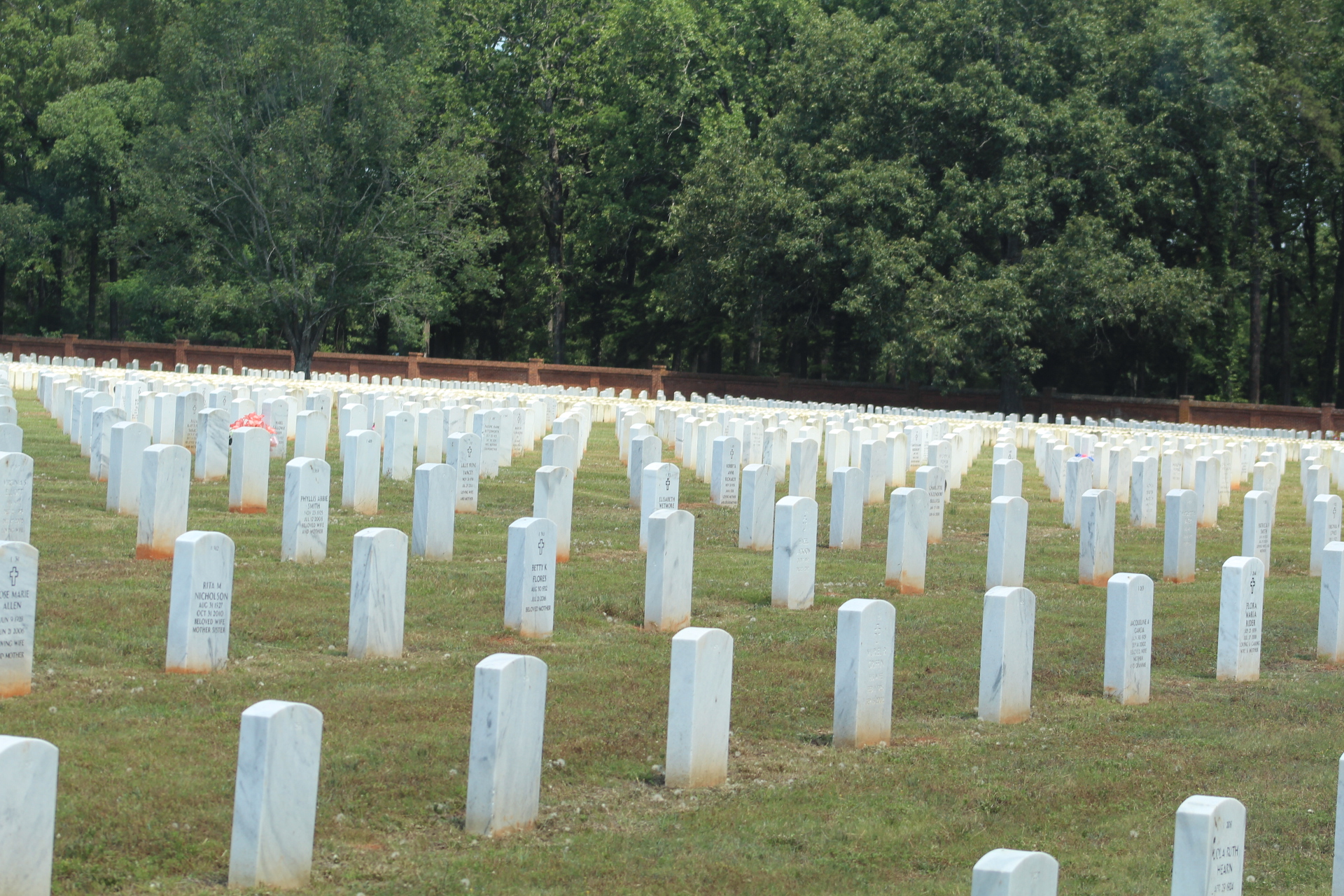
Andersonville Prison ceased to exist in May 1865. Some former prisoners remained in Federal service, but most returned to the civilian occupations they had before the war. During July and August 1865, Clara Barton, a detachment of laborers and soldiers, and a former prisoner named Dorence Atwater came to Andersonville cemetery to identify and mark the graves of the Union dead. As a prisoner, Atwater was assigned to record the names of deceased Union soldiers for the Confederates. Fearing loss of the death record at war’s end, Atwater made his own copy in hopes of notifying the relatives of some 12,000 dead interred at Andersonville. Thanks to his list and the Confederate records confiscated at the end of the war, only 460 of the Andersonville graves had to be marked ” Unknown US Soldier.”
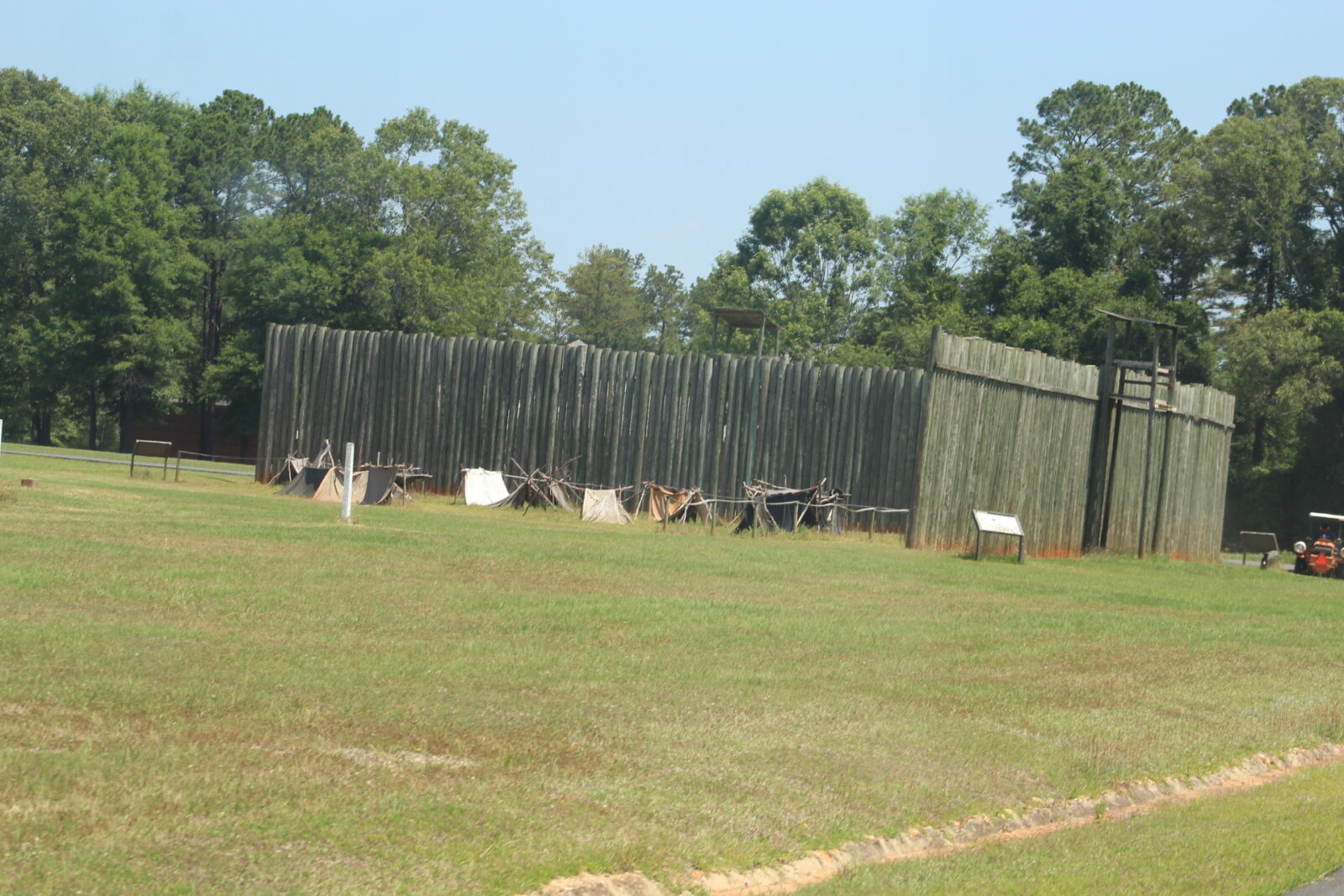
Originally, the prison covered about 16.5 acres of land enclosed by a 15-foot-high stockade of hewn pine logs. It was enlarged to 26 1/2 acres in June of 1864. The stockade was in the shape of a parallelogram, 1620 feet long and 779 feet wide. Sentry boxes, or “pigeon roost” as the prisoners called them, stood at 30-yard intervals along the top of the stockade.
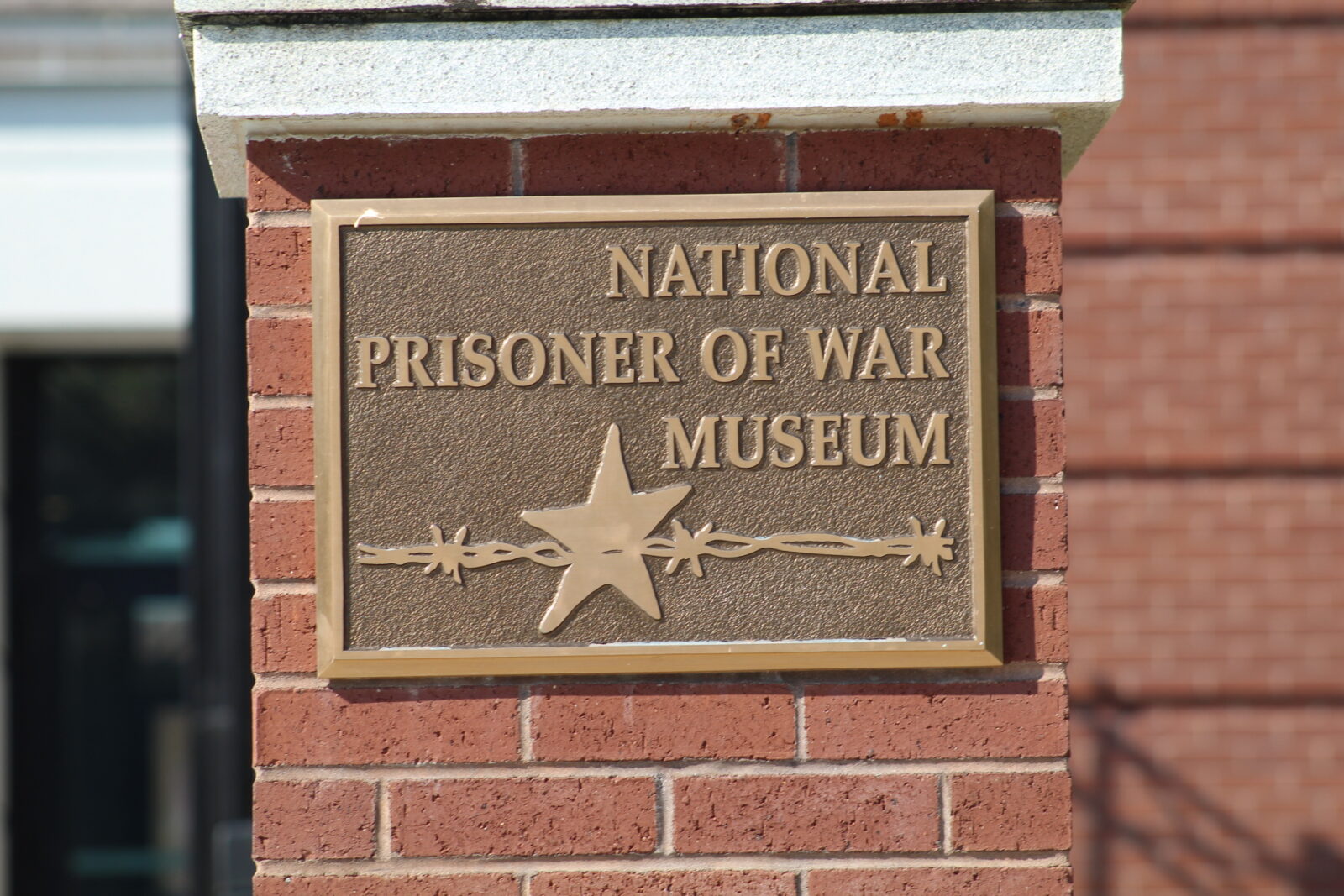
On the grounds of Andersonville is also the National Prisoner of War Museum. The National Prisoner of War Museum covers all the wars and conflicts America has been involved in since it became a nation. In case you were wondering, these atrocities committed against POWs didn’t occur only in the South.
There have been prisoners of war throughout history. Today, all military branches provide mandatory training on what to expect if enemy forces capture someone. This includes the code of conduct of how to act, and what to say and not say to their captors.
These hollowed grounds at Andersonville should serve as a stark reminder of the horrors of war and the price of the freedoms we enjoy here in America. Freedom is not free. This concludes our series, “I’ve Got Georgia On My Mind.” Next time, we will continue our exploration of the Eastern seaboard of the United States.
Until next time, safe travels, my friends.




Comments