


Editor’s Note: This post is written by a member of LTV’s sponsored content team, The Leisure Explorers. Do you own a Leisure Travel Van and enjoy writing? Learn more about joining the team.
The Southwestern border of Georgia intersects with Florida and Alabama and offers many inviting sights and places to camp. If you drive North-South routes in Georgia, Interstate Highway 75 on the central-Western side of the state makes a visit to Southwest Georgia easy. But if you want to move straight across the State on an East-West track, you must take secondary roads.
Much of central Georgia, south of Atlanta, consists of rural towns and farmland—no interstate highway cuts across the state. We cut across the State via secondary roads when we head out with our LTV from the Georgia coast for points due west. This approach offers a calmer driving experience, provides a direct route across the state and the US South, and offers interesting sights and things to do along the way.
Many worthwhile destinations await you along the Southwestern border of Georgia with Alabama. We found an area we call the Lumpkin Loop that offers public art, stunning canyon colors and views, and historic antebellum homes reminiscent of the pre-Civil War era in America.
US 82: An East-West Route To Southwest Georgia
Exit 29 off I-95 at Brunswick on the East Coast of Georgia is a gateway to US 82 that crosses the State. On this route, you’ll pass through small and mid-size towns and farmland on your journey west. You’ll discover Nahunta’s railroad heritage gives way to Hoboken’s quiet streets before you reach Waycross, a railroad junction town at the crossroads of the Okefenokee region. The landscape shifts from pine forests to farmland through Pearson’s agricultural expanse. Bustling Tifton presents its agricultural research legacy, and tiny Ty Ty offers glimpses into rural Georgia life from roadside produce stands to century-old courthouse squares.
Along the way, you’ll pass through the town of Shellman. Look for the massive murals on the local grain silos along the side of the road. A 2017 grant by the Randolph County Chamber of Commerce paid for artist Chris Johnson to paint these murals. Johnson is an assistant professor of visual arts at Andrews College in nearby Cuthbert, Georgia, about 10 miles away.
Cuthbert: History, Culture and Art
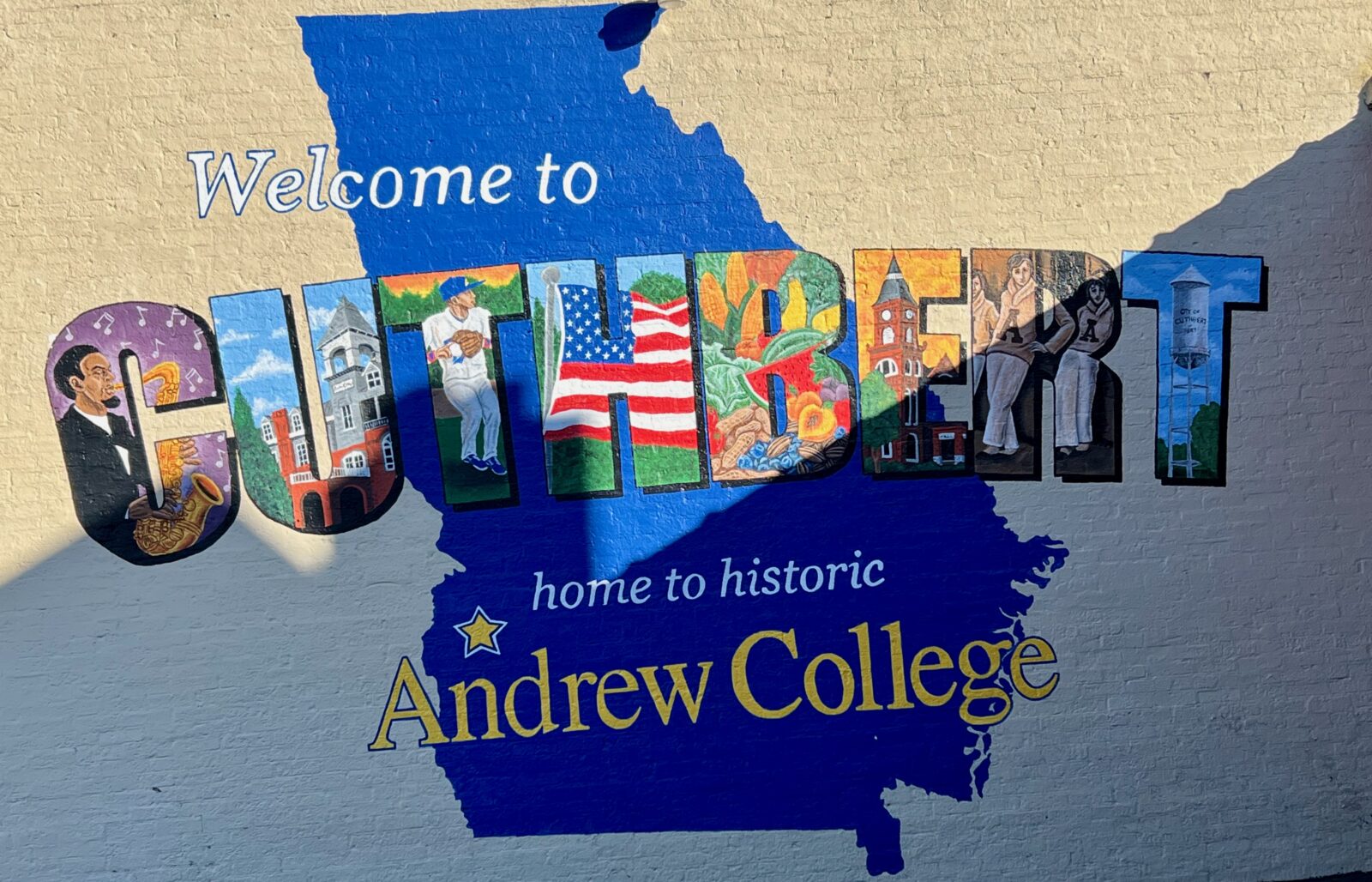
As you drive west on US 82 from Shellman, you’ll find more public murals by Johnson in Cuthbert. Two murals now adorn opposing walls in Magnolia Alley near the town square that showcase the history and notable people from this town.
Fletcher Henderson: From Cuthbert to Swing
Johnson’s first mural is Randolph Ramblings, featuring Cuthbert native and jazz legend Fletcher Henderson, Jr. (1897-1952). You can walk through Magnolia Alley, where the image of Henderson—the small-town boy who helped create the sound of American swing—stands out. The mural, dedicated in 2019 as part of a downtown revitalization effort supported by Andrew College, ensures that Fletcher’s legacy lives on in the place where it all began.
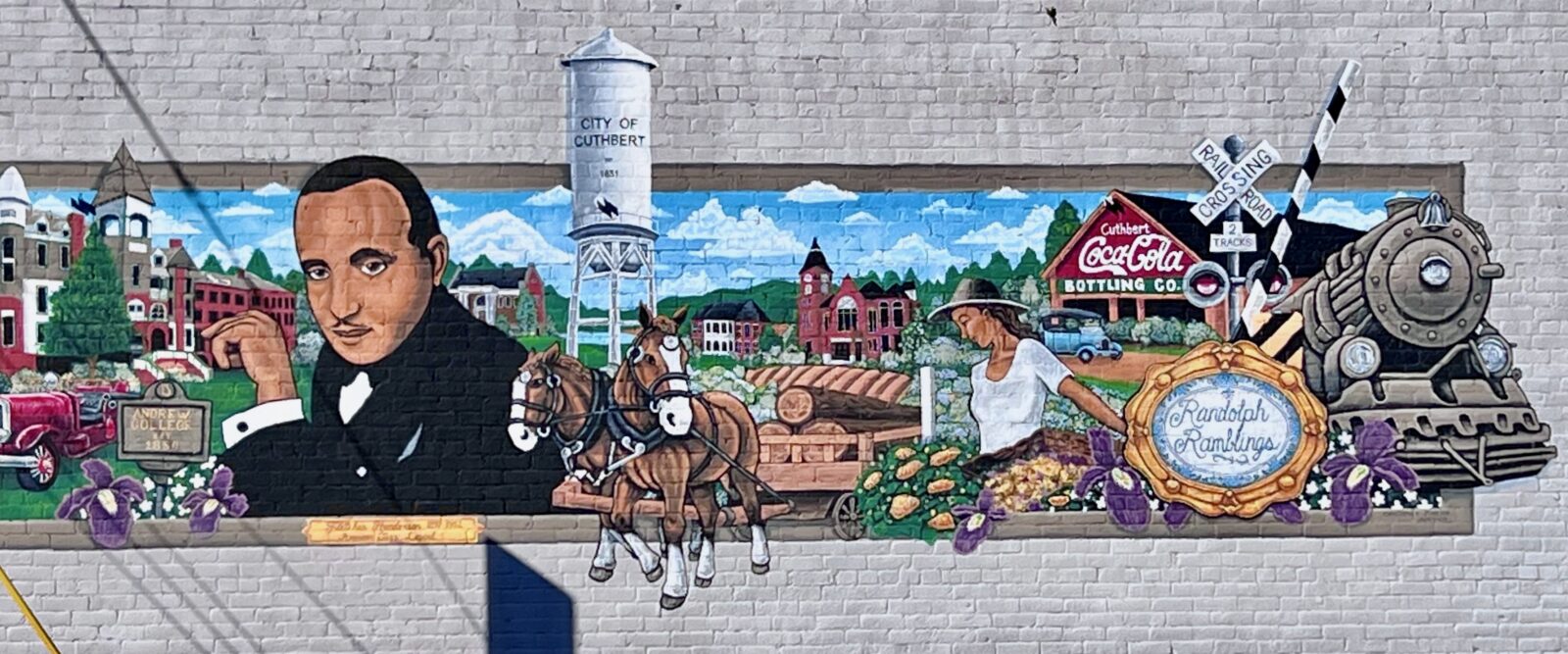
The alley has become a gathering place for the arts, with jazz concerts and community events that would have made the Henderson family proud. Each spring, the Fletcher Henderson Jazz Festival fills Cuthbert with the sounds that made their native son famous. At the same time, the Fletcher Henderson Museum preserves artifacts and memories of his remarkable life.

Magnolia Alley presents benches and a pergola to encourage visitors to gather, remember, and celebrate Cuthbert’s history. Fletcher Henderson’s image reminds us that greatness can emerge from the smallest places and that sometimes the most intense influences come from those who remain quietly in the background, creating the foundation on which others build their fame.
From Cuthbert’s Victorian homes to Harlem’s ballrooms, Fletcher Henderson’s journey embodies the transformative power of music and the enduring legacy of a life dedicated to artistic innovation.
Roosevelt “Rosey” Grier: From Cuthbert Giant to Football Legend
In the summer of 1932, as America struggled through the Great Depression and Franklin Delano Roosevelt campaigned for the Presidency on promises of a New Deal, a baby boy was born in Cuthbert, Georgia, who would carry the future president’s name. Roosevelt Grier entered the world on July 14th, the seventh of twelve children in a family that would soon migrate north in search of opportunity and hope.
Young Roosevelt, later known as “Rosey,” went on to become a football legend in high school, college, and the National Football League, where he was a central figure in national championships (1955-1967). You’ll find an image of Rosey on the wall in Magnolia Alley.

At over 90 years old, Rosey Grier remains the longest-living former NFL player today, a gentle giant whose life has encompassed triumph and misfortune, fame and service, strength and sensitivity. Rosey’s life reminds visitors that heroes come in all sizes, and the gentlest souls often dwell within the strongest bodies.
A New Country Western Star
Cuthbert is also home to 31-year-old Cole Taylor, a rising star on the country Western music scene. Cole is proud of his humble origins in Cuthbert and encourages fans to stop by his hometown. You’ll find an image of Cole in Magnolia Alley, too.

The Little Grand Canyon of the East
Just 28 miles north of Cuthbert along Route 27, you’ll encounter Providence Canyon State Park, just outside the town of Lumpkin along Route 39. Often dubbed Georgia’s Little Grand Canyon, this park stands out as an inspirational destination because of its breathtaking natural beauty, geological history, and the powerful environmental lessons its backstory reveals.
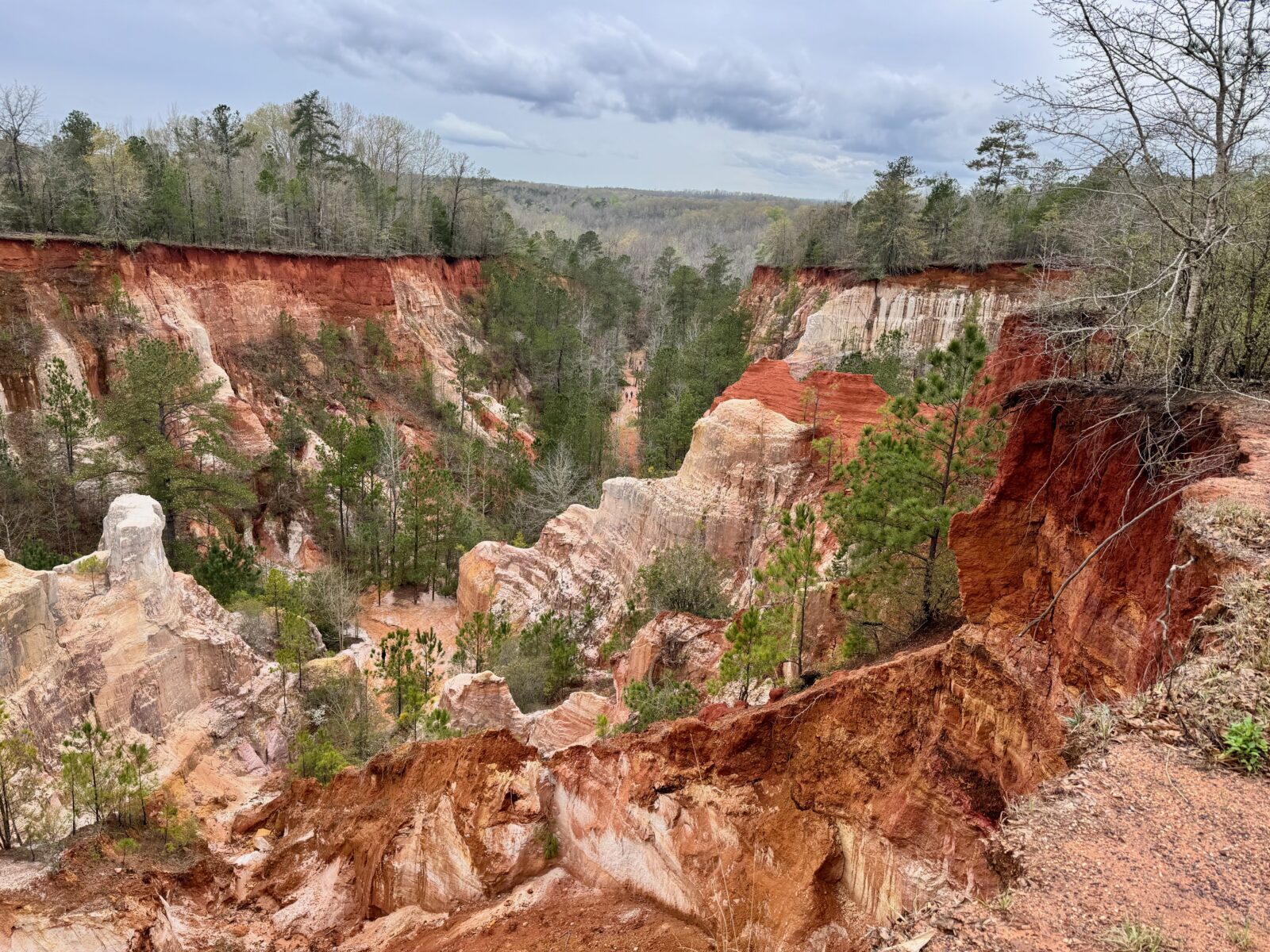
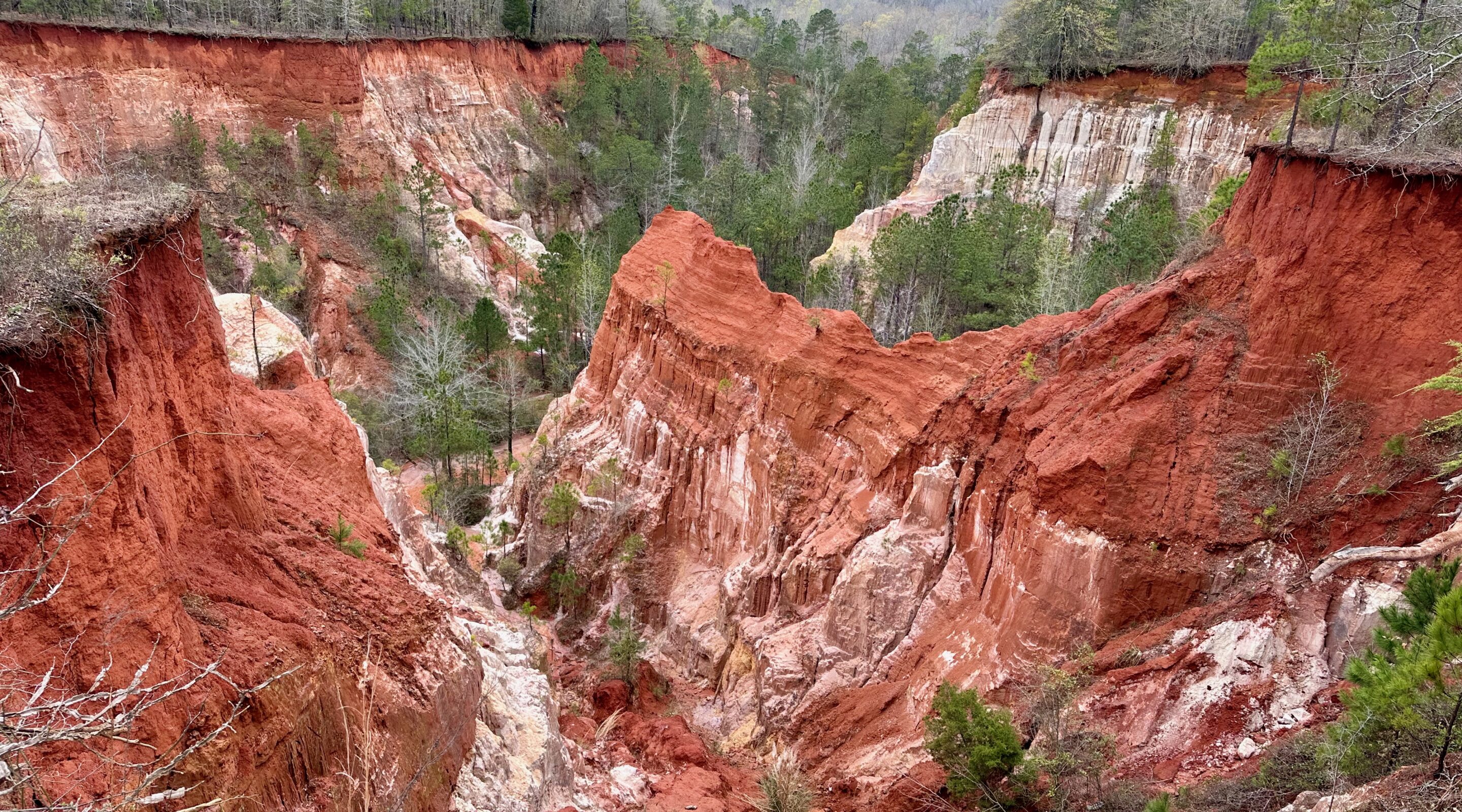
The park is in southwest Georgia’s Stewart County, spans 1,109 acres and features a network of sixteen canyons up to 150 feet deep. The canyons consist of soft, multicolored soils that display vibrant hues of pink, orange, red, purple, white, yellow, brown, and black, to project a natural painting that evokes awe and wonder. This striking palette stems from oxidized iron and manganese in sediments deposited 59 to 74 million years ago in the soil.
The park is also home to the largest known wild colony of the rare plum leaf azalea, which blooms in vivid colors during July and August when most other azaleas have faded. This adds a touch of seasonal magic that symbolizes nature’s resilience and unexpected gifts.
What makes the park interesting is its origin, a testament to human error transformed into enduring beauty. Formed in the early 1800s from severe soil erosion caused by poor farming practices—clearing native forests without erosion controls—the canyons grew from small gullies into dramatic gorges by the mid-19th century. This history highlights the vulnerability of landscapes to human actions and nature’s forces. It underscores the reasons for turning a site of environmental degradation into one of Georgia’s Seven Natural Wonders and a protected State park since 1971.
Hikers can explore miles of sandy trails along the rim for panoramic views or descend into the canyon floor to witness dynamic features like talus cones and cross-bedded sands up close. Wildlife viewing, stargazing, backpacking on backcountry loops, and joining the Canyon Climbers Club inspire adventure. The park evokes the grandeur of Western canyons but in an accessible Southeastern setting. Winter visits, when bare trees reveal more of the colorful walls, are especially recommended for a serene, introspective experience. Alas, there are no RV campsites.
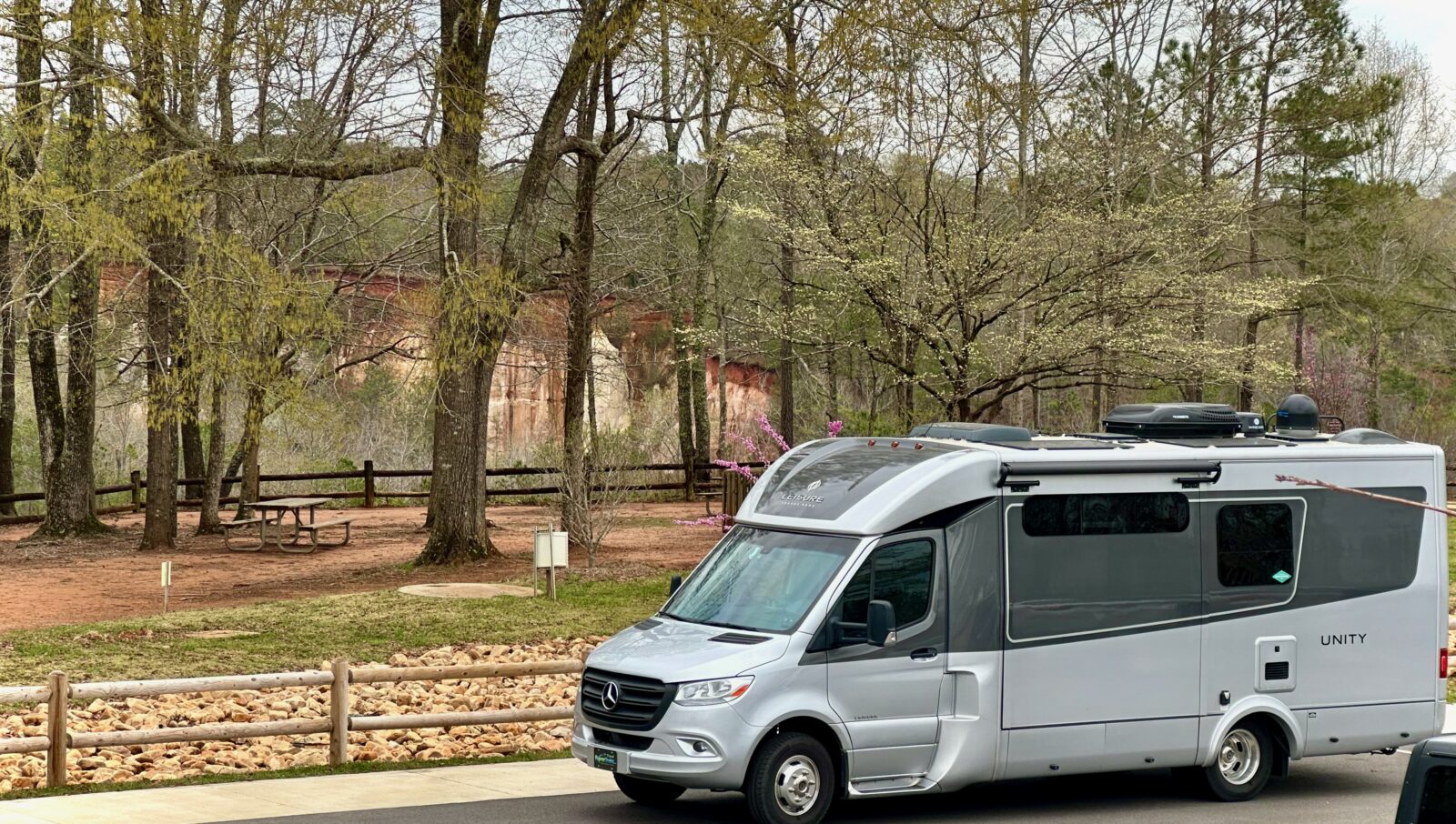
A Fork in the Road
When you depart Providence Canyon, our Lumpkin Loop reveals that any route you take in any direction will lead to interesting sights. Due north, you’ll find President Franklin Delano Roosevelt’s little summer White House at Warm Springs and the beautiful Roosevelt State Park, a terrific campsite for RV travelers.
You can backtrack 31 miles due East via Route 27 to 280 from Lumpkin and visit the home and museum of former US President Jimmy Carter at Plains, Georgia. Due south along Route 39, you’ll find the serene Seminole State Park near the border of Florida, just south of Donaldsonville, Georgia, itself a welcoming campsite for RV travelers. Along the way, you’ll pass the Kolomoki Mounds State Park near Blakely, Georgia, another excellent spot for RV campsites, historic tours, and more.
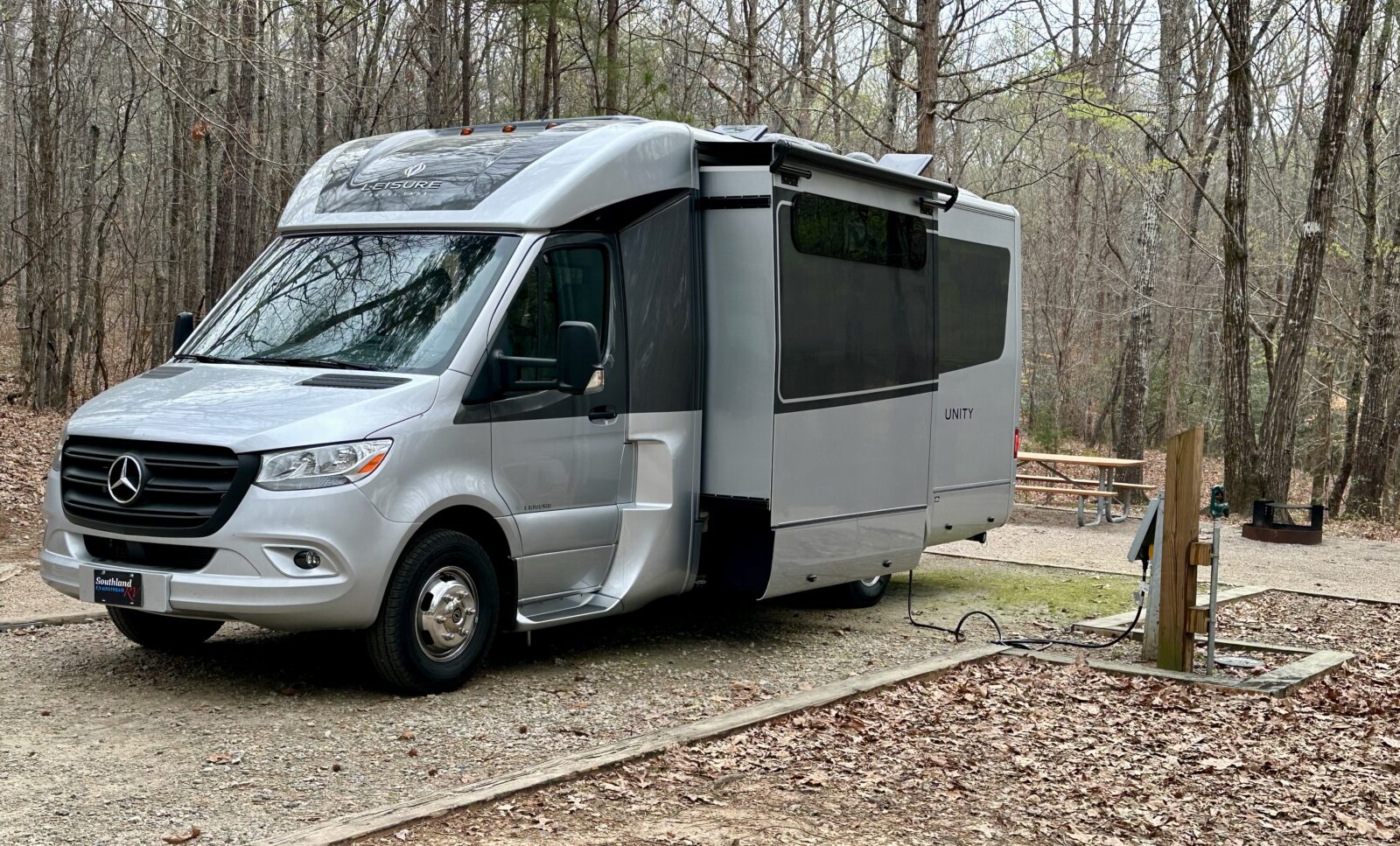
Due west along Route 27 and 26 miles from Lumpkin, you’ll cross a Tennessee Valley Authority waterway called the Walter F. George Reservoir as you pass into Eufaula, Alabama. This area is home to the Eufaula National Wildlife Refuge and many public and private RV campsites and State parks.
The Sights of Eufaula, Alabama
Eufaula, Alabama, is an inviting waterfront town along the Chattahoochee River. It offers visitors a delightful mix of antebellum architecture, outdoor recreation, and Southern hospitality. Stroll through the historic downtown, with its antique shops, local boutiques, and restaurants housed in restored 19th-century buildings.
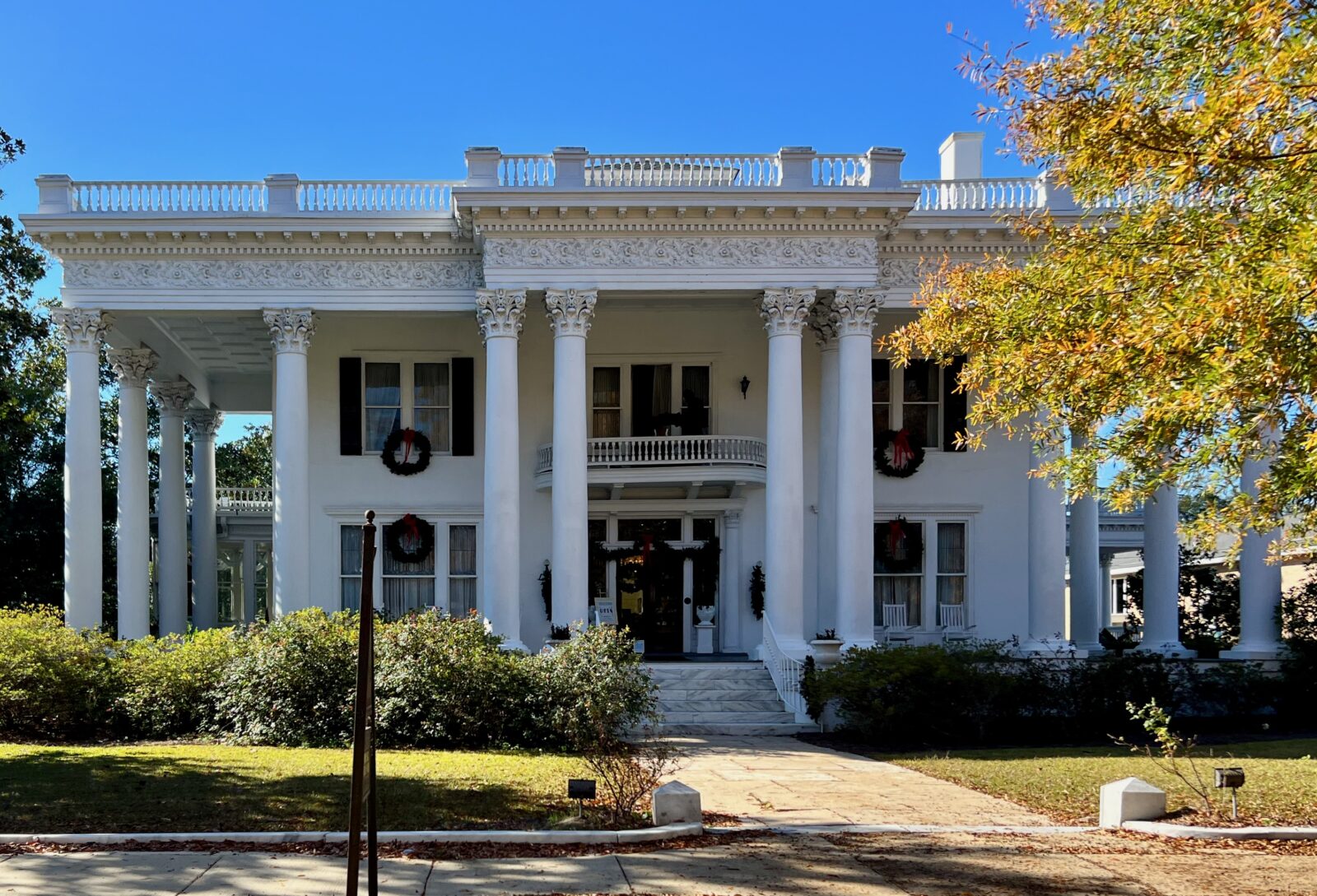
The Seth Lore and Irwinton Historic District in Eufaula offers peaceful, tree-lined streets perfect for walking. The town’s compact size makes it easy to explore on foot, and its location on the Georgia border adds to its accessibility for travelers exploring the Southeast.
Eufaula’s rich architectural heritage dates back to the antebellum period, when it served as a prosperous river port on the Chattahoochee River. The city’s historic district contains one of Alabama’s largest collections of 19th-century architectural structures. This could be your primary reason for driving along the main drag in town. Eufaula’s history spans several periods.
The Antebellum Era (1830s-1860s)
Eufaula’s wealth stems from the cotton trade. Wealthy merchants and traders built these grand mansions, which feature Greek Revival and Italianate architectural styles. The Greek Revival houses display massive columns, symmetrical facades, and classical proportions. Notable examples include the Shorter Mansion (1884) and the Hart House.
The Post-Civil War Period (1870s-1900s)
After the American Civil War, Eufaula experienced a second building boom during Reconstruction and the late Victorian era. This period brought more ornate architectural styles, including Second Empire, Queen Anne Victorian, and elaborate Italianate designs. These homes often featured decorative woodwork, bay windows, wraparound porches, and intricate gingerbread trim.
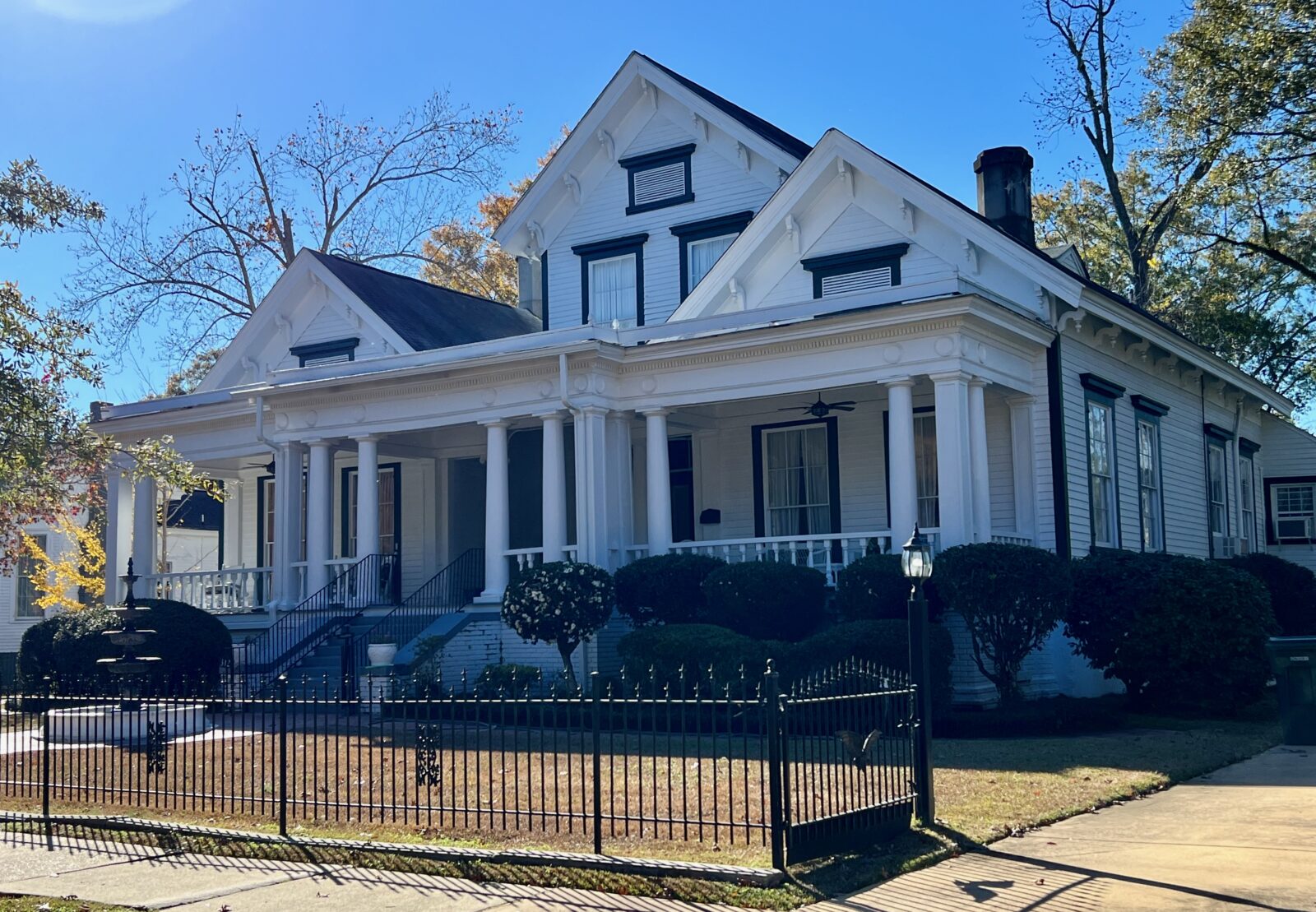
The older homes in Eufaula share several common structural elements:
- Elevated foundations to protect against river flooding.
- High ceilings (often 12-14 feet) for better air circulation in the humid climate.
- Deep porches and verandas for shade and outdoor living.
- Central hall floor plans with rooms opening to cross-breezes.
- Heart pine flooring and timber framing.
- Brick construction is used for the grandest homes, while wood frame construction is typical for modest residences.
The Historic District
Eufaula’s historic district presents over 700 buildings, making it one of Alabama’s most significant landmark preservation zones. The district runs roughly from the Chattahoochee River inland, with the most prestigious antebellum mansions positioned along the high bluffs to take advantage of river views and breezes.
Many historic homes now operate as house museums, offering glimpses into 19th-century Southern domestic architecture and lifestyle. The architectural legacy reflects both the prosperity of the cotton era and the period’s craftsmanship traditions.
What To Do at Eufaula
The period homes at Eufaula are a central theme of the annual Alabama tour of homes. You can sign up for historic tours of the city, and Christmas tours are also available.
But there’s more to Eufaula than historic homes. This city and the surrounding region offer much to those who seek outdoor adventures. Many State and private parks—too many to mention here—invite you to stop and stay a while.
Some claim Eufaula is the significant bass capital of the world. If fishing and boating interest you, you’ll find much to explore at Eufaula.
The Roads Less Traveled
We set out on our journey west to see the Little Grand Canyon. Cuthbert and Eufaula were a pleasant surprise for us on our Lumpkin Loop and a great reminder of the rewards of roving travel offers.
So many LTV owners know that taking the road less traveled offers practical and emotional benefits over major highway routes. The quieter secondary and back roads provide access to unique destinations that Interstate travelers will never discover. Less congested roads, more affordable campsites, less travel stress, deeper connections with landscapes and residents, flexibility, spontaneity, and more stem from roving travel. These qualities many travelers find lacking in their daily lives.
Where is your Lumpkin Loop? Please share it with us in the comments section below.


Comments