


Editor’s Note: This post is written by a member of LTV’s sponsored content team, The Leisure Explorers. Do you own a Leisure Travel Van and enjoy writing? Learn more about joining the team.
Prince Edward Island had been on our list since we first heard about its red sand beaches. We give ourselves 10 days to find out if it’s real (it is), crossing the island by bridge and back by ferry, with lighthouses, potato fields, and entirely too much ice cream. Canada’s smallest province turned out to be one of the biggest surprises of this summer’s trip: equal parts stunning coastline, deep history, and small-town charm. Here’s how our 10 days went.
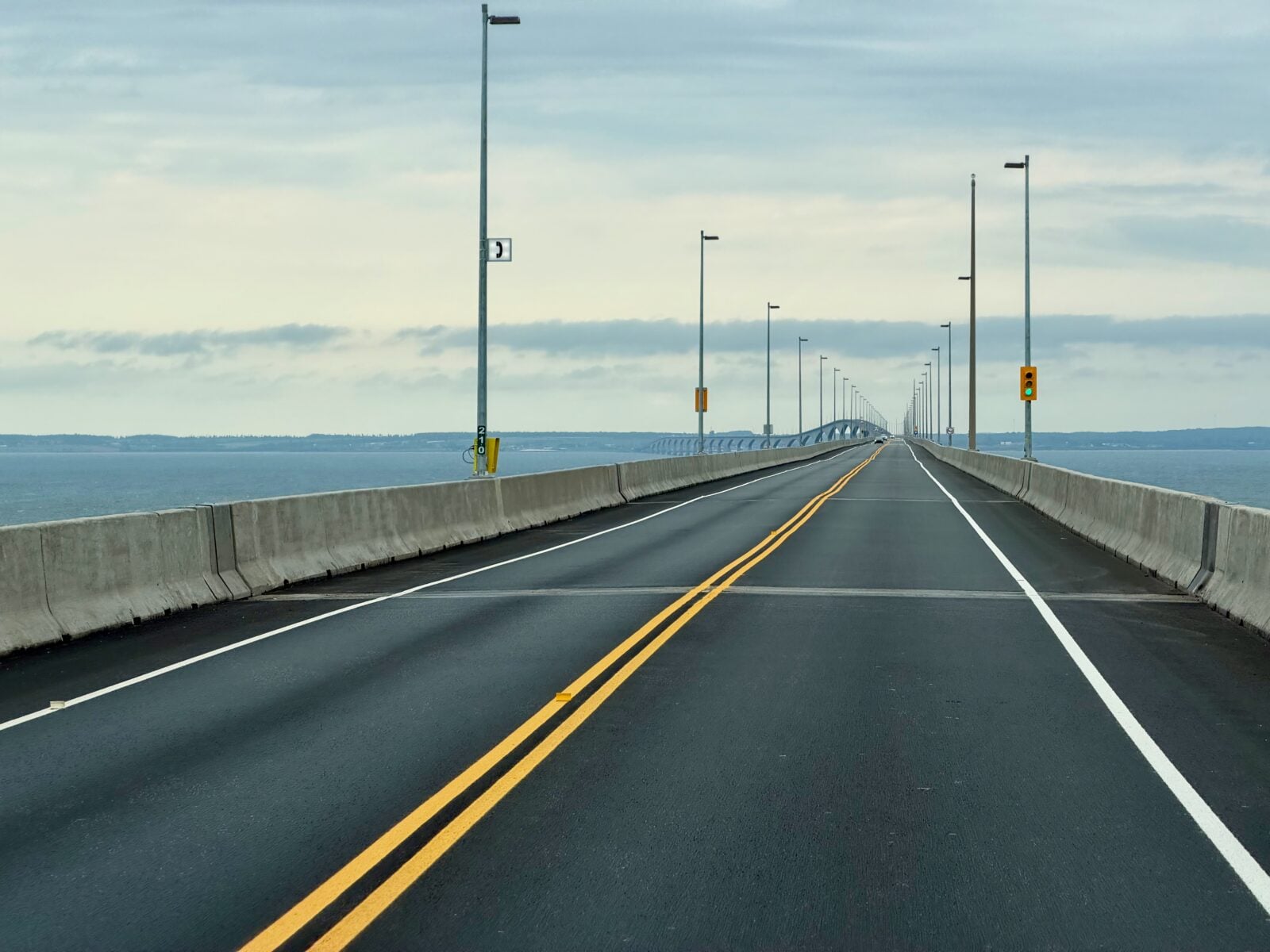
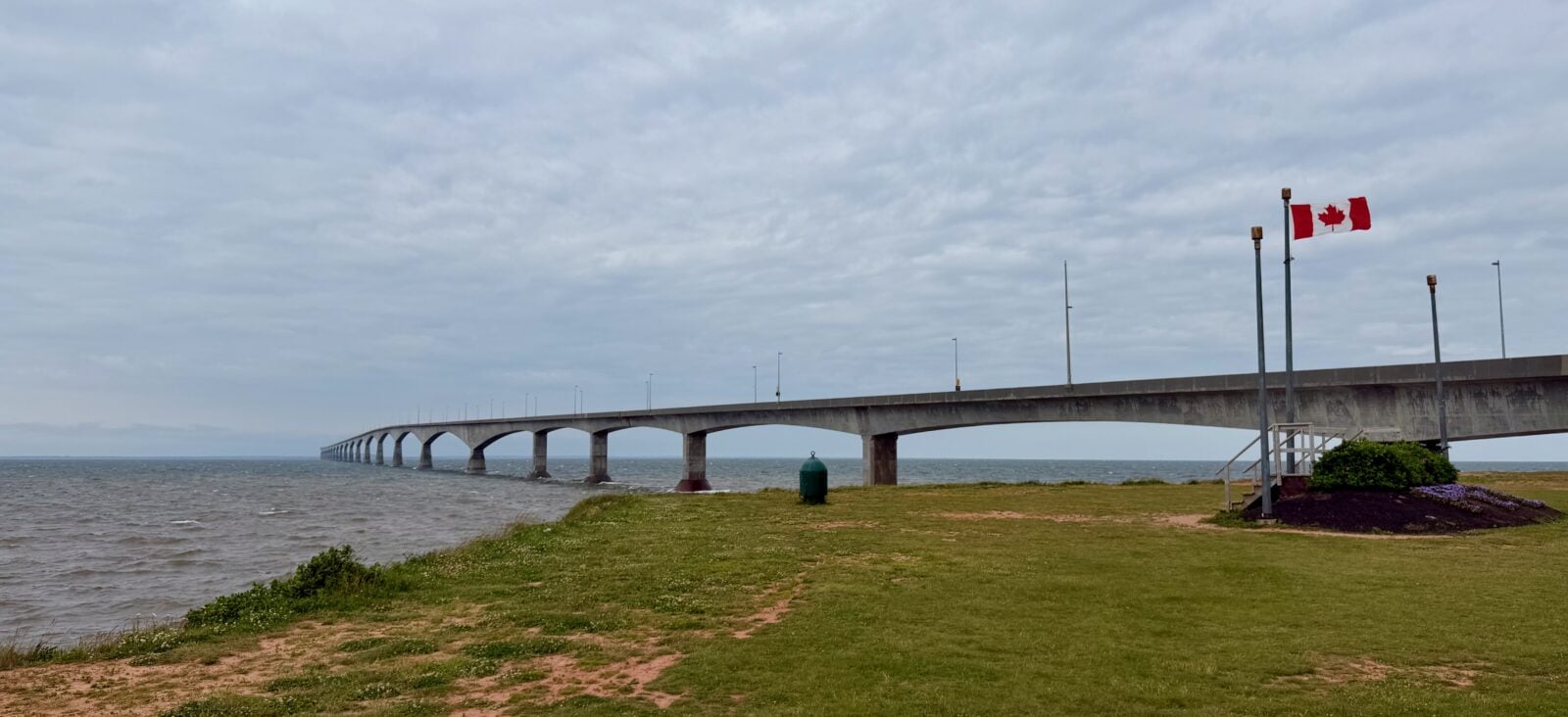
There are two ways to get to Prince Edward Island: a long bridge or a ferry. We chose the Confederation Bridge, which stretches 12.9 kilometers across the Northumberland Strait. This makes it the longest bridge in the world, spanning ice-covered waters. We have experienced strong wind gusts over the last few days, and are worried about crossing the bridge with our LTV. The night before our ride, we check the bridge’s own weather forecast, which promises the wind will calm by 11 am. When we wake up early the next morning, the forecast has flipped, with wind picking up steadily from 8:00 am instead.
An Early Start
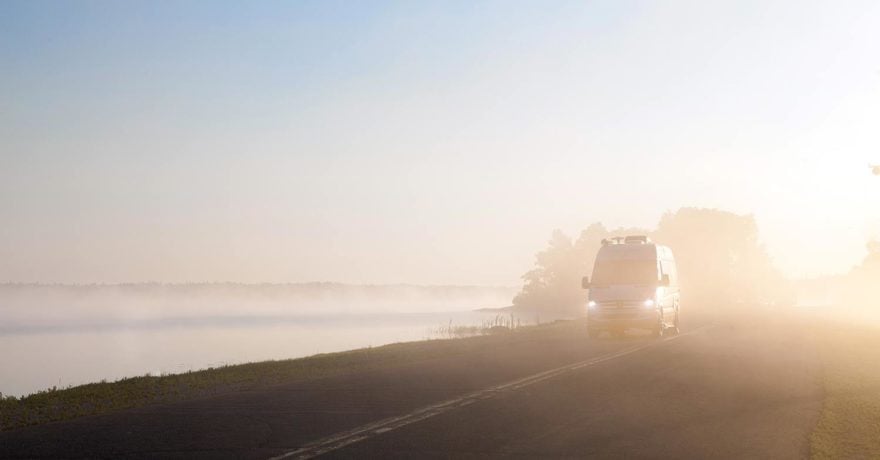
We move fast, grab a coffee to go, and are on the road by 7:00 am. An hour and a half later, we reach the bridge with the wind at our backs, which comes as a pleasant surprise. The bridge has a deliberate curve built into its design, meant to keep drivers from slipping into highway hypnosis over eight miles of open water. It’s a strange, beautiful, and slightly breathless 15 minutes.
We take the first exit off the bridge and stop at a little park with a fantastic view back across the water, and more importantly, breakfast.
The interpretive center turns out to be the perfect welcome to the island. We learn that modern Canada itself was essentially born in PEI. The Charlottetown Conference of 1864 sets Confederation in motion, but in the end, PEI holds out for six years. It joined only in 1873, once Canada agreed to pay off the island’s crushing railway debt and guarantee a year-round mainland connection. That promised connection takes much longer than expected. Winter crossings relied on iceboats hauled across the ice by their own passengers until 1915, and the Confederation Bridge didn’t fulfill the original promise until 1997, 124 years later. The old railway itself didn’t survive the 20th century. It closes in 1989, and its bed becomes the Confederation Trail, which we end up crossing again and again all over the island.
First Impressions: Red Sand, Beautiful Lighthouses, and Potatoes
We have hours before check-in time at our campground, so we explore some of the western part of the island. Two things about PEI strike us almost immediately: the red sand and the number of potato fields.
The island’s soft sandstone is loaded with iron oxide and is, quite literally, rusting. That same soil happens to be perfect for potatoes. PEI is home to just 152,000 people, yet it grows a quarter of Canada’s entire potato crop.
We arrive right at peak strawberry season, buying some at nearly every farm stand we pass. Not everything is a bargain, though: at one small grocery stop, we pay close to $20 for a melon and a carton of orange juice. A good reminder that anything not grown on the island comes at a real premium. If there’s something you can’t live without that isn’t a local product, it’s worth stocking up before you cross the bridge.
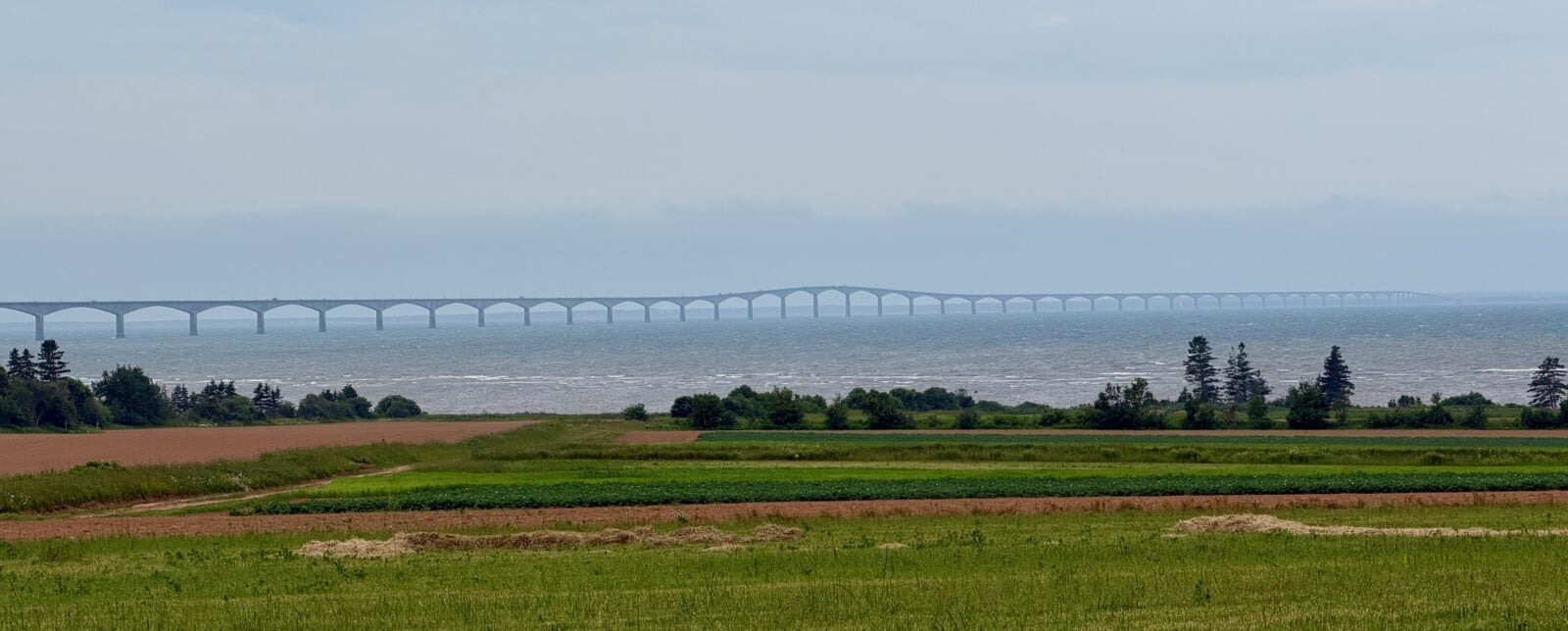
On our way to West Point Lighthouse (the first lighthouse of many), we catch a fantastic view back to the Confederation Bridge from the parking lot of St. Peter’s Roman Catholic Church absolutely worth a stop, the bridge is equally breathtaking from this perspective.
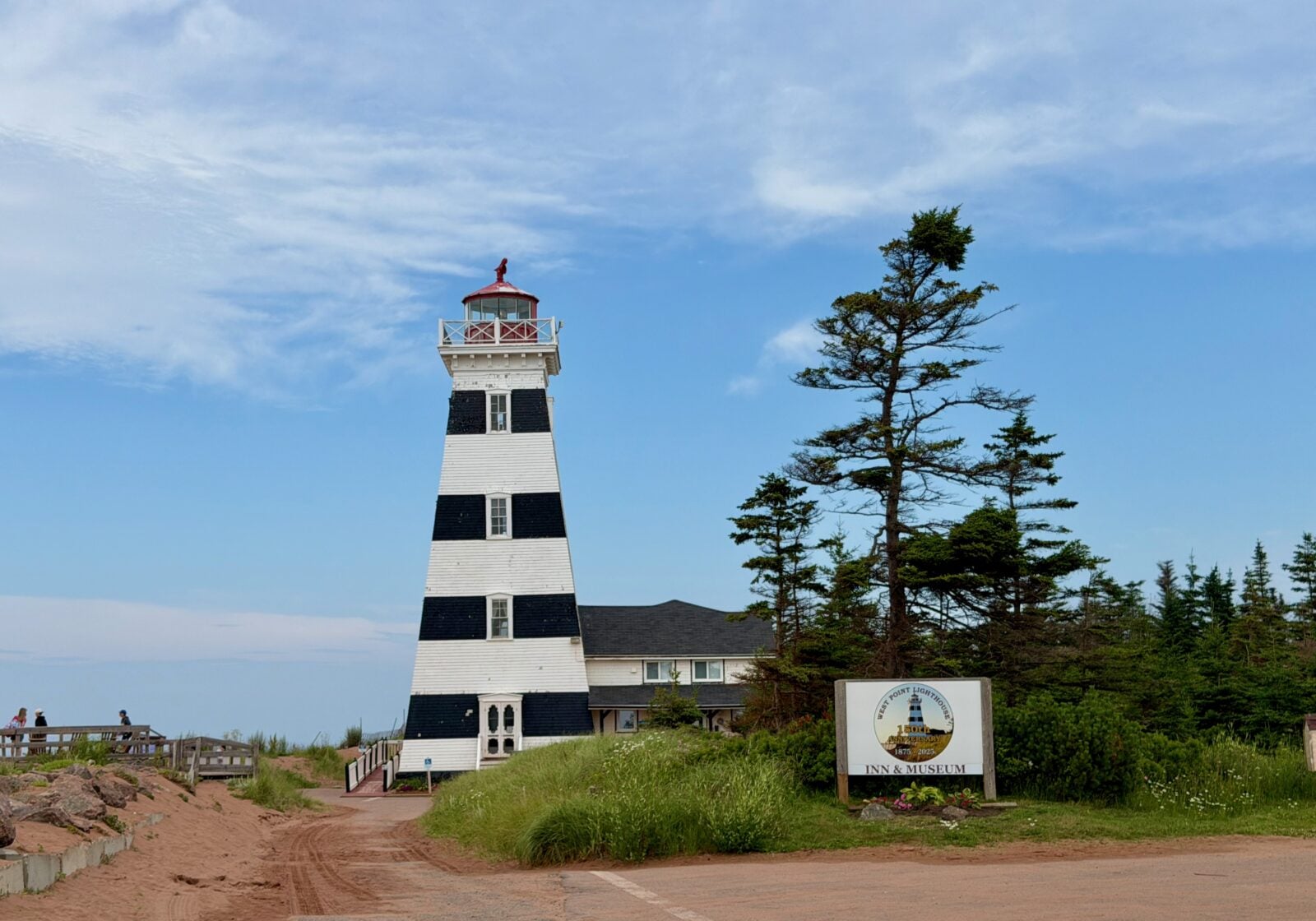
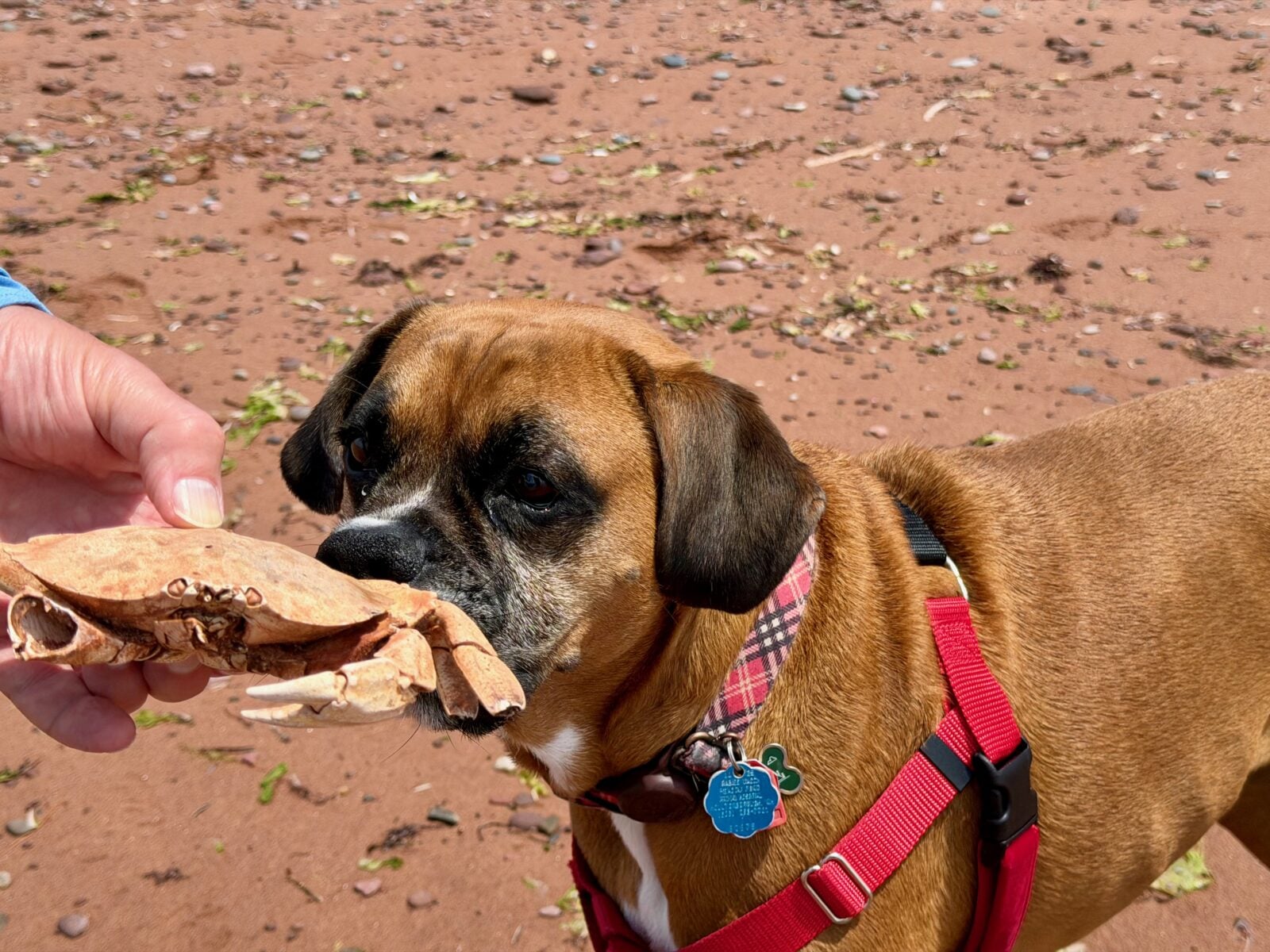
West Point is the first lighthouse built on PEI after Confederation, striped black and white, and standing over 20 meters tall. Its first keeper, “Lighthouse Willie” MacDonald, worked there for 50 years without taking a single day off. We wander the beach below it, getting our first taste of red sand in our shoes—the first of many times.
Cavendish: Anne, COWS, and a Missing Teacup
We spent our first night near Cavendish at Red Fox Campground because we couldn’t get a spot at the national park campground that night. It’s at a convenient location, and feels a bit like camping on a Christmas tree farm.
The nearby Avonlea Village, a themed shopping center inspired by L.M. Montgomery’s Anne of Green Gables, includes the actual schoolhouse Montgomery taught in and a relocated 1872 church. I’ll confess—I have never heard of Anne during my childhood in Germany, I only learned about her story here, while apparently half of North America (and Japan, somehow) grew up on it.
What wins us over completely, though, is COWS: PEI’s beloved ice cream institution, made with island milk from a recipe unchanged since 1983. Usually, ice cream leaves me “cold,” but the double chocolate cheesecake flavor converts me on the spot. Tauck World Discovery ranked it amongst the world’s top ten places for ice cream, and I totally believe it.
The landscape around the Cavendish campground is beautiful. We explore the surroundings and make our way to Thunder Cove Beach to see the famous “teacup rock.” We’re disappointed to learn it’s long gone, a victim of storm Fiona back in 2022. We laugh about ourselves as we realize we spent a fair amount of time on the beach crowning random rock shapes “the teacup”.
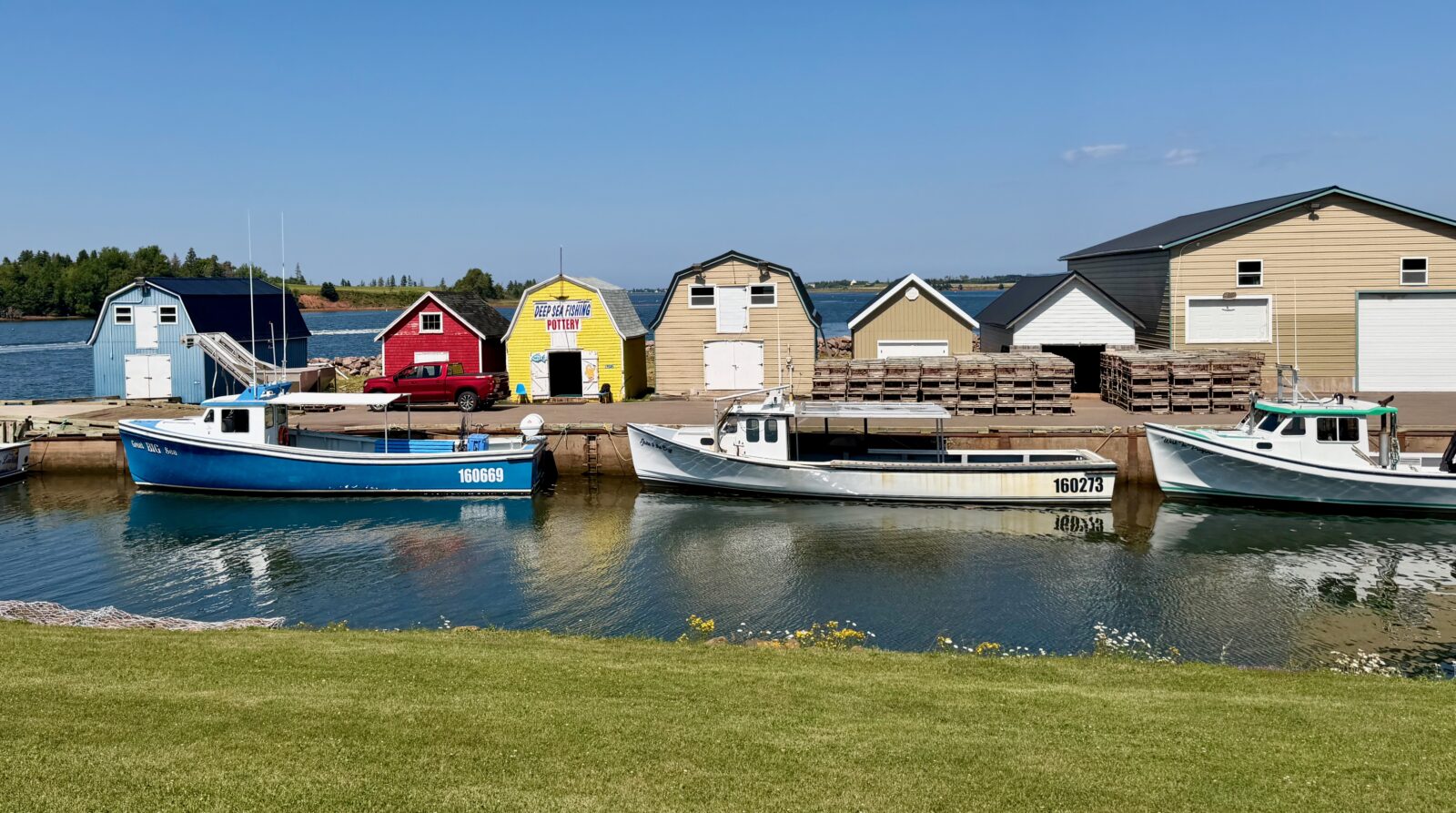
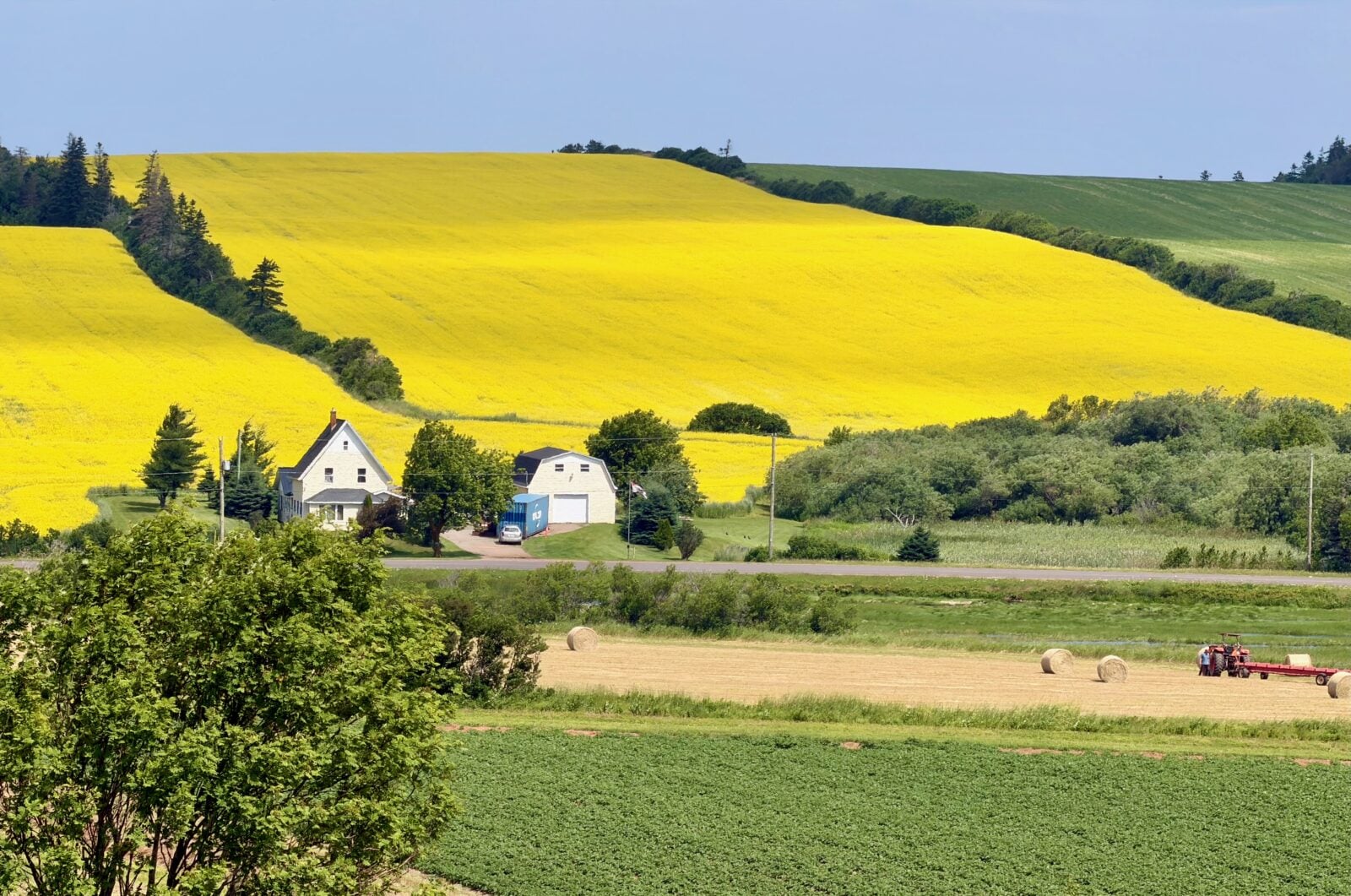
Though we don’t find our teacup, we do catch some beautiful views on the way. The little harbor in Darnley, which looks like a picturesque postcard, and a stunning canola field, perfectly glowing in the afternoon sun.
We are staying at the Cavendish National Park Campground for three nights and have the opportunity to explore each of its loops, as the same campsite wasn’t available for three consecutive nights.
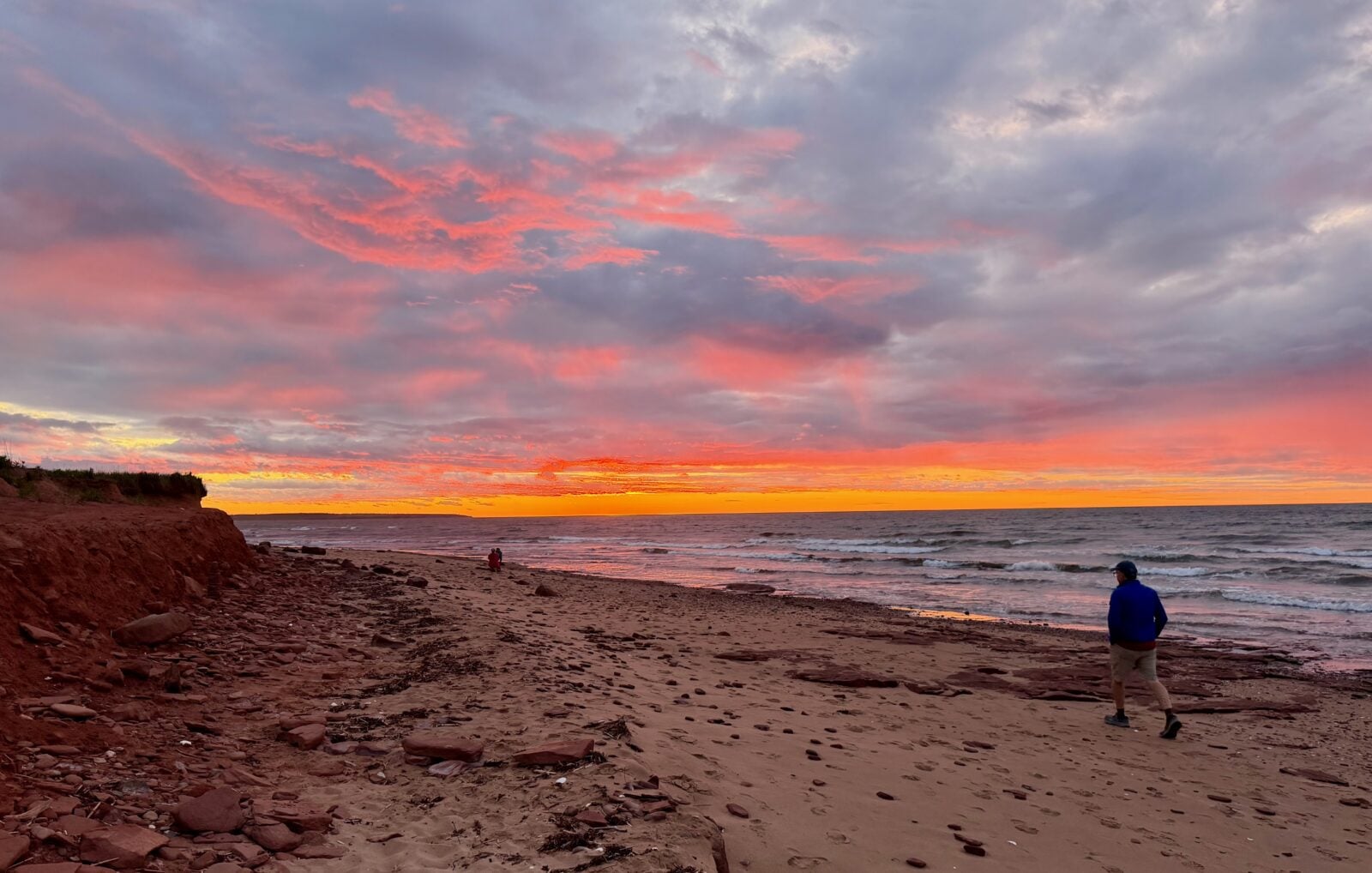
Our favorite site is located in loop A. Compared to the other loops, it has more mature vegetation, which gives us a little more privacy. However, the campground itself is in a gorgeous location. We’d book any loop again if we could get a spot. All loops are close to the beach; loops B and C are a little closer. The sunset during our evening walk is breathtaking. The campground books out fast, so it’s worth planning ahead to stay there for a few nights.
Seacow Head: A Lighthouse and a Lobster Debate
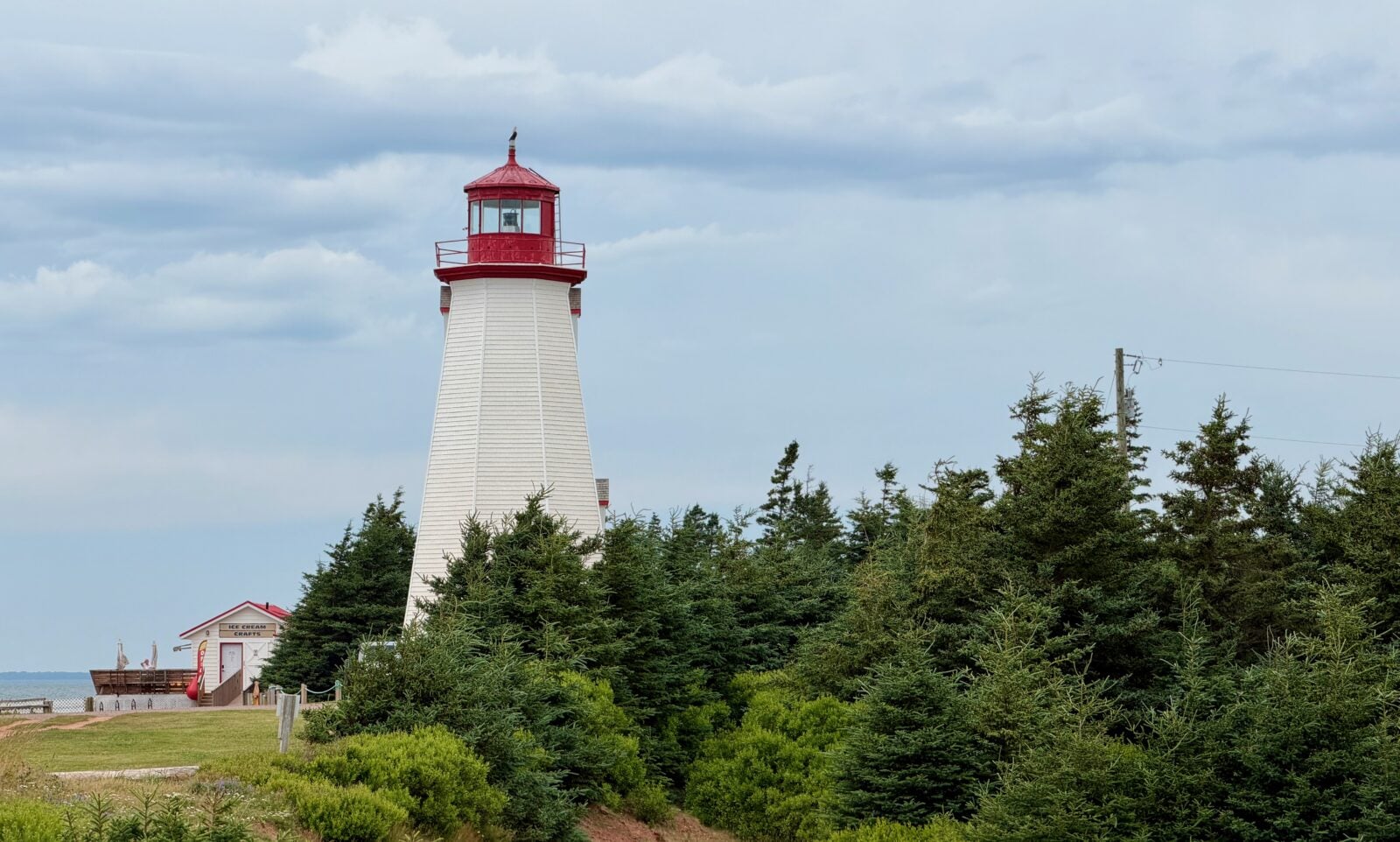
Driving the central coast toward Seacow Head Lighthouse, the road turns to red dirt, and the views along the cliffs make every pothole worth it. The lighthouse there has guided ships through the narrowest part of the Northumberland Strait since 1864, one of the oldest wooden lighthouses left in the Maritimes. Dave climbs it while Winni and I wait below.
We consider one of PEI’s famous “lobster suppers”—unlimited chowder, mussels, and lobster for a very reasonable price, but Dave’s shellfish allergy rules that out, and one look at the mobbed parking lot of the most famous one (New Glasgow Lobster Suppers) makes us grateful for the excuse. We find a quieter seafood spot instead, with a water view that more than makes up for it.
Skmaqn: Three Names, Three Peoples
Charlottetown comes next, and it starts with a history that puts everything else into context.
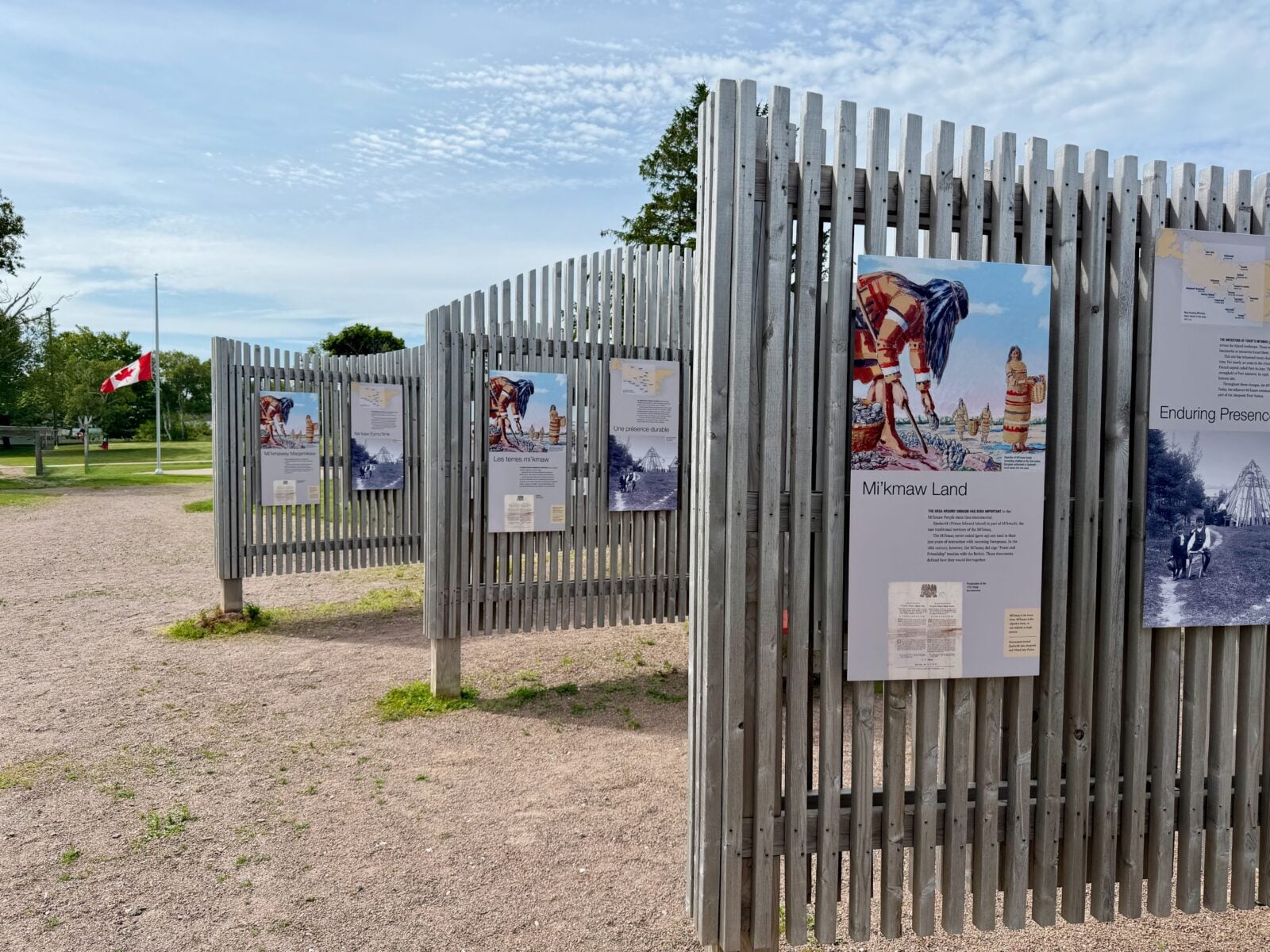
Our first stop is Skmaqn–Port la Joye–Fort Amherst, a single site carrying three names in three languages. Skmaqn means “the waiting place” in Mi’kmaw. It marks where the Mi’kmaq, Atlantic Canada’s original inhabitants, gathered annually to renew alliances with arriving French leaders. Port-la-Joye is the name French settlers gave to their colony here starting in 1720. They were soon joined by Acadians—originally French farmers who’d settled mainly in Nova Scotia and New Brunswick since the 1600s and fleeing to PEI for refuge. Then, in 1758, the same year Fort Amherst was named, the British ordered the forced deportation of 3,500 Acadians from the island. The history feels heavy and present as we walk through the now-peaceful park above the bay.
Charlottetown: Rain, Cannons, and COWS
Charlottetown turns out to be an easy, walkable city. Once we find a public parking lot by the municipal building (a much better bet than the packed waterfront streets, and available on weekends), we wander the boardwalk to the old Prince Edward Battery. It was built in 1805 and never once fired in actual battle.
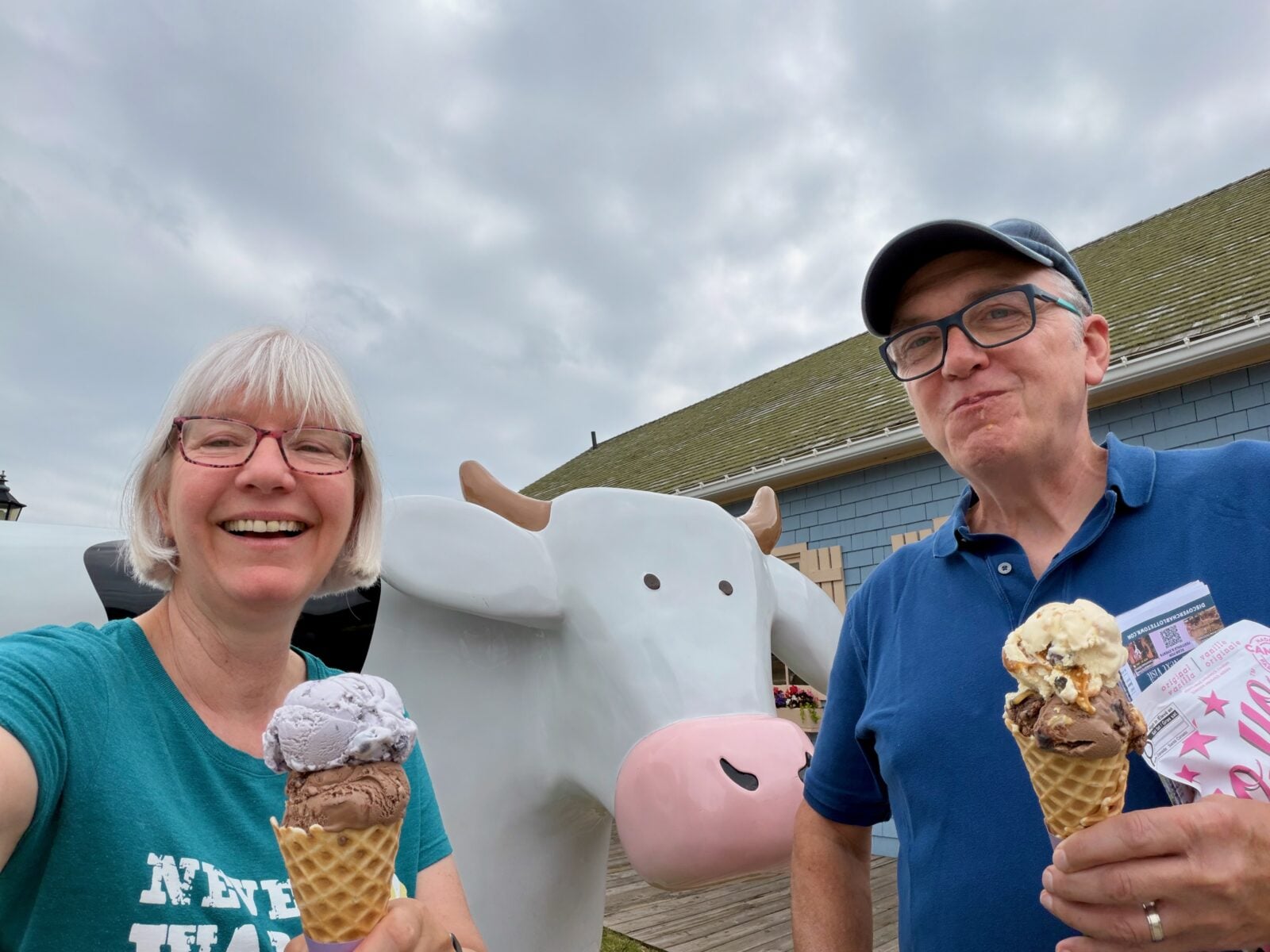
We continue on to Province House, where Confederation was quite literally conceived in 1864. We duck a downpour in an indoor food plaza full of local vendors, and of course, find our way to another COWS Ice Cream. This time, we both ordered the double chocolate cheesecake, and we need to take a picture fast, before it starts melting in our hands.
We spent two nights at the Holiday Haven Campground and booked a waterfront site there. The extra money is worth it, we really like the campground, and enjoy the beautiful view over the bay.
Greenwich: The Floating Boardwalk
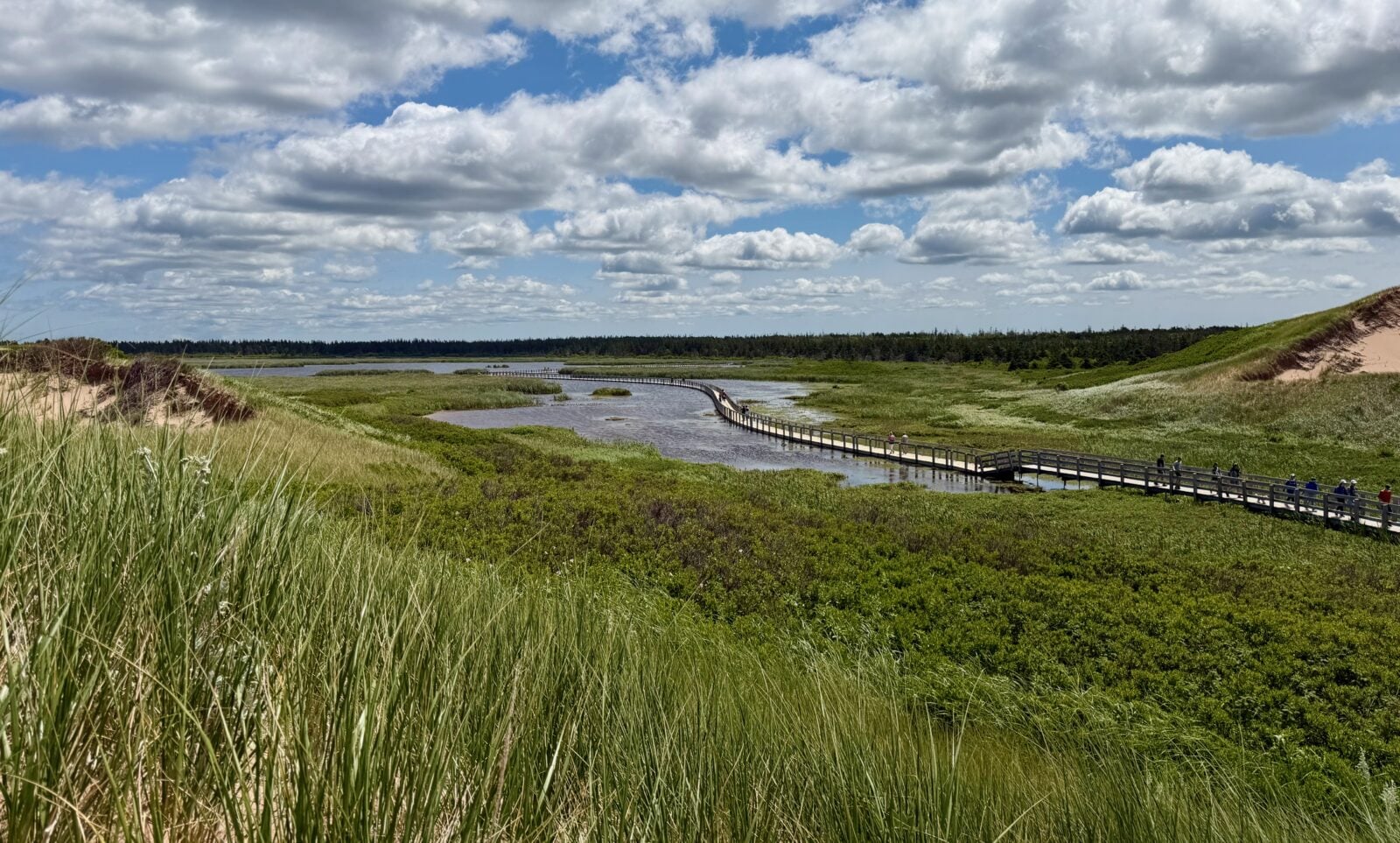
The island’s northeastern tip gives us some of our favorite hours on PEI. At Greenwich, part of PEI National Park, a wooden boardwalk gradually turns into a long floating boardwalk that glides directly over Bowley Pond, with the island’s largest sand dunes rising behind it. On the far side, a beach that looks almost pink stretches out nearly empty despite the crowd we passed on the trail. We walk barefoot in surprisingly warm water until it’s just us, the ocean, and the wind. Winni sits this one out in the RV.
PEI National Park’s beaches are closed to dogs from April through October, to protect nesting Piping Plovers—an endangered shorebird that lays its eggs directly in the open sand.
Basin Head: The Sand That Sings
Basin Head, better known as the Singing Sands, might be the island’s strangest natural feature. The sand grains there are almost perfectly spherical, high-silica quartz—one of only a few dozen places in the world where sand actually squeaks and sings underfoot on a dry day. We have to try it immediately, and it works on nearly every step. A woman nearby watches us dragging our feet through the sand, asks what we’re doing, and a few minutes later, we spot her doing the exact same thing in her flip-flops.
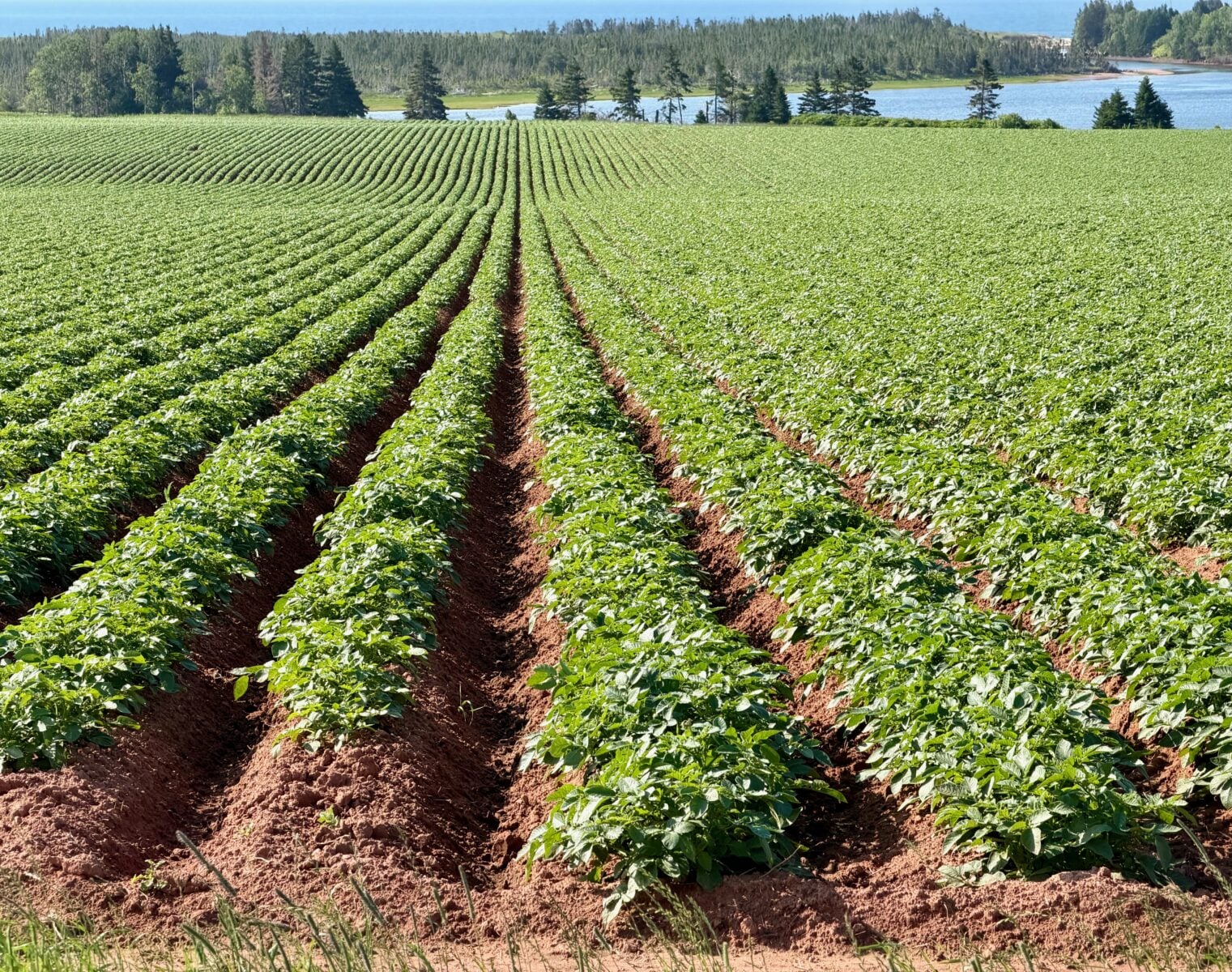
Driving north past more potato fields, I finally catch the photo I’ve been chasing all week—red-soil potato hills lined up toward green bushes and blue water in the background. Something about those ridged rows feels oddly familiar; I grew up around farms in northern Germany, and apparently, some of that knowledge never left. (The short version: fields get shaped into raised rows each spring, hilled again as the plants grow to keep the tubers covered and protected from sunlight, and harvested from August through fall, though the “new potatoes” we keep finding at farm stands are pulled early, smaller and sweeter than the mature crop.)
East Point: Where Three Tides Meet
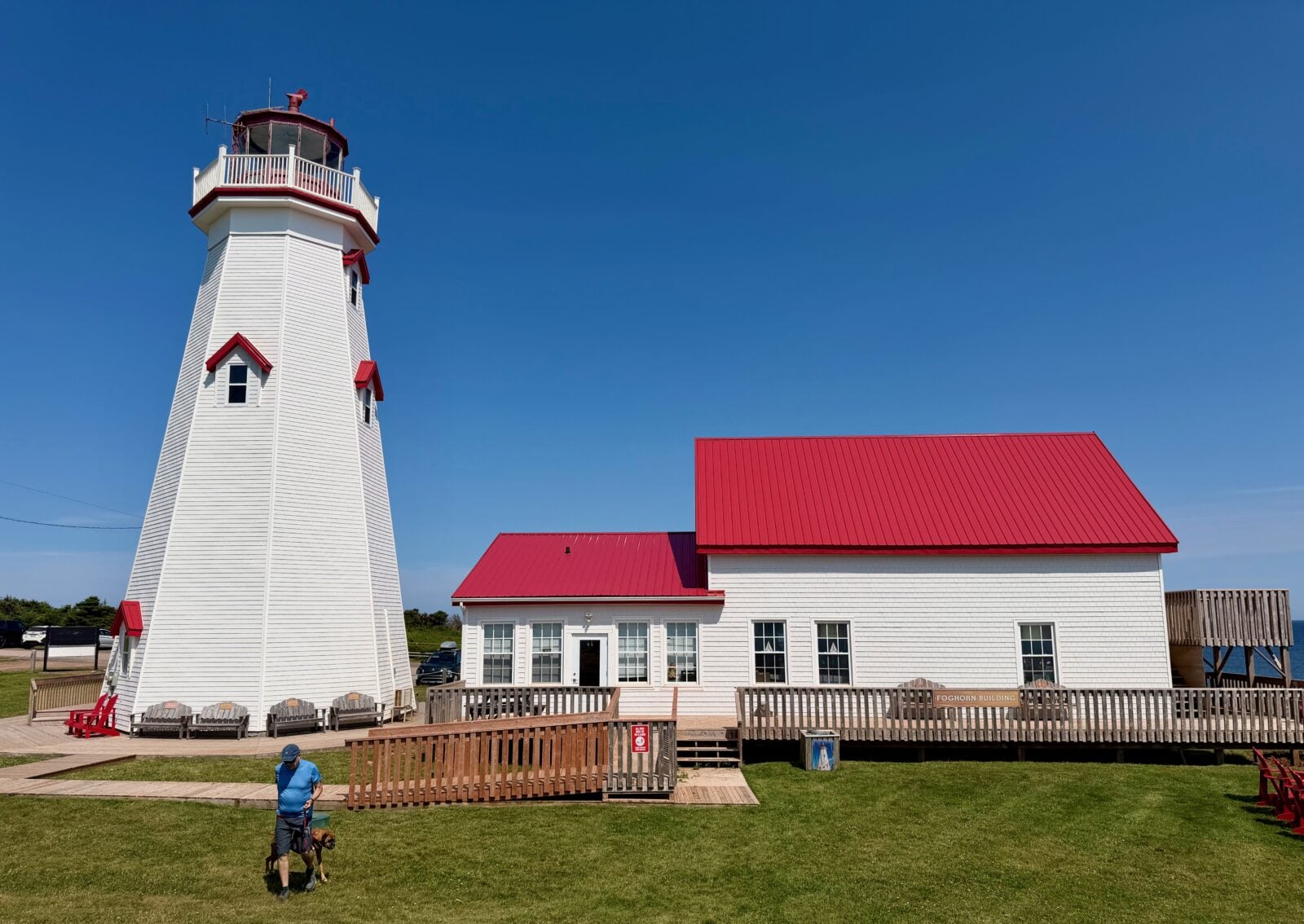
East Point Lighthouse, built in the very year of Confederation in 1867, marks the spot where three tidal currents: the Gulf of St. Lawrence, the Northumberland Strait, and the Atlantic collide over a reef just offshore. Erosion has been severe enough here that the lighthouse itself has had to be moved inland over the years, a small, vivid reminder of how much of this coastline is disappearing into the sea.
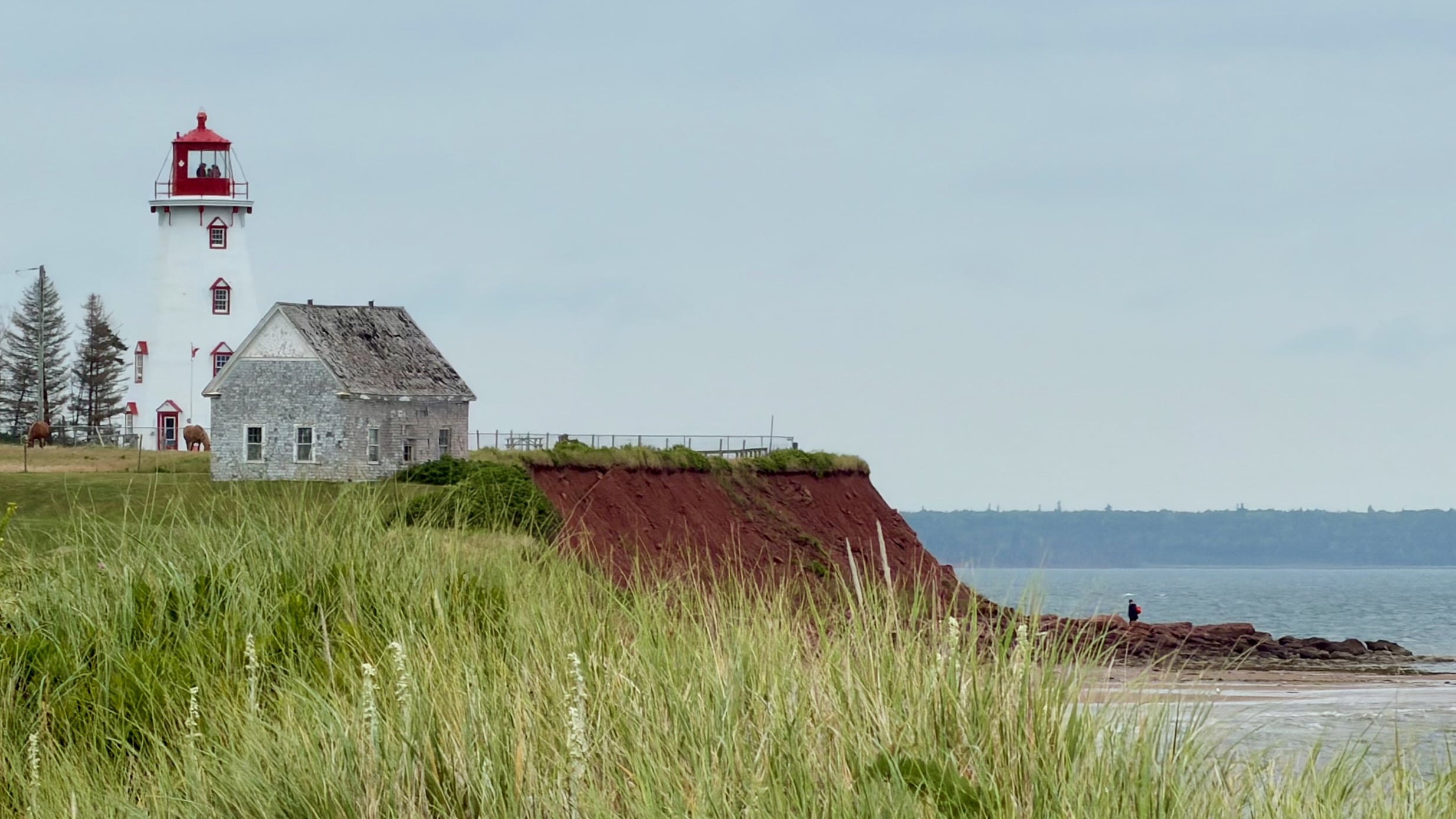
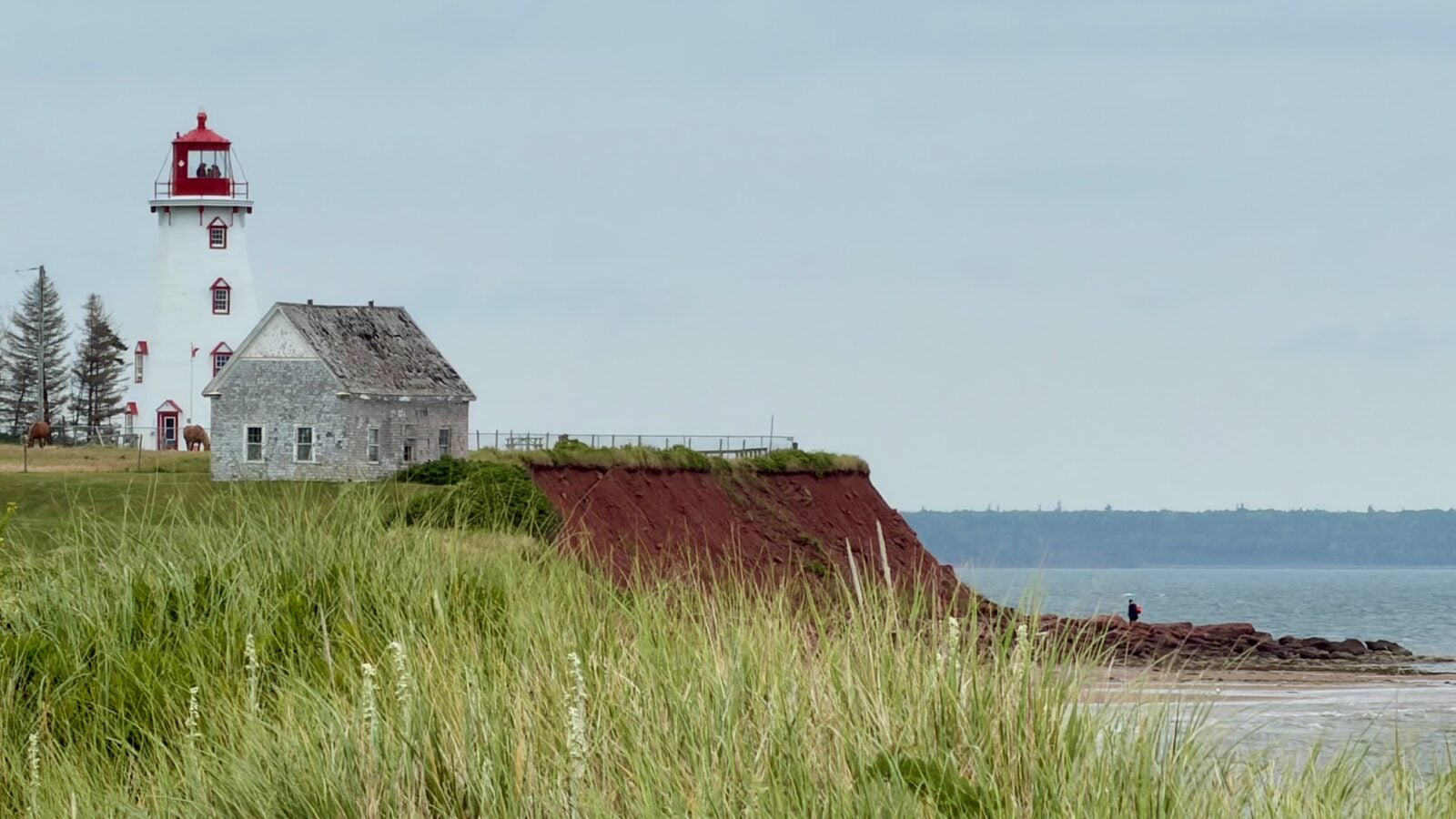
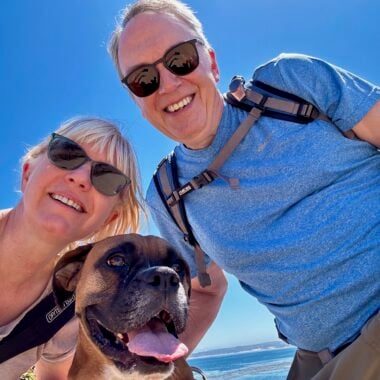
While we are exploring the East Coast, we are staying at All Points East Campground. We’d originally planned three nights at our campground near the eastern tip, but the beautiful lakeside site comes with two real downsides: a side-to-side slope that takes every leveling block we own and a lot of patience, and mosquitoes hungry enough to send us straight back into the RV after one evening walk. We shorten our stay and move south a day early, giving us time for one more lighthouse—Panmure, PEI’s oldest wooden lighthouse, built in 1853 and reached via a 1960s causeway that replaced what used to be a sandbar crossing at low tide. White octagonal tower, an old keeper’s hut, red cliffs behind it. It almost looks like a painting. Winni finally gets a proper beach run there, tearing across the sand with more joy than we’ve seen from her in days.
Montague: A Twin in the Night
We spend our last night on the island at a Harvest Host location, Bogside Brewing in the riverside town of Montague, a place we fall for almost instantly—tree-lined streets, a waterfront boardwalk, and the beer garden looking out over the small harbor. We’re told a second Harvest Host guest will be joining us that night, and laugh out loud when it turns out to be another LTV that looks almost like Nauke’s twin. We enjoy swapping stories with the friendly owners upon their arrival, then turn in early: the next morning means an 8:30 am ferry to Nova Scotia.
The Ferry: Nauke Goes Nautical
After 10 days on Prince Edward Island, we get up really early to catch the ferry from Wood Islands, PEI, over to Caribou, Nova Scotia. We are a bit nervous—still not quite sure how good an idea it is to get an RV onto a ferry.
In the early morning light, we drive toward the terminal, surprised by the sheer size of the staging area where vehicles are gathered before boarding. The friendly attendant at the gate sends us to the right-most lane; we’re early, with only a few vehicles ahead of us. When a fully loaded logging truck pulls into the lane beside us, we get our first real sense of the scale of traffic between PEI and Nova Scotia and feel oddly relieved. If he can do it, we can do it.
Boarding is smooth and well-organized, with dozens of crew members directing every vehicle to its spot. Nauke ends up near the front of the ferry, out in the open air. We have to leave the vehicle during the crossing, with the choice of bringing Winni along to a dog-designated section of the deck or leaving her behind. Since she’s comfortable in the RV and honestly doesn’t do well around unfamiliar dogs, we leave her in familiar surroundings.
We spent the crossing enjoying the wind, the view, and a surprisingly good onboard breakfast. The ride covers about 14 miles (22.5 kilometers) of open water and takes 75 minutes. Time passes quickly, and we’ve just finished the last bite of our eggs when everyone is called back to their vehicles – and just like that, we’re rolling onto Nova Scotia soil, ready for our next chapter.

Comments