


Editor’s Note: This post is written by a member of LTV’s sponsored content team, The Leisure Explorers. Do you own a Leisure Travel Van and enjoy writing? Learn more about joining the team.
After several days exploring the central Adirondacks, Kona and I continued working our way west through New York’s six-million-acre Adirondack Park.
One thing that had become obvious during the first part of the trip was just how many camping opportunities exist throughout the region. Between the 41 DEC campgrounds scattered throughout the park and the numerous boondocking opportunities available on public lands, it would be easy to spend an entire summer here without running out of new places to explore.
The Adirondacks are also one of the few places in the Northeast where getting off the grid is still easy. Cell service is limited throughout much of the park, and many campgrounds have little or no signal at all. Most of the time, reliable service only appeared when passing through towns. While that occasionally complicated trip planning, it was also part of the appeal.
Another thing visitors should be prepared for, especially during late May and early June, is black fly season. No matter where I camped, the black flies seemed determined to make their presence known. Some days were better than others, especially when the wind picked up, but there were plenty of times when simply stepping outside attracted a swarm. Long sleeves, bug spray, and patience became part of the daily routine. By the end of June, they largely disappear, but during my visit, they were definitely part of the Adirondack experience.
Fortunately, the scenery more than made up for the insects.
Our next stop was Sacandaga River Campground.
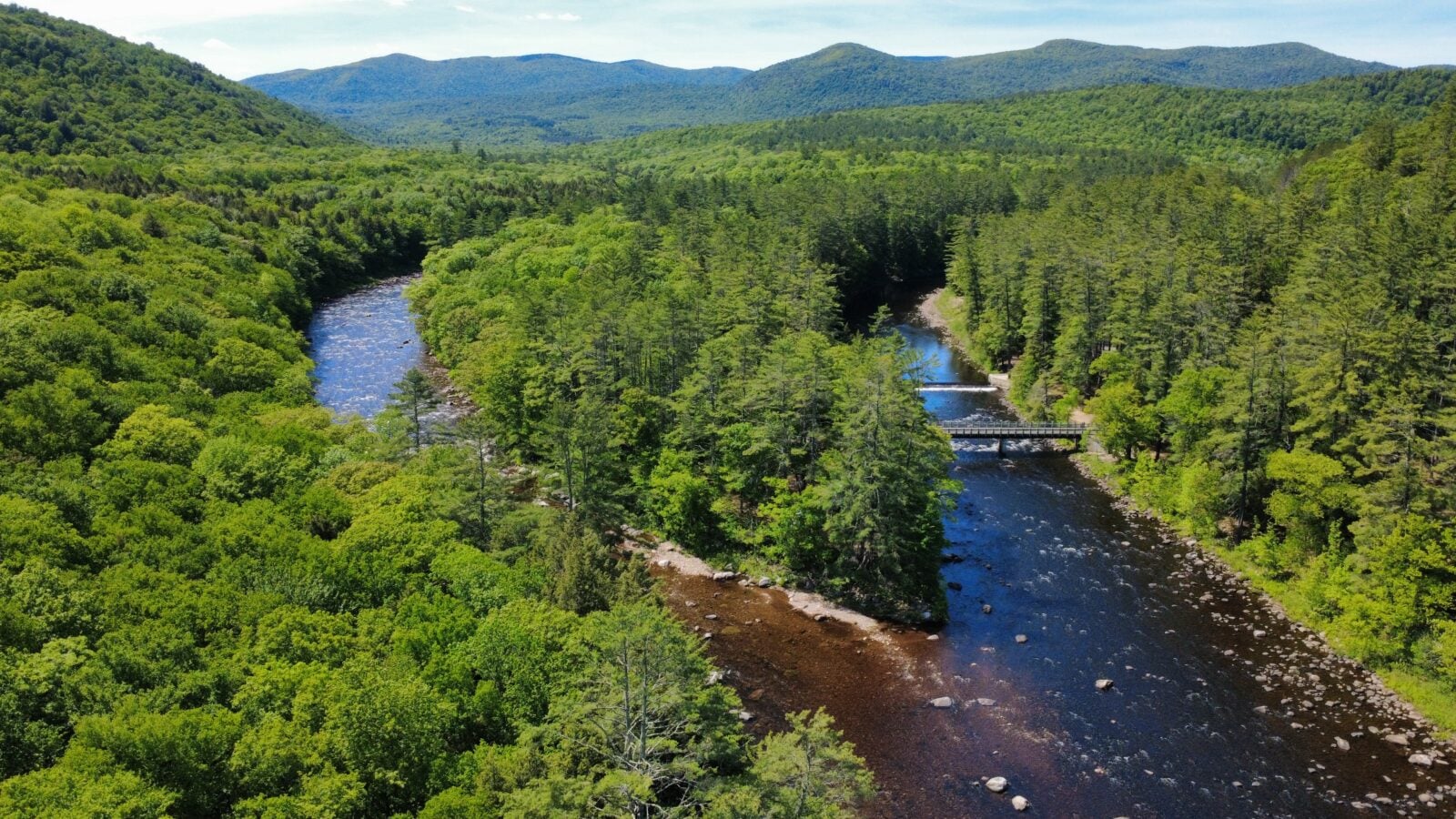
Located near Wells, the campground occupies a unique piece of land where two branches of the Sacandaga River flow around a peninsula before merging farther downstream. Water surrounds much of the campground, creating excellent opportunities for fishing and exploring along the riverbanks.
I spent three days there exploring the river and fishing from several different locations around the campground. Anglers can fish both branches of the river as well as the waters below the confluence where they merge. The fishing was surprisingly productive, and I found plenty of opportunities without ever leaving the campground.
The campground itself was equally impressive. The sites were large, well-spaced out, and surrounded by mature trees. Like many DEC campgrounds, it featured picnic areas, bathhouses, water stations, a swimming hole, and a dump station. Throughout my Adirondack travels, one thing that consistently stood out was how much privacy the campgrounds offered. Even when other sites were occupied, it rarely felt crowded.
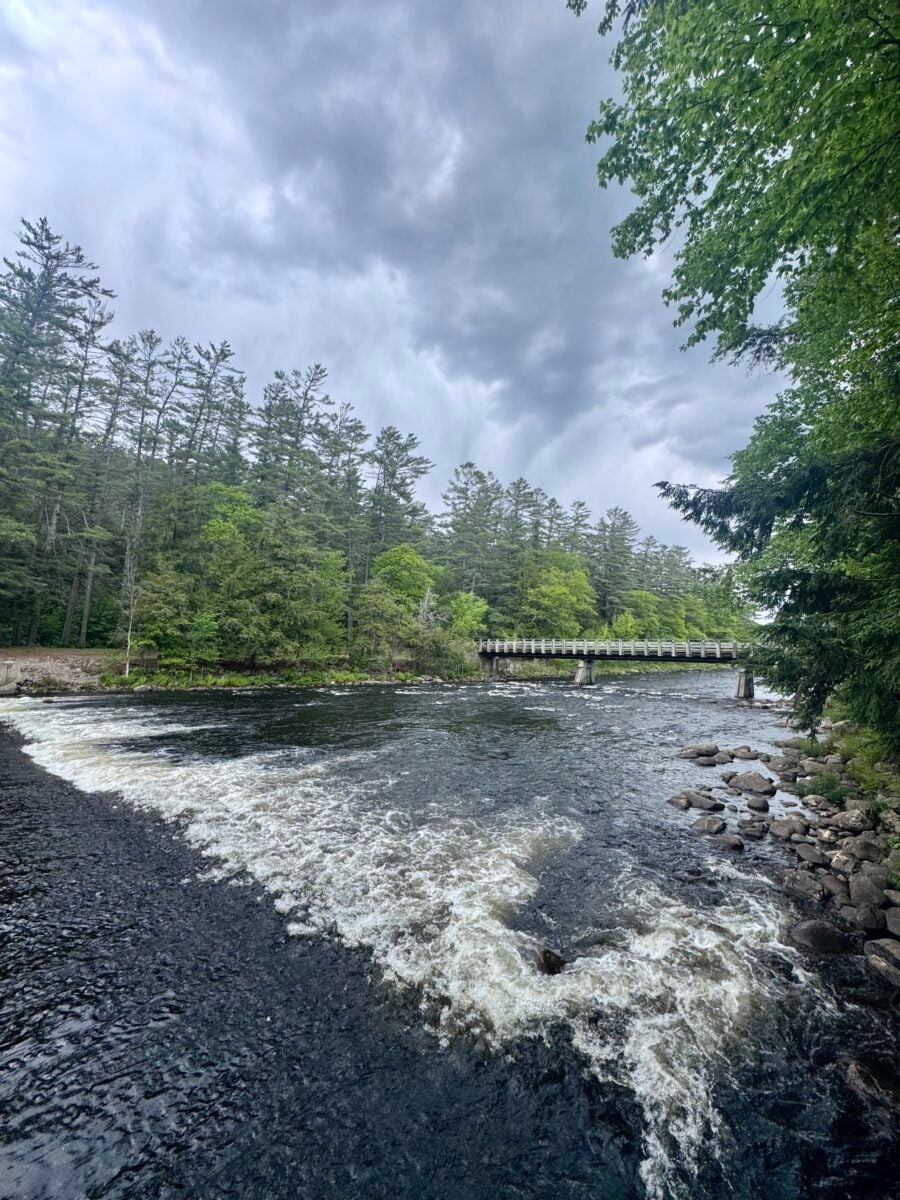
The river quickly became the focal point of each day. Whether sitting outside with a cup of coffee in the morning, walking Kona around the campground, or spending the evening with a fishing rod in hand, the water was never far away. With the river flowing on both sides of the peninsula and additional access where the channels merge downstream, there was no shortage of places to cast a line.
As every lake and river stop on this trip, Kona found opportunities to swim and cool off. She was quickly becoming an expert at locating waterfront campsites before I even finished setting up camp.
After three days at Sacandaga River Campground, it was time to move on.
Before heading north again, I stopped in Speculator to restock supplies and take care of a few errands. One of the challenges of extended travel is figuring out where to receive packages and refill prescriptions while you’re on the road. Fortunately, I discovered that the Speculator Department Store serves as an Amazon pickup location. I was able to have both Amazon prescriptions and supplies shipped there and picked up everything in one stop before continuing deeper into the Adirondacks. For anyone spending an extended amount of time in the region, it was a useful discovery. With fresh supplies loaded into the RV, I continued north.
The route eventually took me through North Creek, a small Adirondack town that turned out to be one of the trip’s more unexpected discoveries.
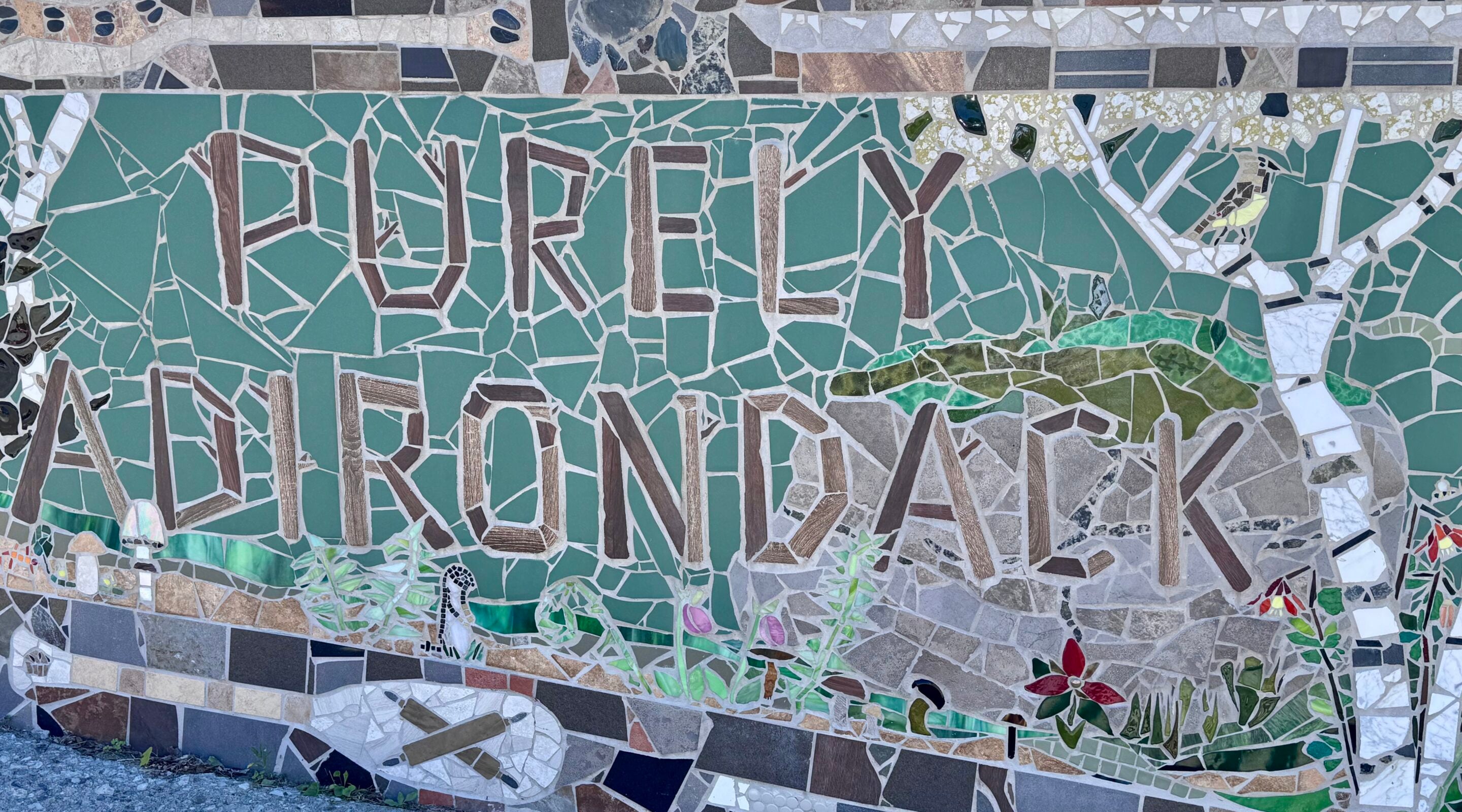
Stretching nearly two blocks through downtown is the North Creek Mosaic Project, a massive public art installation built into a retaining wall. The artwork depicts scenes from Adirondack life, including fishing, kayaking, rafting, wildlife, forests, and mountain landscapes.
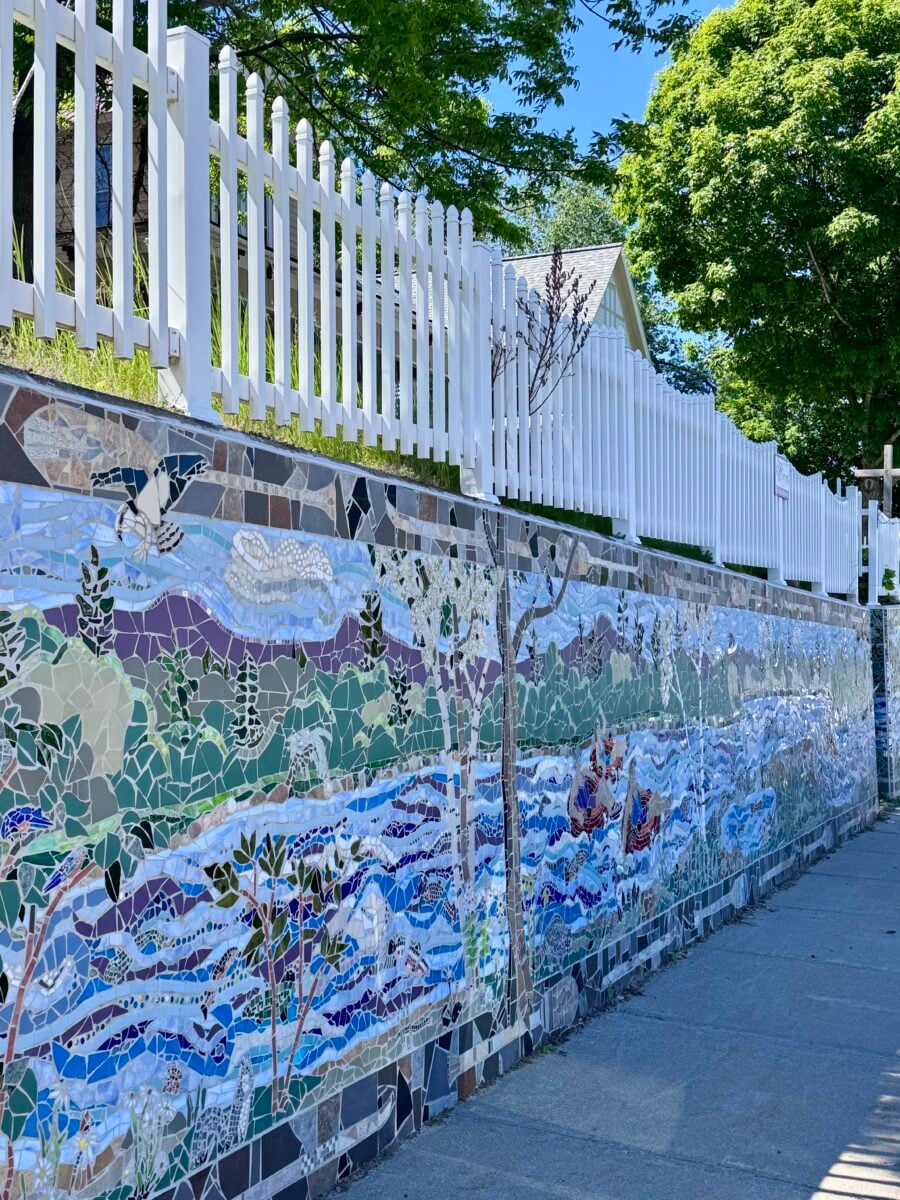
At first, I expected it to be a quick photo stop. Instead, I spent far more time walking along the wall and examining the details. Every section seemed to tell a different story. The craftsmanship was remarkable, and it captured the character of the Adirondacks better than many museums manage to do.
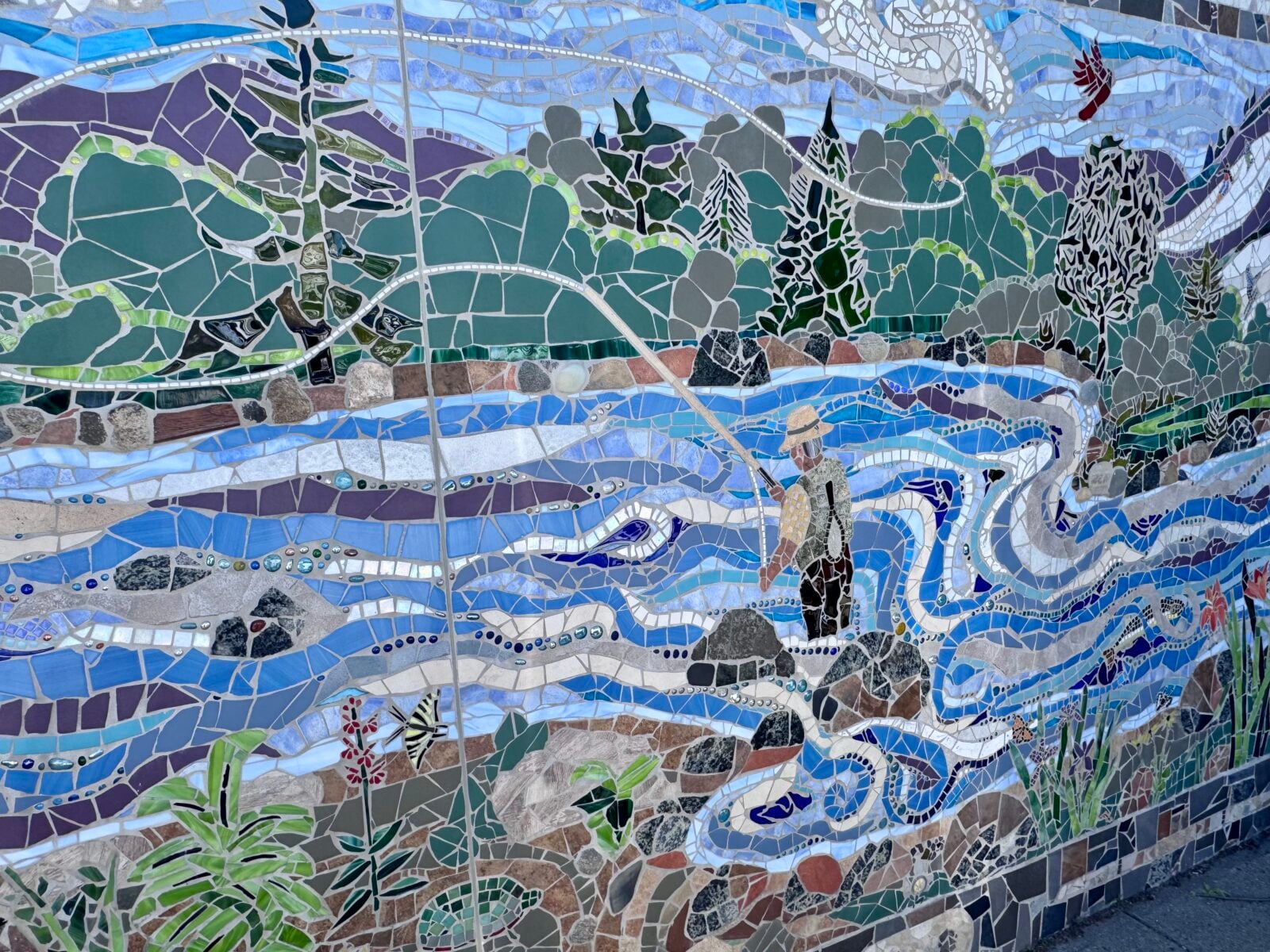
For anyone traveling through the area, it’s well worth taking a few minutes to stop and explore.
From North Creek, it was only a short drive to Newcomb Campground, which became my next base camp.
Unlike some of the more remote locations I had visited earlier in the trip, Newcomb Campground offered water and electric hookups, as well as a comfortable place to spend a few days while exploring the central Adirondacks. The campground was quiet, well-maintained, and ideally located for day trips throughout the region. The owners were very friendly and provided a wealth of knowledge about the local area.
One of those day trips took me to The Wild Center in Tupper Lake It was only about an hour drive.
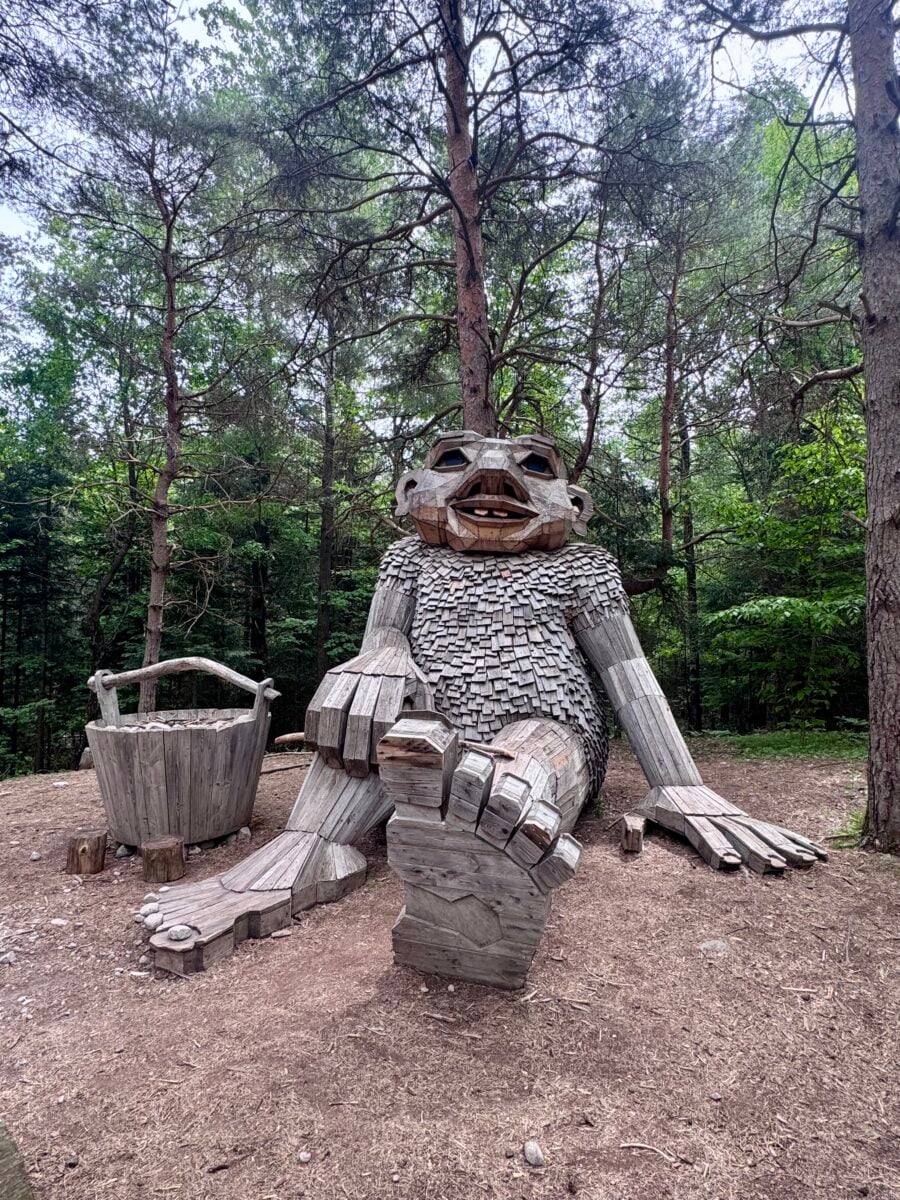
The main attraction this year is artist Thomas Dambo’s Trolls exhibit, a temporary installation running from June 1 – October 31. Six giant trolls constructed entirely from recycled materials are hidden throughout the property, turning a visit into a giant scavenger hunt.
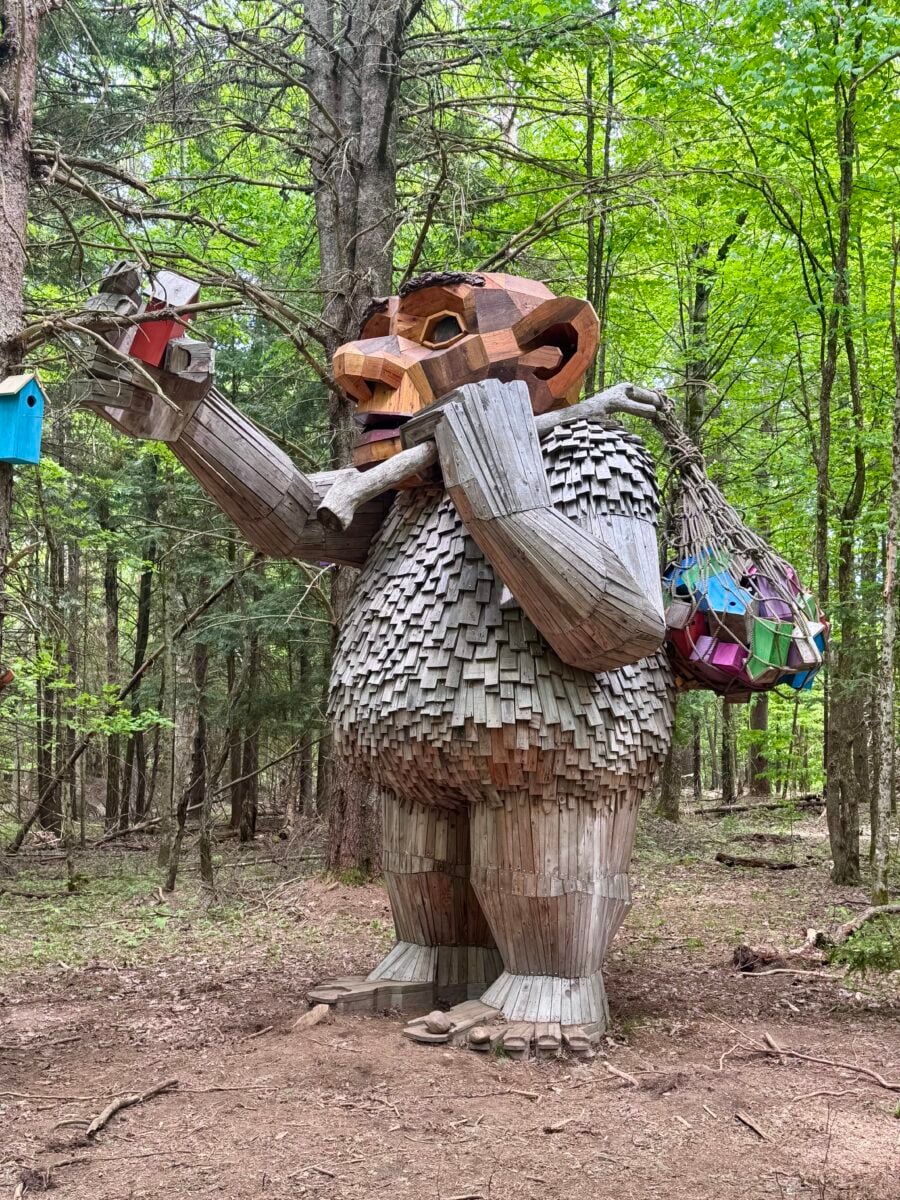
The trolls themselves were impressive. Each one has its own personality and setting, blending naturally into the surrounding forest. Built from reclaimed wood and other recycled materials, they stand nearly twenty feet tall and look as though they belong in the Adirondack woods.
What surprised me, however, was how much there was to see beyond the trolls.
The Wild Center itself is one of the most impressive attractions in the Adirondacks. The centerpiece is the Wild Walk, an elevated trail system that takes visitors high into the forest canopy. Rope bridges, giant nests, observation platforms, and a massive spider web suspended high above the ground provide unique perspectives of the surrounding landscape.
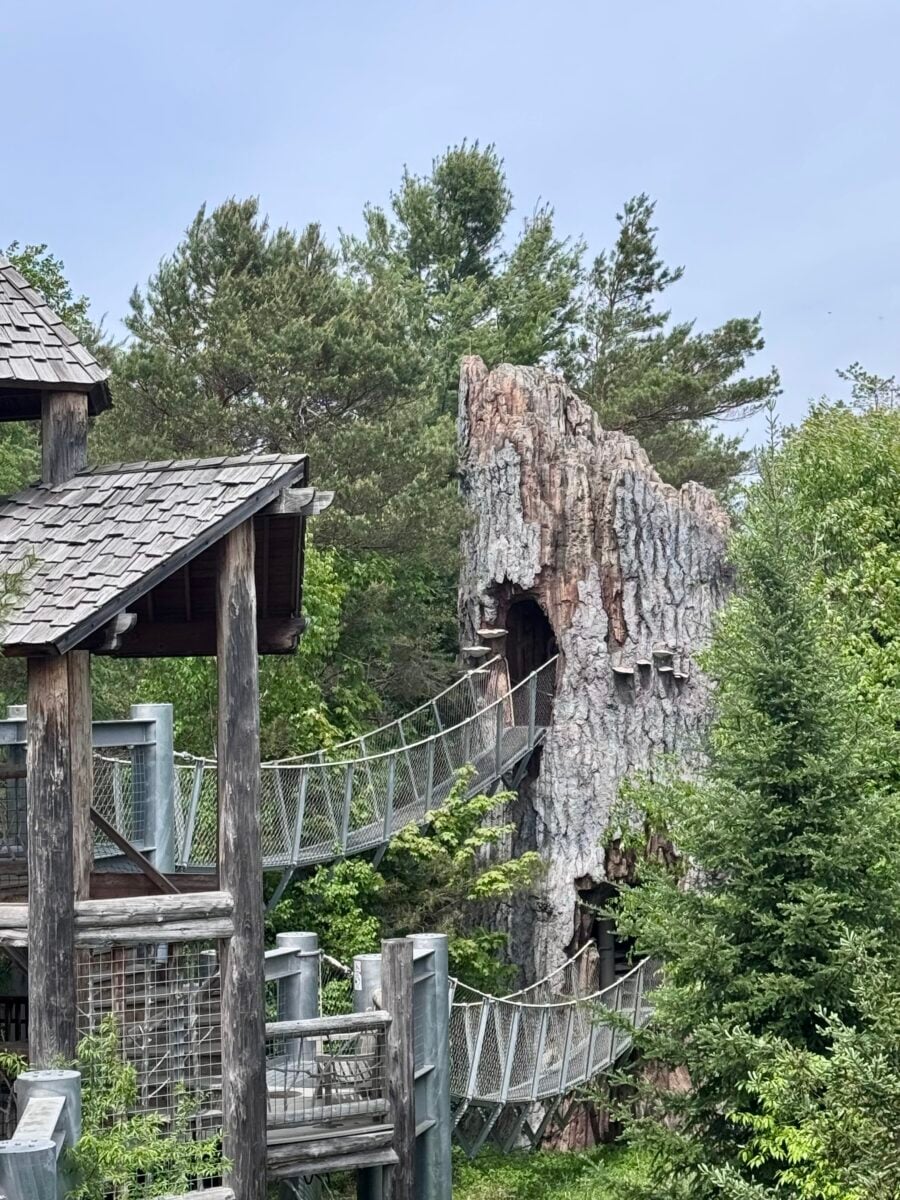
The giant bird nest quickly became one of my favorite viewpoints. From there, visitors can look out across the forest while standing inside a structure large enough to hold an entire family.
The center also features live animal exhibits, educational displays, and a fascinating section called the music forest. As visitors walk through the trees, music blends with the natural surroundings while colorful birdhouses hang throughout the woods. It was unlike anything I had experienced before and fit perfectly with the creative atmosphere of the Trolls exhibit.
The Wild Center turned out to be one of those places that exceeded expectations. I originally planned to spend a few hours there and ended up staying most of the day.
Another day trip from Newcomb took me in a completely different direction.
Most people associate the Hudson River with New York City, but few think about where it begins. The headwaters of the Hudson are hidden deep within the Adirondacks, and I wanted to see them for myself. The drive passes through a fascinating landscape shaped by both nature and industry. Along the route are remnants of the region’s mining history, including abandoned equipment and a massive stone iron furnace that still stands as a reminder of the area’s industrial past.
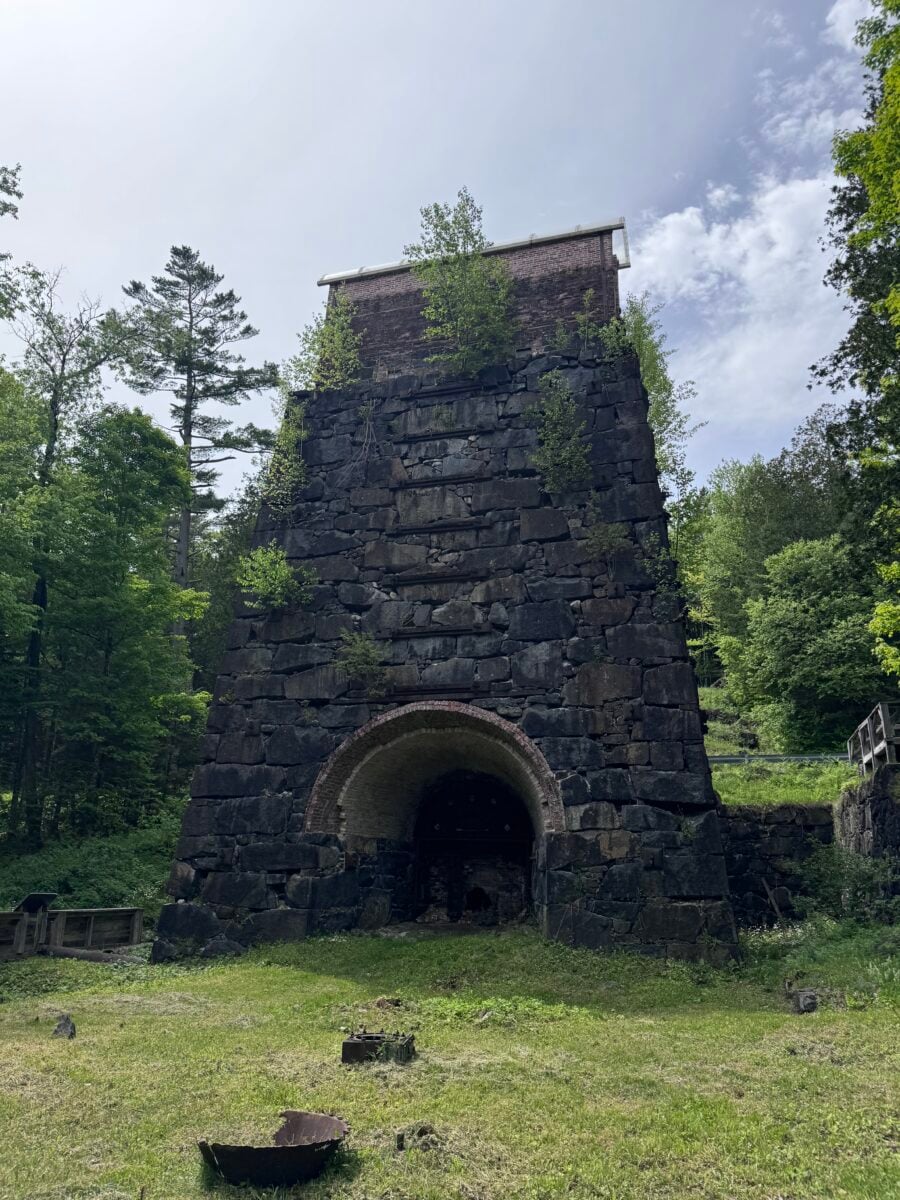
The farther I traveled, the more remote the landscape became. Eventually, the road narrowed and the forest closed in around it. Along the way, I found several potential boondocking sites tucked beside rivers and forest roads. Some were little more than small clearings, while others offered enough room for several campers.
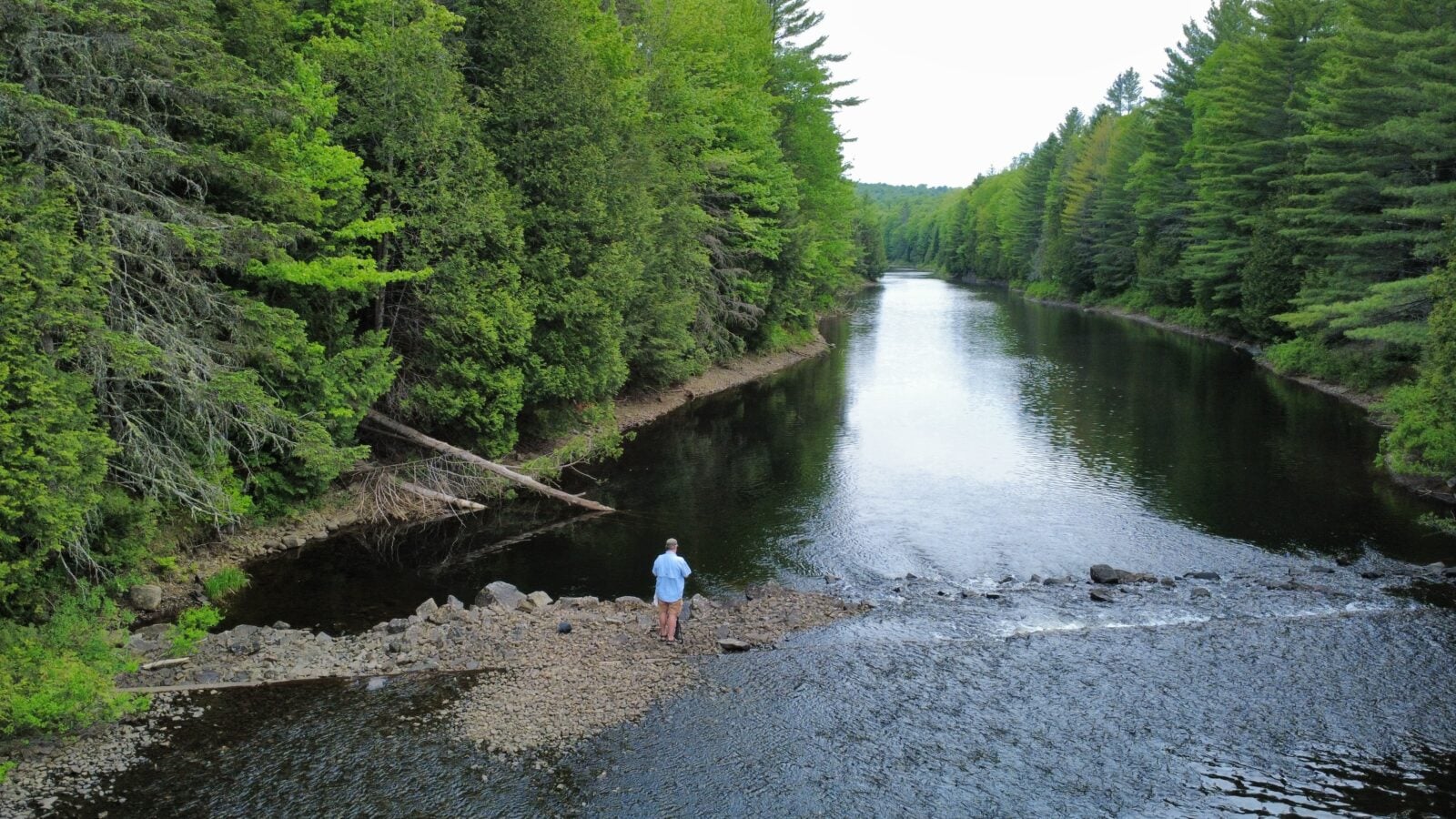
The Hudson itself looked nothing like the broad river most people picture. Here, it was a wilderness river winding through forests and wetlands.
I spent part of the afternoon fishing near the headwaters and exploring the surrounding area. The fish once again managed to avoid becoming part of my photo collection, but the scenery more than made up for it. One of my favorite photographs from the Adirondacks came from this stop and will definitely be included in my final gallery from the trip.
Eventually, it was time to continue west. My final Adirondack stop was Limekiln Lake Campground.
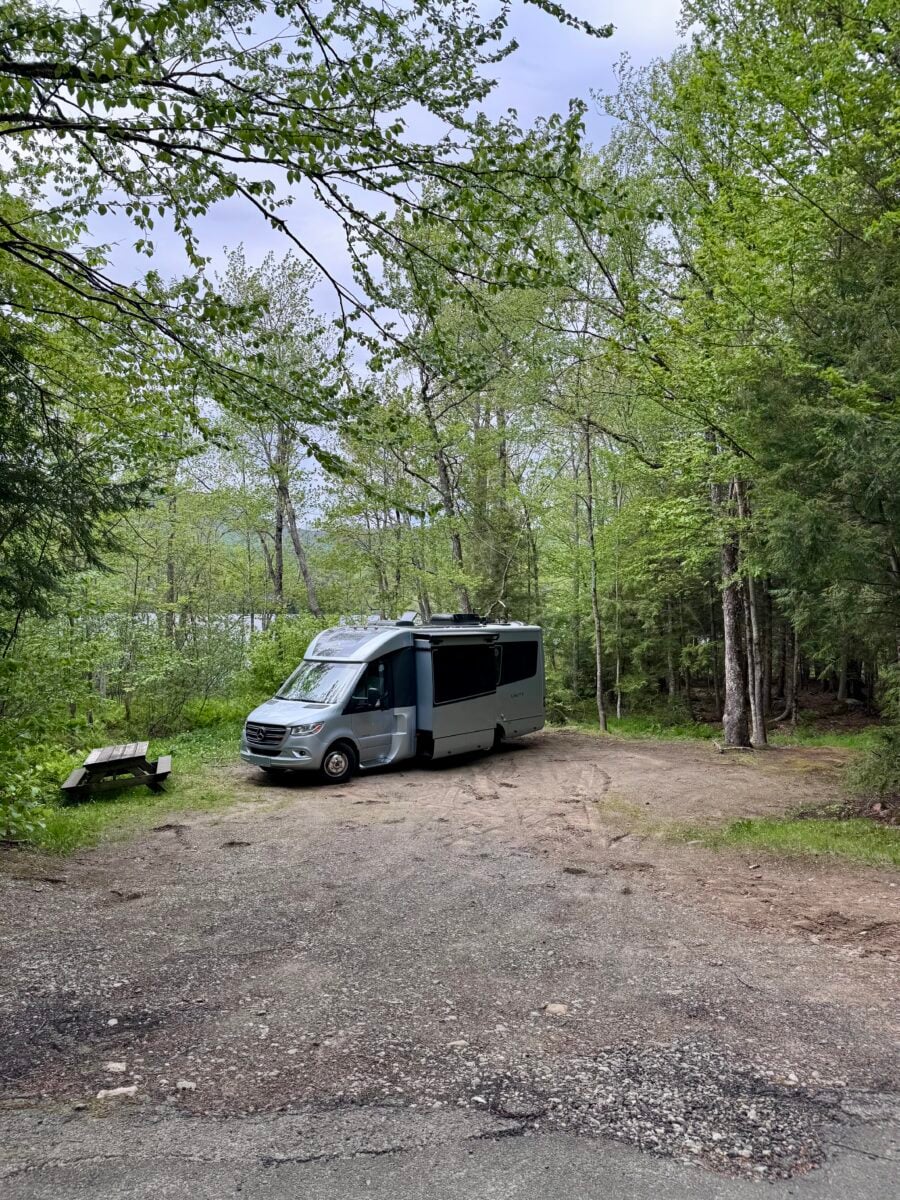
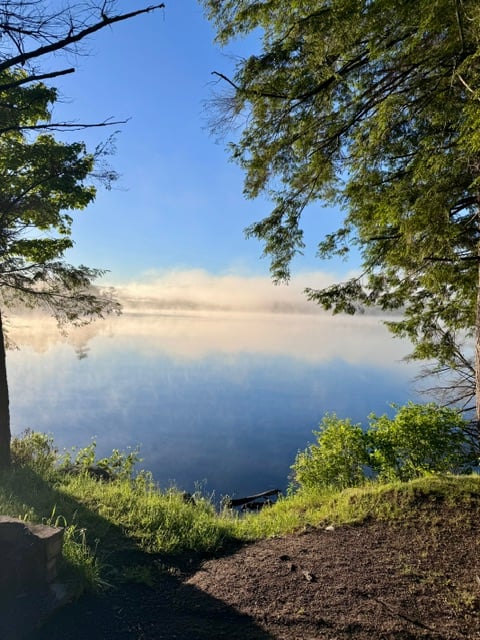
I spent three days camped directly on the water with a view across the lake from my campsite. The first day brought rain, but afterward the weather turned cool and pleasant. Steady breezes moved across the water and kept the black flies at bay most of the time, making it one of the most comfortable stretches of camping on the trip.
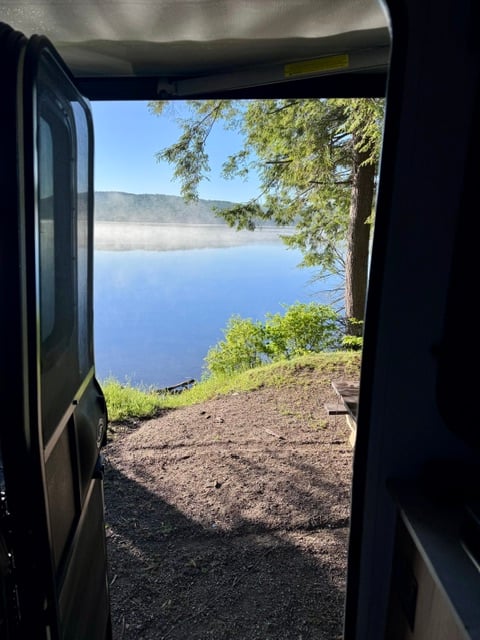
The campground reminded me a little of Squam Lake in New Hampshire. The lake is surrounded by forests and hills; development is minimal, and the atmosphere feels peaceful and remote despite its relative accessibility. From my campsite, I could watch the lake throughout the day while working, cooking, or simply relaxing outside.
Kona wasted no time making herself at home. By this point in the trip, she had managed to swim at every lake where we camped, and Limekiln was no exception.
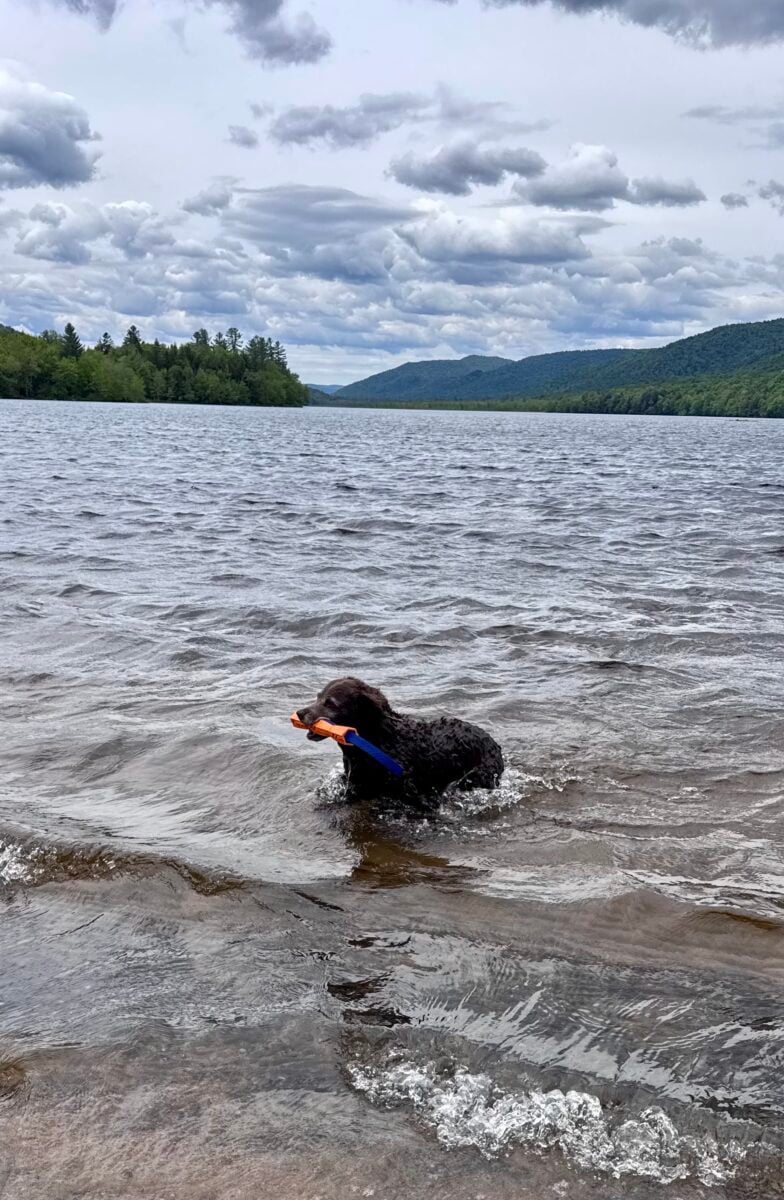
The highlight of the campground came after dark. As evening settled over the lake, loons began calling across the water. Their haunting calls echoed through the surrounding forest and continued into the early morning hours. It had been quite a while since I had spent several days listening to loons on a regular basis, and it quickly became one of my favorite parts of the stay.
The cooler temperatures also made outdoor activities much more enjoyable. After battling black flies through much of the Adirondacks, it was nice to finally have conditions where sitting outside wasn’t a constant battle against insects.
Looking back over the Adirondack portion of the trip, what stands out most is the variety. Within a relatively short distance, I experienced river campgrounds, waterfront lake campsites, remote boondocking locations, mountain towns, public art projects, giant trolls hidden in the woods, and the headwaters of one of America’s most famous rivers.
The combination of public lands, extensive camping opportunities, fishing access, paddling routes, and small-town attractions makes the Adirondacks one of the best destinations in the Northeast for outdoor travelers.
From Limekiln, the route turns west toward Niagara Falls, the Great Lakes shoreline, Cuyahoga Valley National Park, and Indiana Dunes National Park. Beyond those stops lies the final destination for this leg of the journey: Michigan’s Upper Peninsula.
The Adirondacks set a high bar for what comes next.

Comments