


Editor’s Note: This post is written by a member of LTV’s sponsored content team, The Leisure Explorers. Do you own a Leisure Travel Van and enjoy writing? Learn more about joining the team.
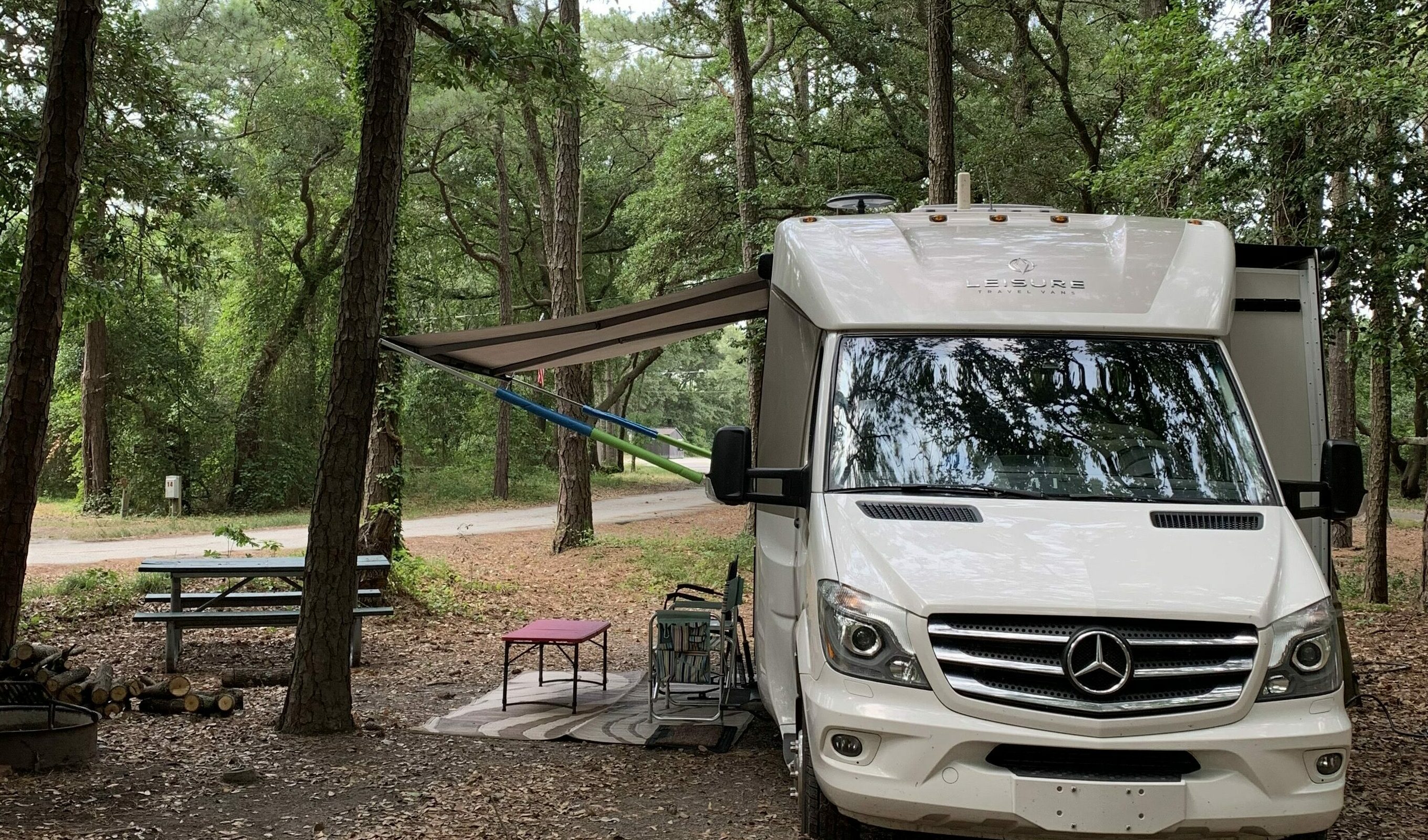
Our first campsite in Virginia was at Joint Expeditionary Base – Fort Story, near Virginia Beach and on the Chesapeake Bay. Fort Story is the location of the landing of the colonists who started the first permanent English colony at nearby Jamestown. Virginia was our 29th state to visit in our 2018 Unity FX. After nine years and over 130,000 miles of travel in our Leisure Travel Van, we couldn’t be happier with its performance and durability. We are looking forward to the next 130,000 miles of adventures.
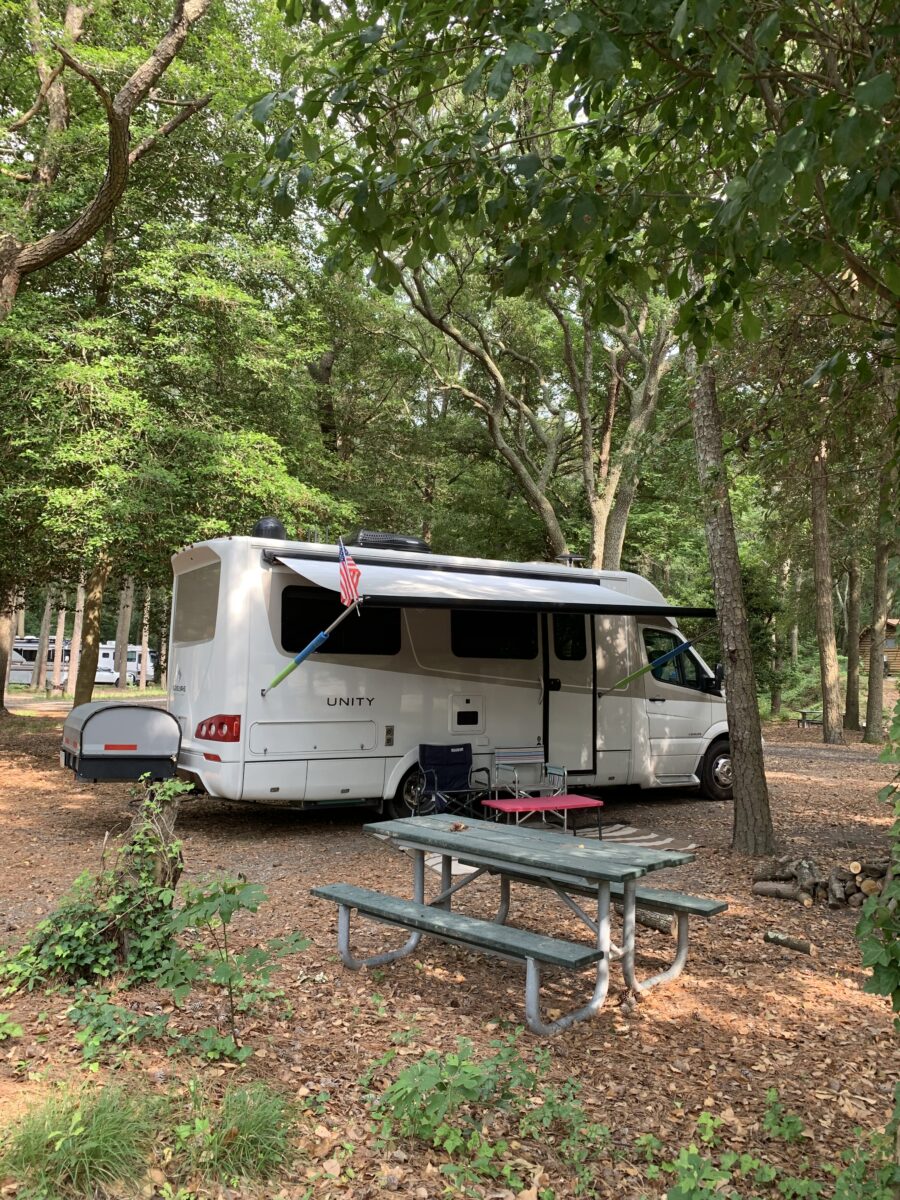
We make a point to camp at military facilities whenever possible. The price is always lower than at civilian campgrounds with the same amenities, and sometimes even more. Often, the campsites are farther apart than at privately owned parks. Security is also top of the line, and we have access to the base exchange and commissary. The local wildlife is usually in abundance as well.
There is so much to see here in Virginia, so much history, and so little time to do it. Come along as we explore some of the beginnings of America.
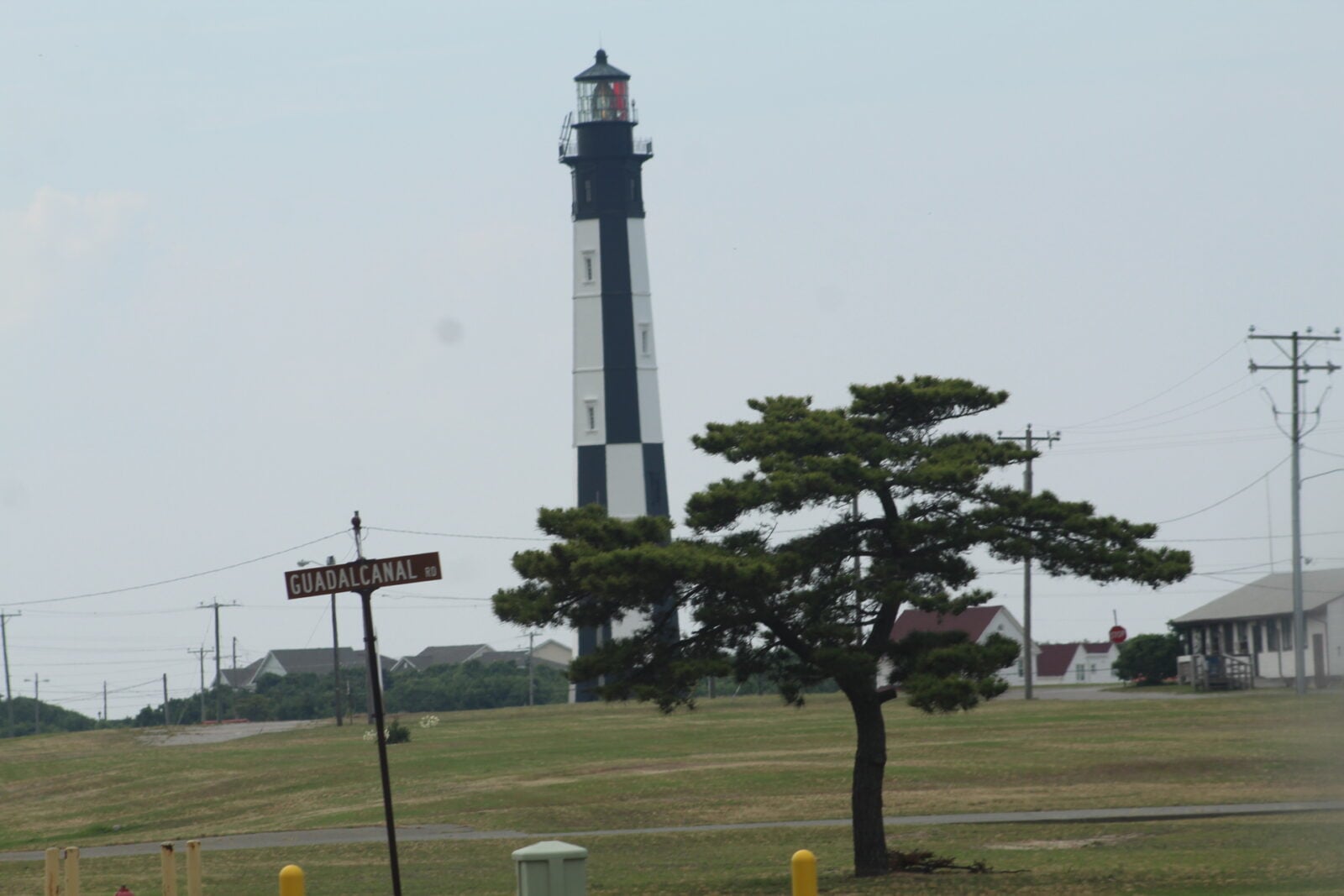
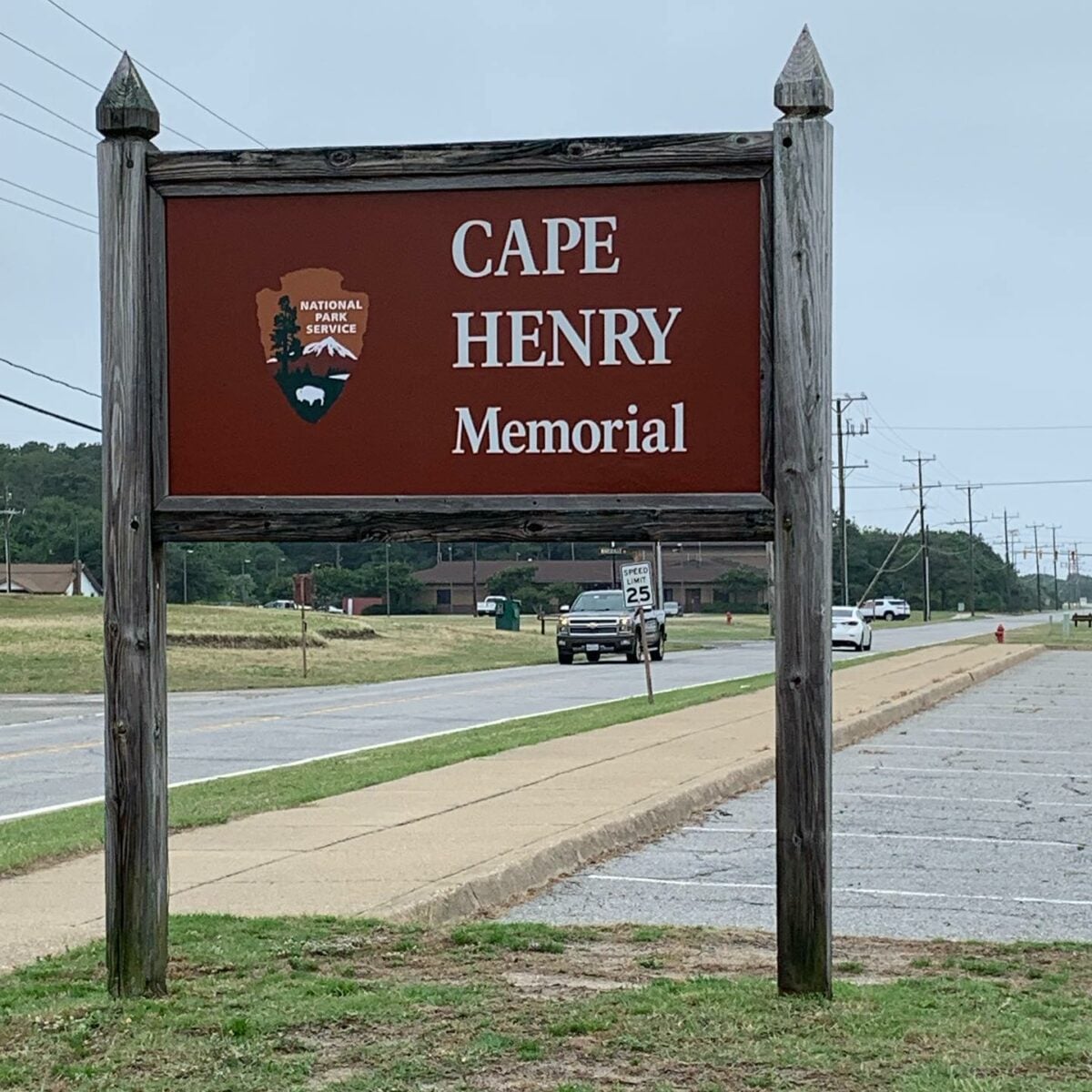
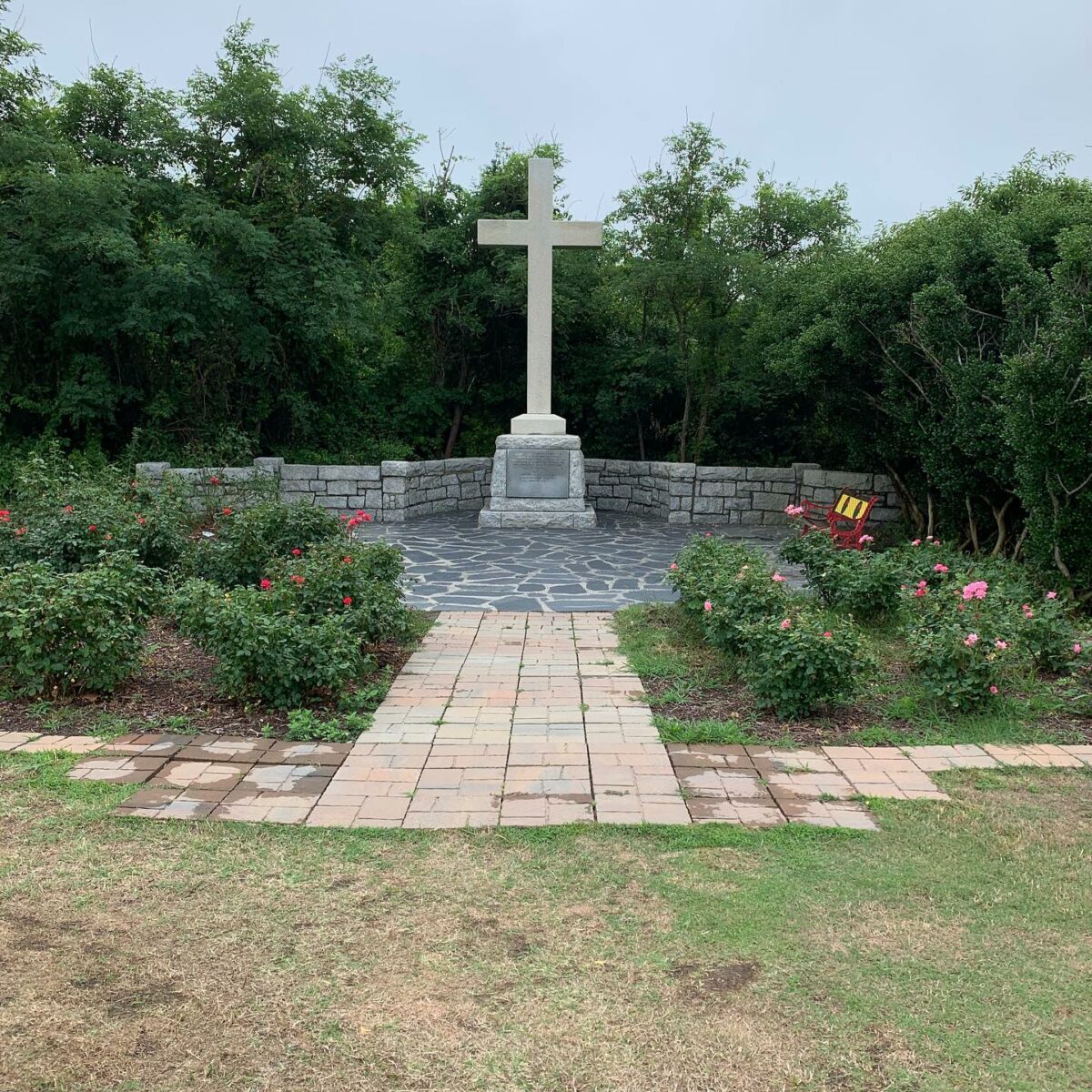
At Fort Story, there are several lighthouses. Located just outside the fort and accessible to the public is the Cape Henry Memorial. It’s completely free and plenty of room to park your LTV. The memorial commemorates the place where English colonists landed after their journey from England on April 26, 1607.
Also at Cape Henry (named after one of the two sons of King James I), the French, led by Francois Joseph Paul De Grasse, successfully prevented the English Navy from reinforcing General Cornwallis during the American Revolutionary War. This naval battle was instrumental in the outcome of the war.
The first thing the colonists did when landing at Cape Henry was to erect a cross on the shoreline and proclaim a covenant with the Lord God Almighty, dedicating the land and themselves to His service and to spread the Gospel message not only here but throughout the world. Here’s a quote of the actual dedication/declaration made by Robert Hunt (the leader of the colonists) on April 29, 1607, while standing on the shores of Cape Henry:
“We do hereby dedicate this land, and ourselves, to reach the People within these shores with the Gospel of Jesus Christ, and to raise up Godly generations after us, and with these generations take the Kingdom of God to all the earth. May this Covenant of Dedication remain to all generations, as long as this earth remains and may this land, along with England, be evangelists to the world. May all who see this cross remember what we have done here, and may those who come here to inhabit join us in this Covenant and noble work that the Holy Scriptures may be fulfilled. From these very shores the Gospel shall go forth, not only to this new world, but the entire world. Psalm 22:27-28 All the ends of the world shall remember and return to the Lord. And all the kindreds of the nations shall worship before Thee. For the Kingdom is the Lord’s and He rules among the nations.” (KJV)
On the morning of September 8, 1781, a line of 19 British warships appeared off the coast of Cape Henry on the Chesapeake Bay. Surprised by the sudden appearance of the British warships, 24 French warships currently anchored in the bay scrambled out to challenge the British in the early morning. Both sailed southward in parallel lines of battle.
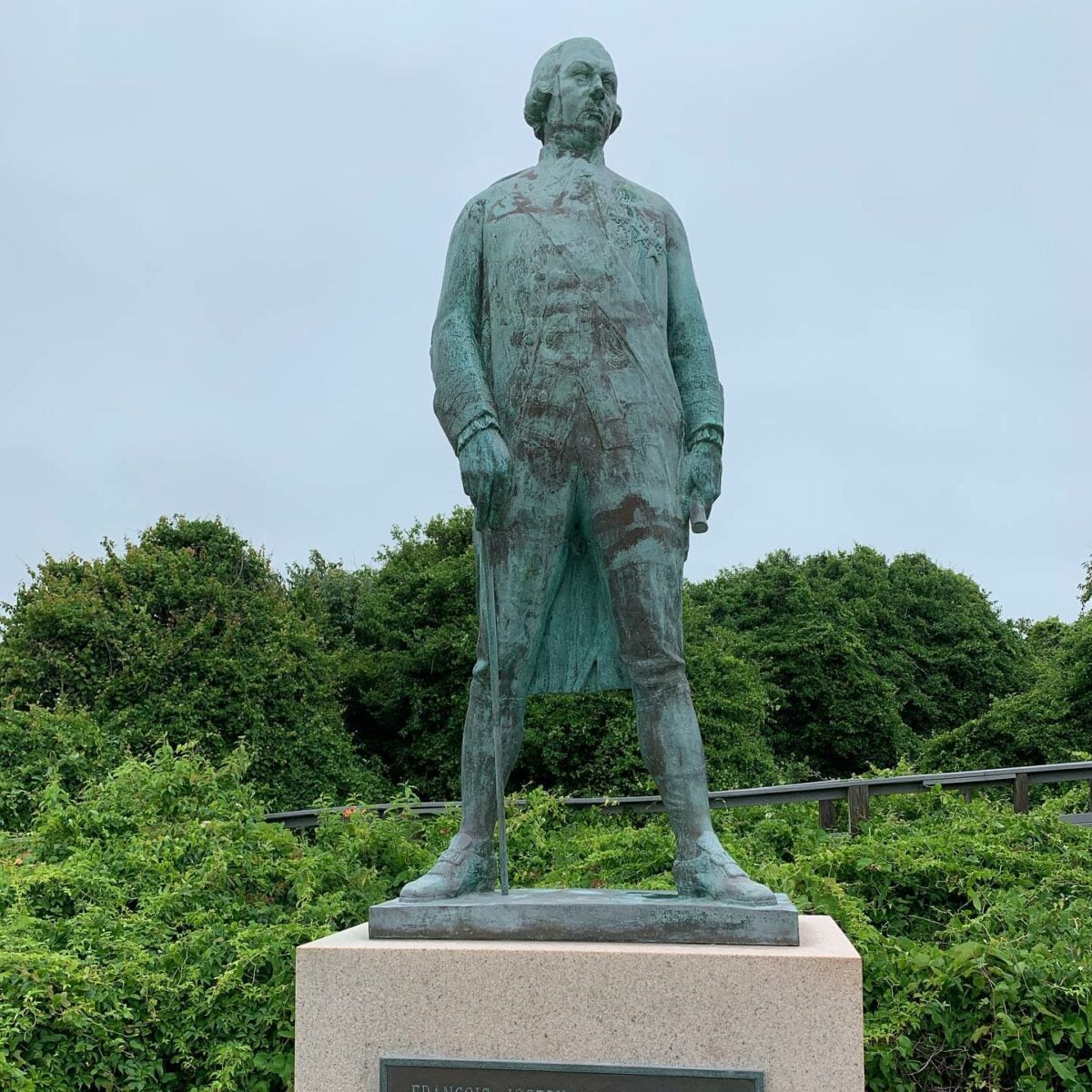
The two naval fleets continued to battle each other until nightfall. When the cannons finally fell silent and the smoke cleared, the French had prevailed and kept the British from resupplying and reinforcing General Cornwallis, which ultimately contributed to the British defeat and the United States’ victory in the War for Independence. There is a statue of the French commander, François Joseph Paul De Grasse, commemorating this naval victory over the British here at Fort Story.
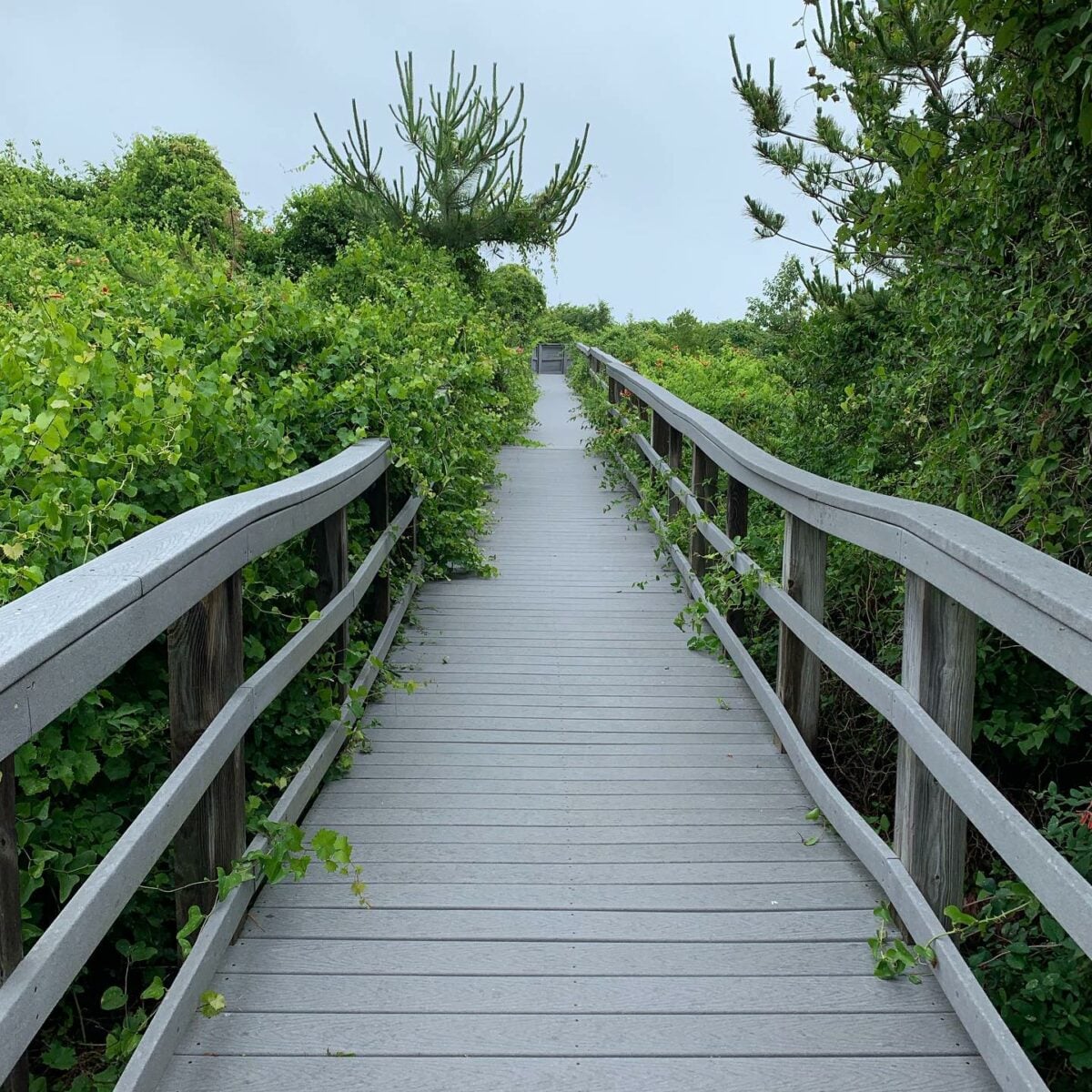
From the memorial, a boardwalk leads down to the shoreline of Chesapeake Bay. Cape Henry and Cape Charles (the two sons of King James I) are 17 miles apart in the Chesapeake Bay. Cape Charles in the north and Cape Henry in the south. The waterway provides access to the important ports of Baltimore and Hampton Roads. Over the years, the bay has required many forms of defense. The first defense was Fort Jamestown, constructed by the English in 1607. In the years that followed, many other fortifications were built, such as Point Comfort, Fort Nelson, and, in 1823, Fort Monroe.
Following the Civil War, the defenses of the Chesapeake Bay were nonexistent until the 1880’s, when more modern artillery was installed at Fort Monroe. During World War I, defenses expanded, and small-caliber guns were also placed at Cape Henry and Cape Charles. During World War II, larger artillery pieces were deployed, and an underwater minefield was deployed in the Chesapeake Bay. In 1942, a German submarine challenged these defenses and failed.
The information in this post comes from the Cape Henry Memorial, located on plaques and statues. We enjoyed our visit to Fort Story, and the discovery of the Cape Henry Memorial was completely by accident and quite a surprise. We will continue our exploration of Virginia Beach next time, as we will be visiting Fort Monroe, also located in the area of Virginia Beach on Chesapeake Bay, Virginia.
Safe travel, my friends, and we will see on the road.


Comments