


Editor’s Note: This post is written by a member of LTV’s sponsored content team, The Leisure Explorers. Do you own a Leisure Travel Van and enjoy writing? Learn more about joining the team.
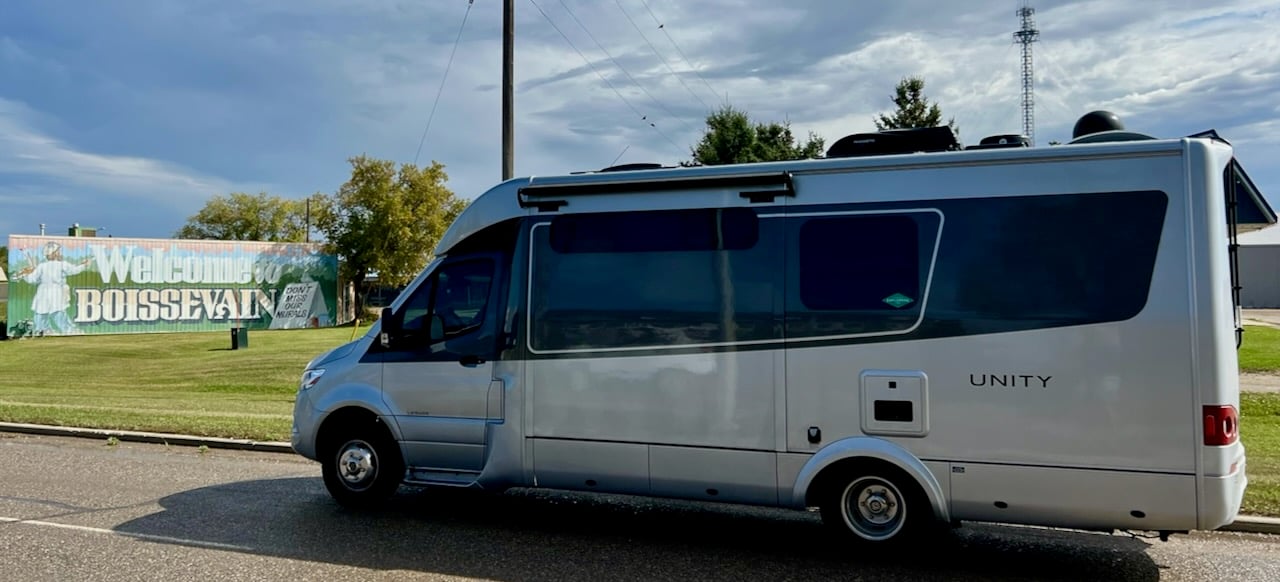
Driving through the heart of the Canadian prairies, you might expect endless grain fields punctuated by the occasional grain elevator. But in Boissevain, Manitoba, a town of just over 1,500 people sitting 20 kilometers north of the North Dakota border and the International Peace Garden, something remarkable awaits visitors along the main streets. Here, the walls tell stories.
The Murals at Boissevain
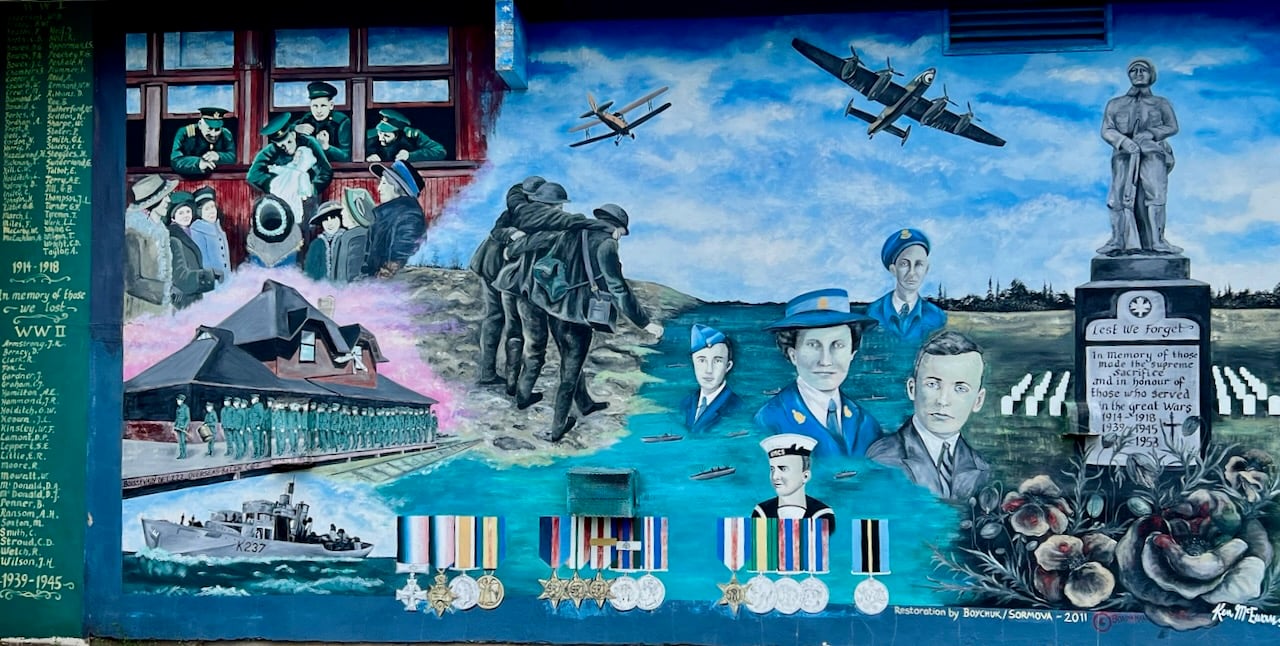
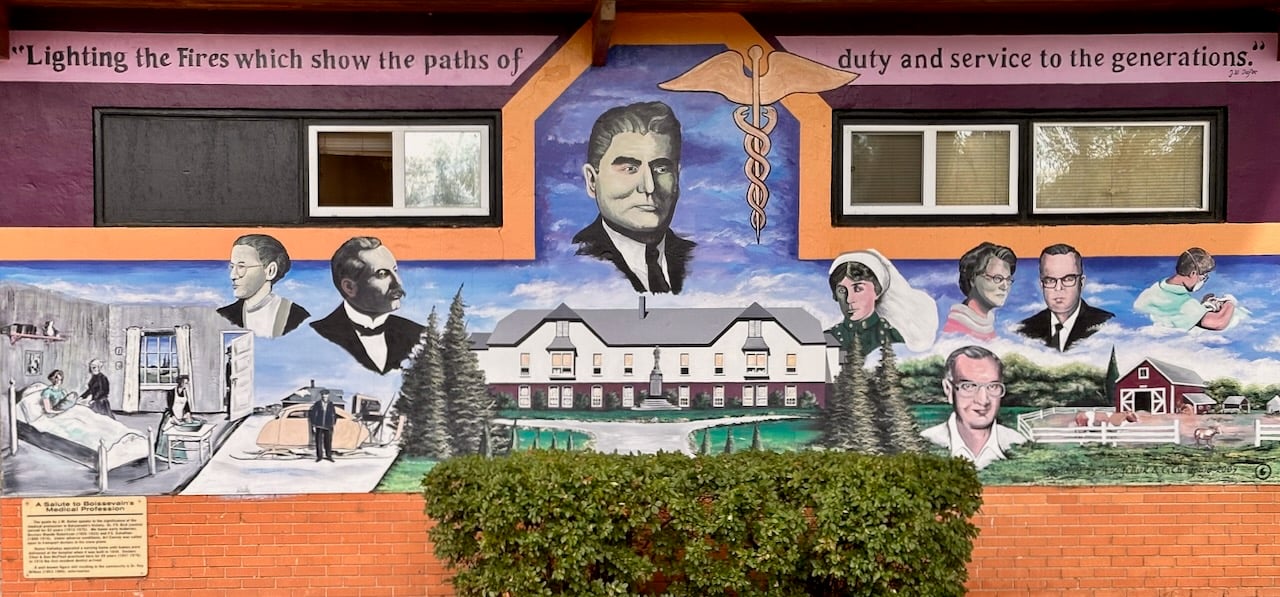
Nearly twenty professionally painted murals transform ordinary building walls into an outdoor art gallery that tells the community’s history in living color. These aren’t small decorative pieces—many stretch 60 feet wide and 12 feet high, commanding attention from anyone driving through town.
The murals at Boissevain are a Manitoba Star Attraction, drawing visitors from across Canada and the United States. The story of Boissevain’s murals begins not with a grand municipal plan, but with community passion and individual initiative.
Eddie Clark, who was on the Boissevain-Morton Arts Council in 1989, brought in funds to start the murals. This grassroots beginning reflects the town’s character, where residents roll up their sleeves to make art happen rather than waiting for someone else to take charge.
The Green Meadows Farm Mural
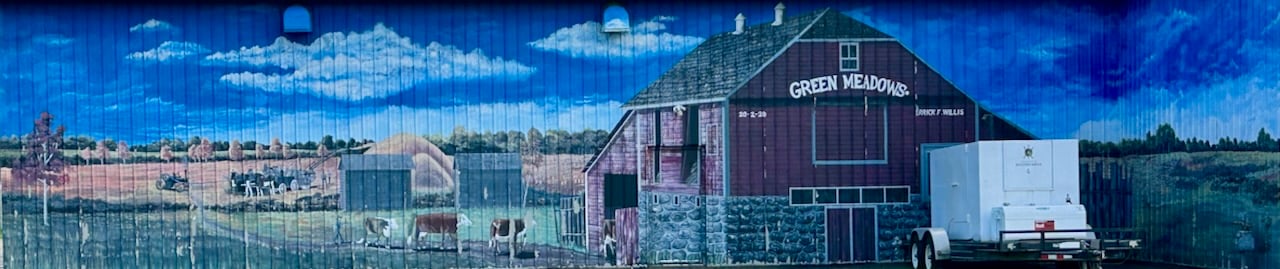
The first murals appeared in the early 1990s, with artists like Hubert Theroux creating the earliest pieces. The Green Meadows Farm mural by Theroux in 1992 at the Boissevain-Morton Fire Hall, depicting the farm known locally as the home of Manitoba’s former Lieutenant Governor Errick F. Willis. This 69-foot-wide mural set up the pattern that would define Boissevain’s outdoor gallery: each piece would tell a specific story about the town’s past while adding visual appeal to local businesses.
The Red Coats Mural
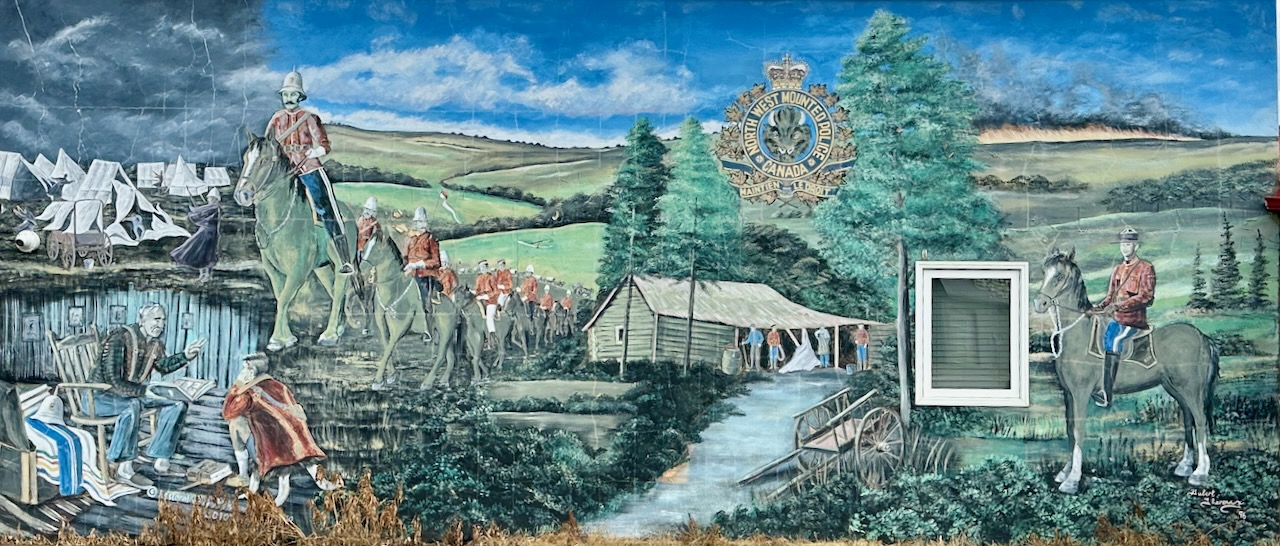
What makes these murals special isn’t just their size or artistic quality, but the deeply personal stories they preserve. The Red Coats mural painted by Theroux in 1996 shows 10-year-old Dominick French seated at his grandfather’s feet, listening to the adventures of his great-grandfather, Commissioner George Arthur French, who led the North-West Mounted Police. The remarkable part? Dominick French was present at the mural’s unveiling as an RCMP officer inspired by those childhood stories, and he appears in the mural alongside his father and grandfather.
The Morton Sawmill Mural
The murals at Boissevain capture moments that might fade from memory. Morton Sawmill, painted by Gus Froese in 1994, preserves the story of George Morton, an entrepreneur who bought a sawmill in 1883 and planned a large-scale dairy farm and cheese factory. The town was named after him in 1890, and he presided at the first election. Visitors might never know the town’s name honors Morton’s vision without this mural.
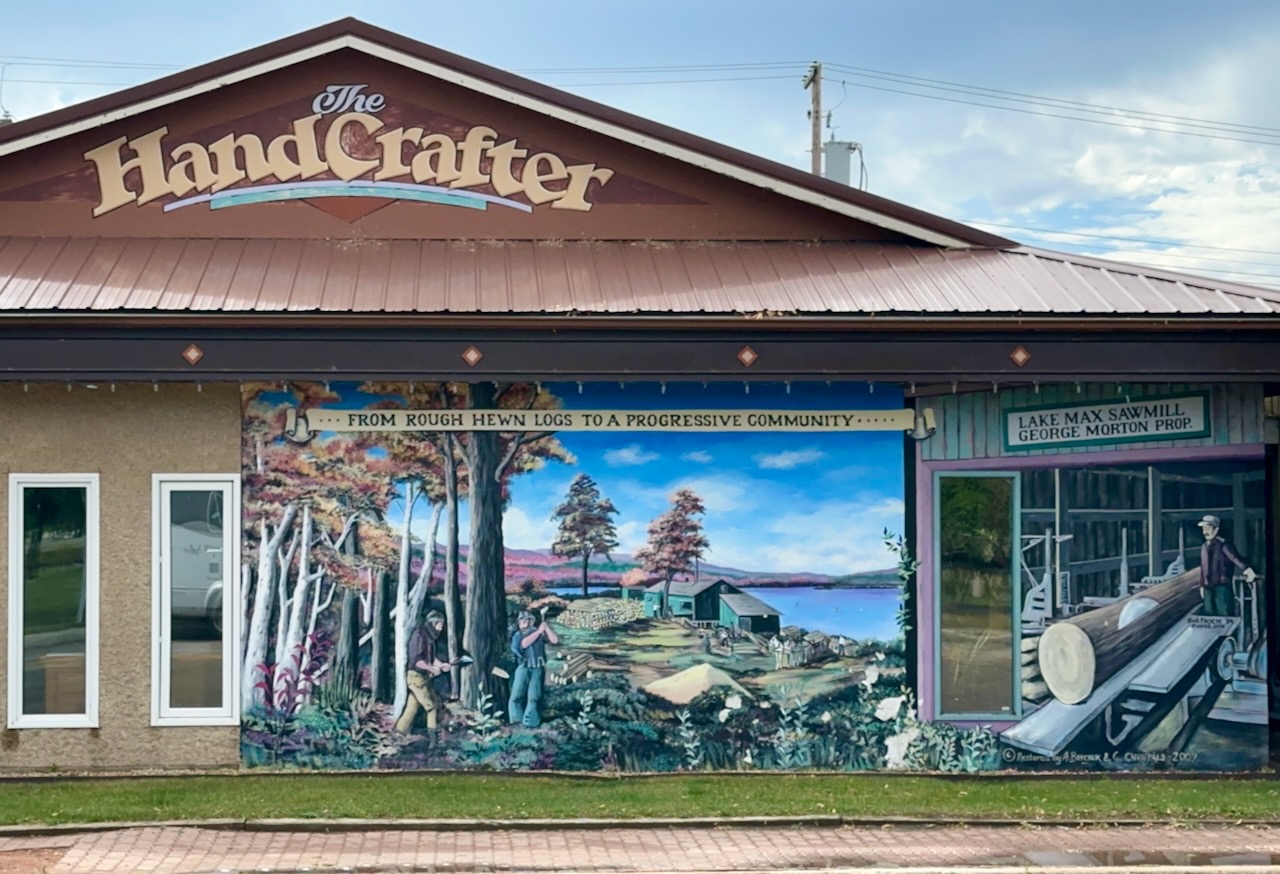
Some murals document everyday life that defined prairie communities. Pioneer Kitchen by Carol Ramsay describes “the heart of the home,” where families gathered around a lamplight for the evening. General Store depicts the George King General Store around 1922, as a tribute to all general stores, which were the center of each rural community. These scenes help visitors understand how life functioned in small towns before a more modern era.
The mural program has changed with the community’s needs and artistic possibilities. More recent additions include These Roots Run Deep, created in 2019 by a traveling artist team. This mural highlights the connection to the land, depicting local plants like prairie crocus, wild rose, echinacea, alfalfa, caragana, trees, a silhouette of Turtle Mountain, and the many area lakes. The design drew inspiration from the heritage homes in Boissevain and a song called I’ll Bend but I Won’t Break by Red Moon Road.

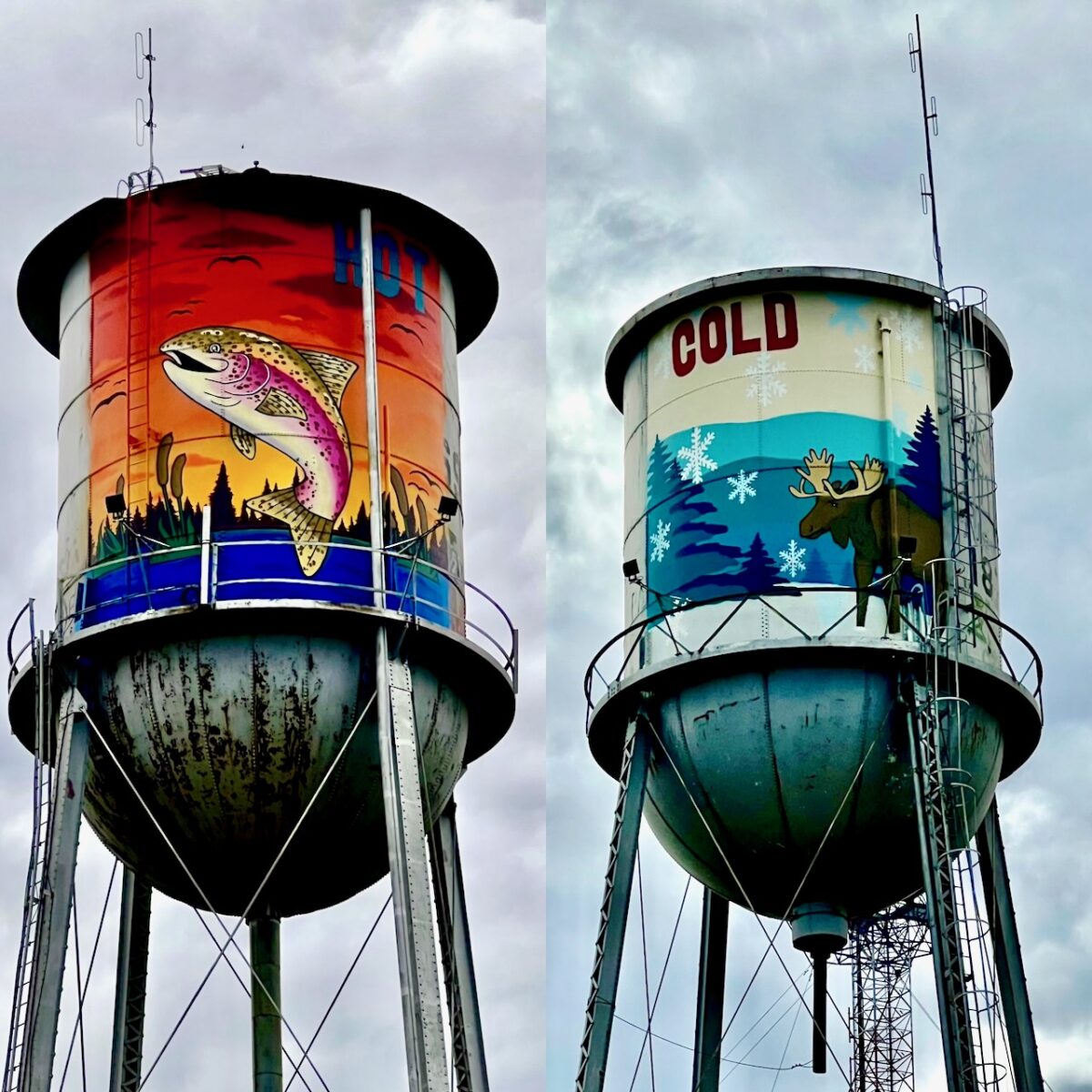
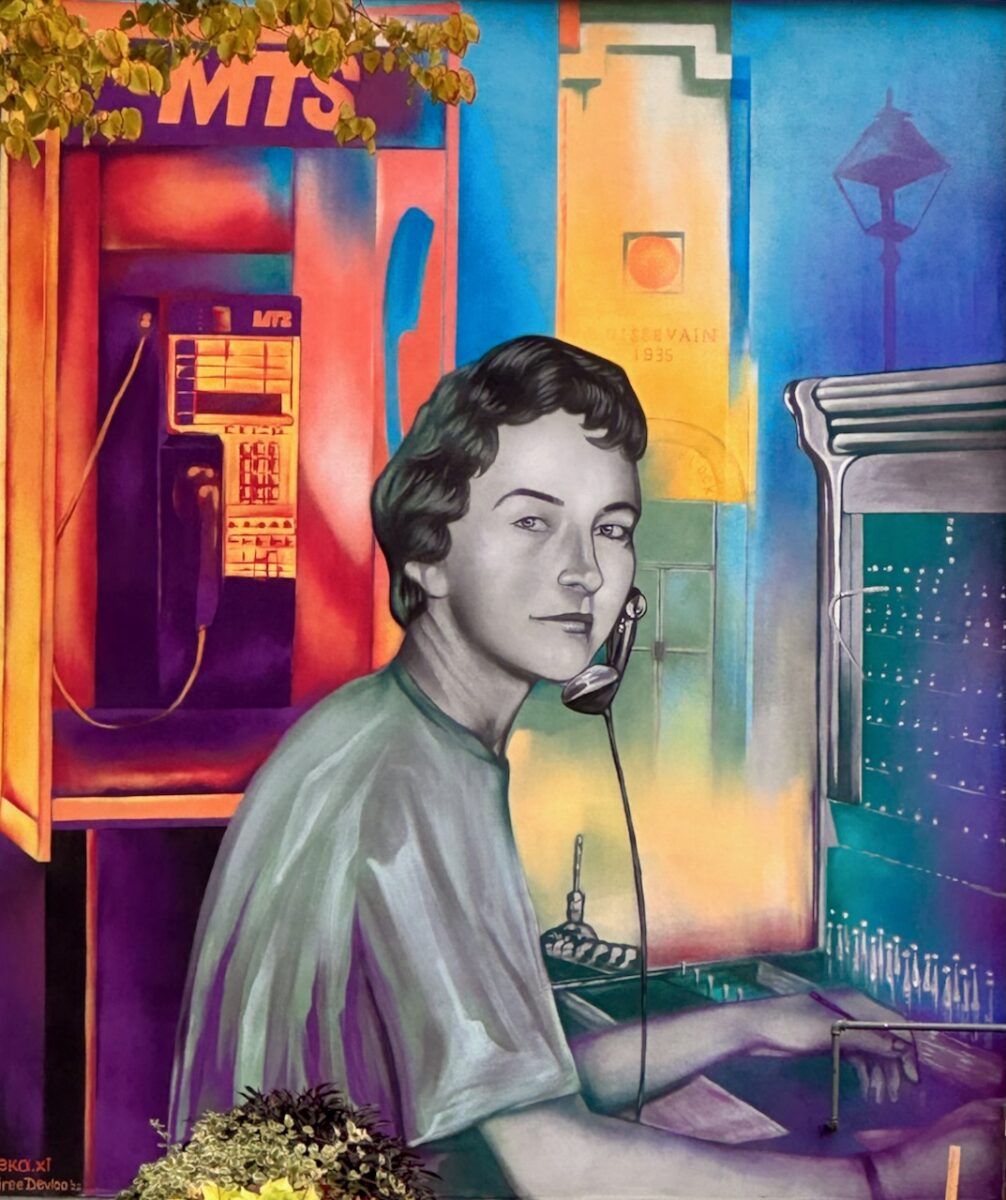
The town continues commissioning new murals, with recent additions including paintings on the water towers featuring winter and summer themes. Kent Ness from Saskatoon created murals on the water towers with neat graphic animals and local features. At the same time, other recent projects include a mural on the historical telegraph building and one dedicated to the Queen of England to celebrate her Platinum Jubilee.
Boissevain For Travelers
The murals offer visitors an engaging way to explore Boissevain. The town offers a mural scavenger hunt, a great activity for families with kids or adults wanting to explore this hamlet. This interactive approach encourages people to walk the streets, discover local businesses, and spend time in areas they might drive past quickly.
The murals serve multiple purposes beyond tourism. They provide business owners with distinctive, attractive facades while creating a shared identity among residents. Local businesses benefit from increased foot traffic as visitors following the mural trail stop for refreshments, souvenirs, and services. Along the way, visitors stop at the Boissevain Bakeshop for doughnuts and cookies or grab lunch from the town’s breakfast and lunch café, the Sawmill.
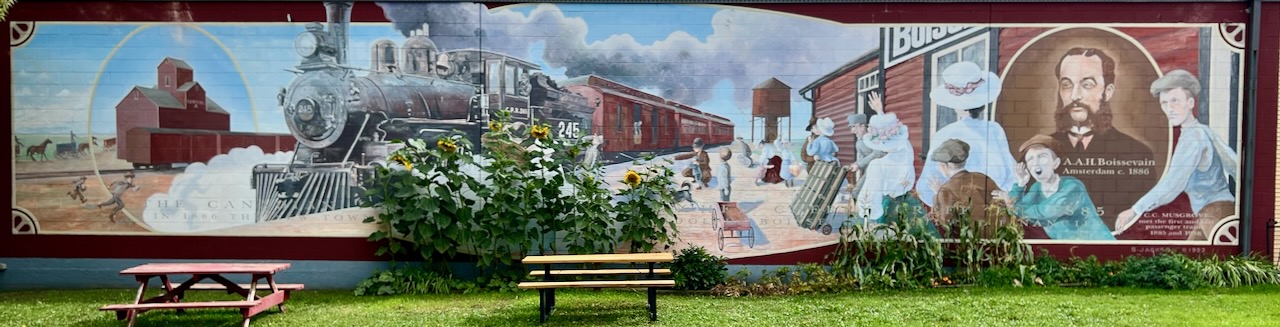
The outdoor gallery reflects broader themes in Boissevain’s character and history. The community was named after Adolphe Boissevain, who helped finance the Canadian Pacific Railway (CPR). Like many western towns, Boissevain’s wealth came with the railway when the CPR line arrived in 1885. The murals capture this railroad heritage alongside agricultural themes, pioneer life, and local personalities who shaped the community.
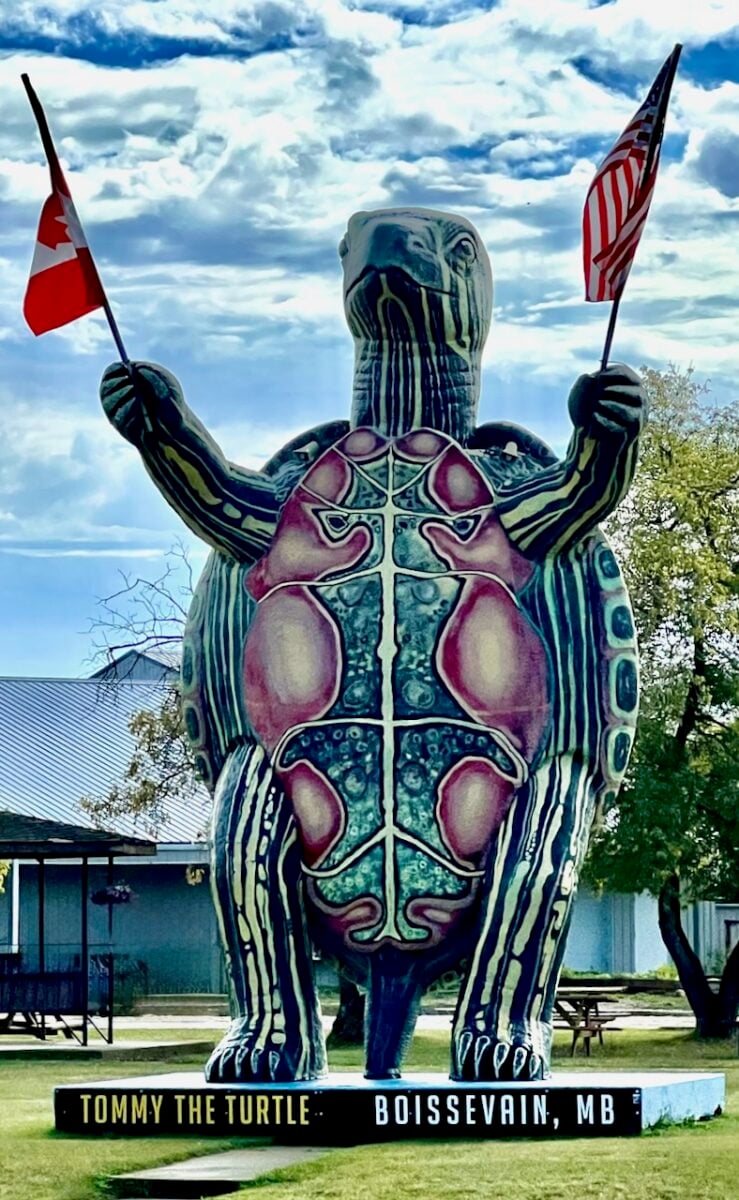
Today’s visitors find a town that balances preservation of its past with modern conveniences. Beyond the murals, visitors can explore the Arts Park, a volunteer-driven park filled with flowers and unique public art pieces, with a gazebo and picnic table at its center. The town also offers the iconic Tommy the Turtle roadside attraction, proximity to the International Peace Garden, and access to recreational opportunities at nearby Turtle Mountain Provincial Park.
What sets Boissevain apart from other prairie towns isn’t just the presence of public art, but the thoughtful way the community has used murals to preserve and share its stories. Rather than generic decorative paintings, each mural serves as a historical document that connects present-day visitors with specific people, places, and moments from the area’s past.
A Path To Winkler
Some LTV owners set out to visit the factory at Winkler with a stopover at the International Peace Garden on US Route 281 or State Route 3 in North Dakota. Boissevain is directly North of the Peace Garden, about 20 kilometers away.
A trip through the International Peace Garden portal between the United States and Canada ensures you’ll have a spot to camp while traveling between countries. You’ll also get a chance to soak up the culture of Boissevain.
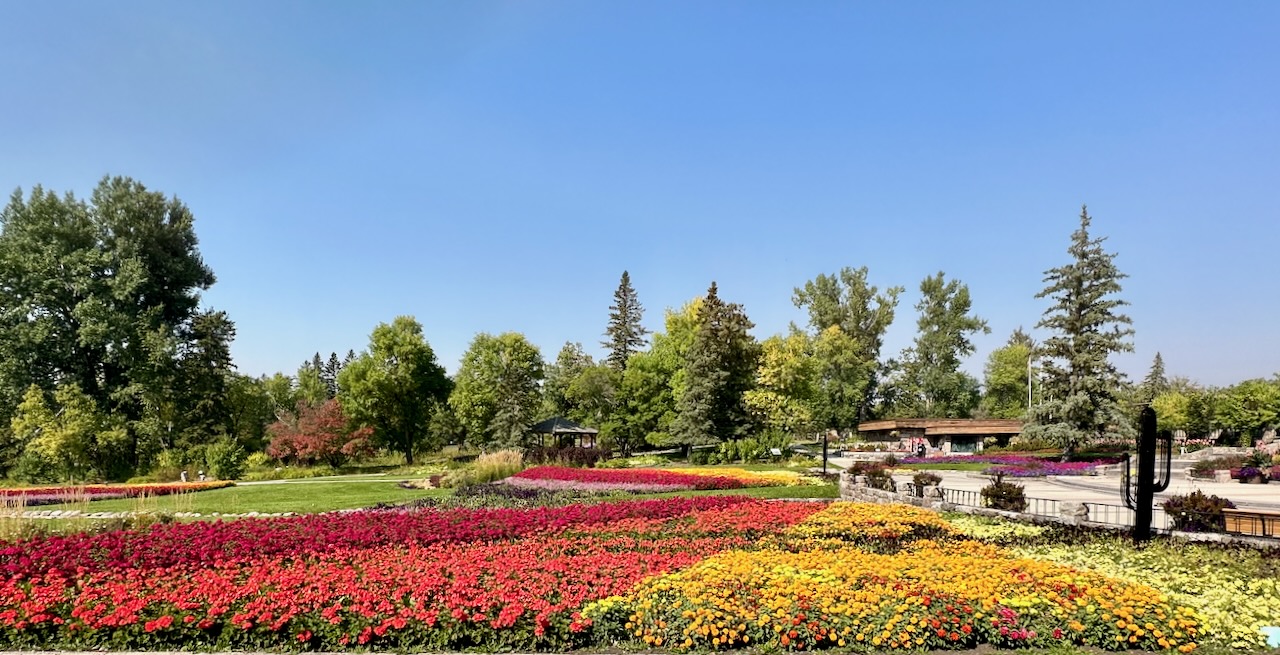
The International Peace Garden
The International Peace Garden spans 2,300 acres along the North Dakota-Manitoba border, marking the world’s longest undefended frontier between two nations. This living monument features over 150,000 flowers arranged in formal displays, including a stunning floral flag that blooms in red, white, and blue each summer.
LTV travelers will find the garden’s peaceful atmosphere offers a genuine break from highway monotony, with wide paved paths perfect for stretching legs and multiple pull-through sites nearby.
The Peace Chapel, built from stones gathered from both countries, provides a quiet reflection space. The Interpretive Center explains how this unique collaboration between the United States and Canada began in 1932.
Unlike typical roadside attractions, the garden changes dramatically with each season. Spring tulips give way to summer annuals, then autumn’s prairie grasses, making return visits worthwhile.
A Reason To Visit Manitoba
For travelers crossing the prairies, Boissevain offers a compelling reason to exit the main highway and spend time in a small town. The murals provide entertainment and education, while the surrounding community offers genuine prairie hospitality, local dining, and access to natural attractions. Whether you’re a history enthusiast, art lover, or simply someone who appreciates communities that take pride in their heritage, Boissevain’s painted walls offer stories worth discovery.
Best of all, for LTV owners, the North-South portal between North Dakota and Manitoba opens up so many possibilities for the LTV traveler. Winkler is 118 miles or a 2+ hour drive from the International Peace Garden. In one trip, you can visit three interesting but different locales— Winkler, Boissevain, and the Peace Garden—all within a short period.

Comments