


Editor’s Note: This post is written by a member of LTV’s sponsored content team, The Leisure Explorers. Do you own a Leisure Travel Van and enjoy writing? Learn more about joining the team.
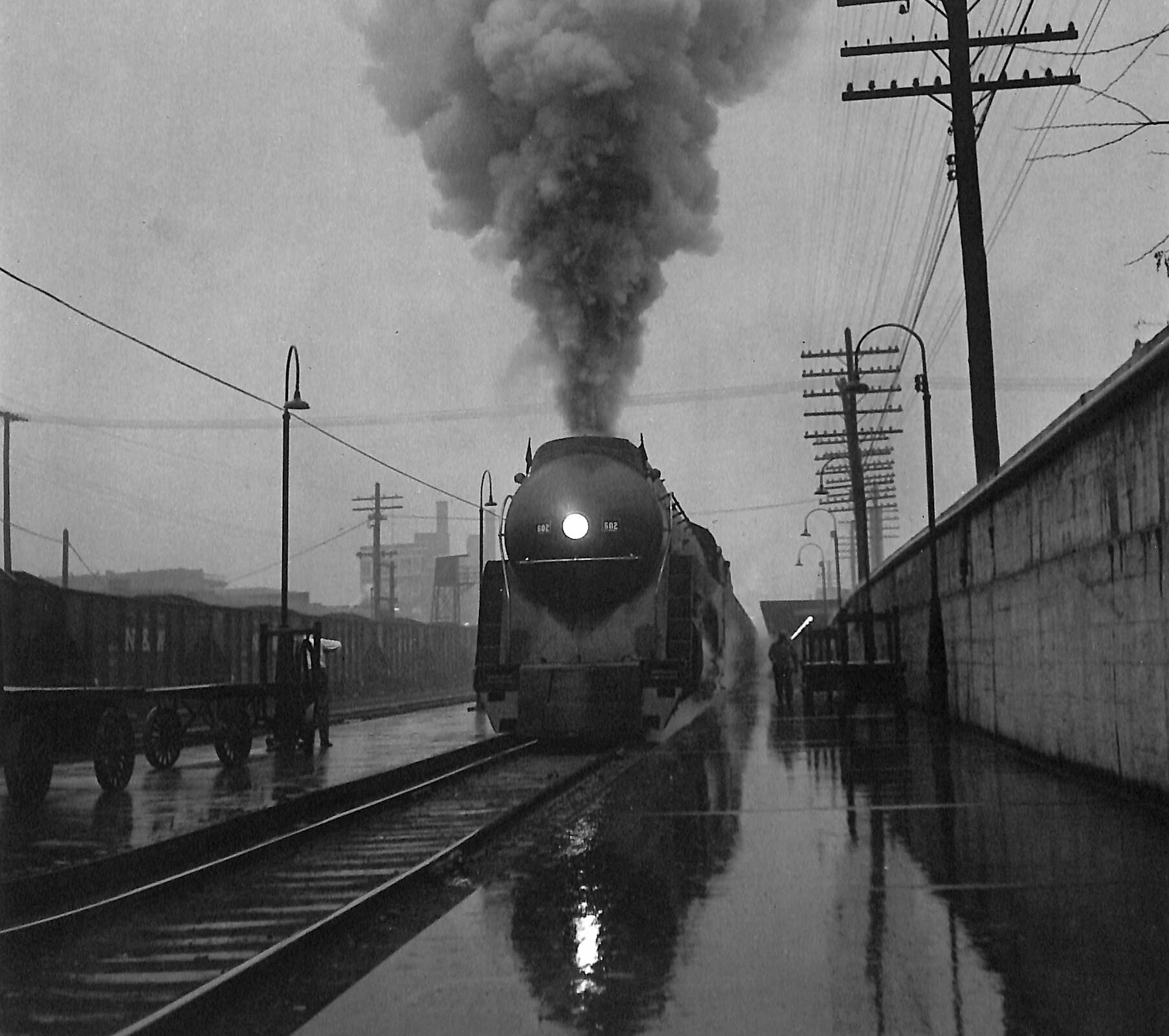
When you cruise Virginia’s scenic Blue Ridge Parkway, you’ll meet Roanoke, a Shenandoah Valley city where mountain mist mingles with echoes of industrial-age American history. Also known as Star City—you’ll see a massive star that lights up at night on Mill Mountain overlooking this mini-Metropolis—Roanoke is where America’s steam locomotive era lives on through the lens of one man’s extraordinary vision.
Between 1957 and 1960, commercial photographer O. Winston Link saw that Roanoke represented the last stand, the final place, where visitors could see America’s steam locomotive iron giants run. He set out on a personal odyssey at his own expense to preserve the legacy of this era not through words or artifacts, but through the lens of his camera.
The result is a first-rate body of photographic works that present a vivid blend of technical skill, artistic vision, and a complete pictorial record that focuses on the interplay of steam engine trains and the culture of railroad workers with the residents of the towns and villages in the region.
Link’s story and other historic and cultural treasures await you at Roanoke, a destination worthy of a stopover for the roving traveler.
Roanoke and Railroads
Roanoke was and still is a train town. Between 1830 and 1960, steam engine locomotive freight and passenger trains from distant cities passed through the massive train switching junction at Schaffers Crossing Yards, where locomotives are still built and serviced at Roanoke today.
After World War II, while the rest of America rapidly embraced diesel-electric engine locomotives, the Norfolk and Western Railway, headquartered at Roanoke, stubbornly clung to steam-engine locomotives. But the era of this breed of iron horse projecting its trademark ear-piercing whistle and massive steam-white and charcoal black exhaust plumes would soon end.
Enter the Train Photographer
As a commercial photographer in the bustling New York City scene, Ogle Winston Link honed his skills, capturing images of everything from standalone industrial products to creating photographic displays for entire advertising campaigns. His work demanded precision and creativity, which would later define his photographic works of trains.
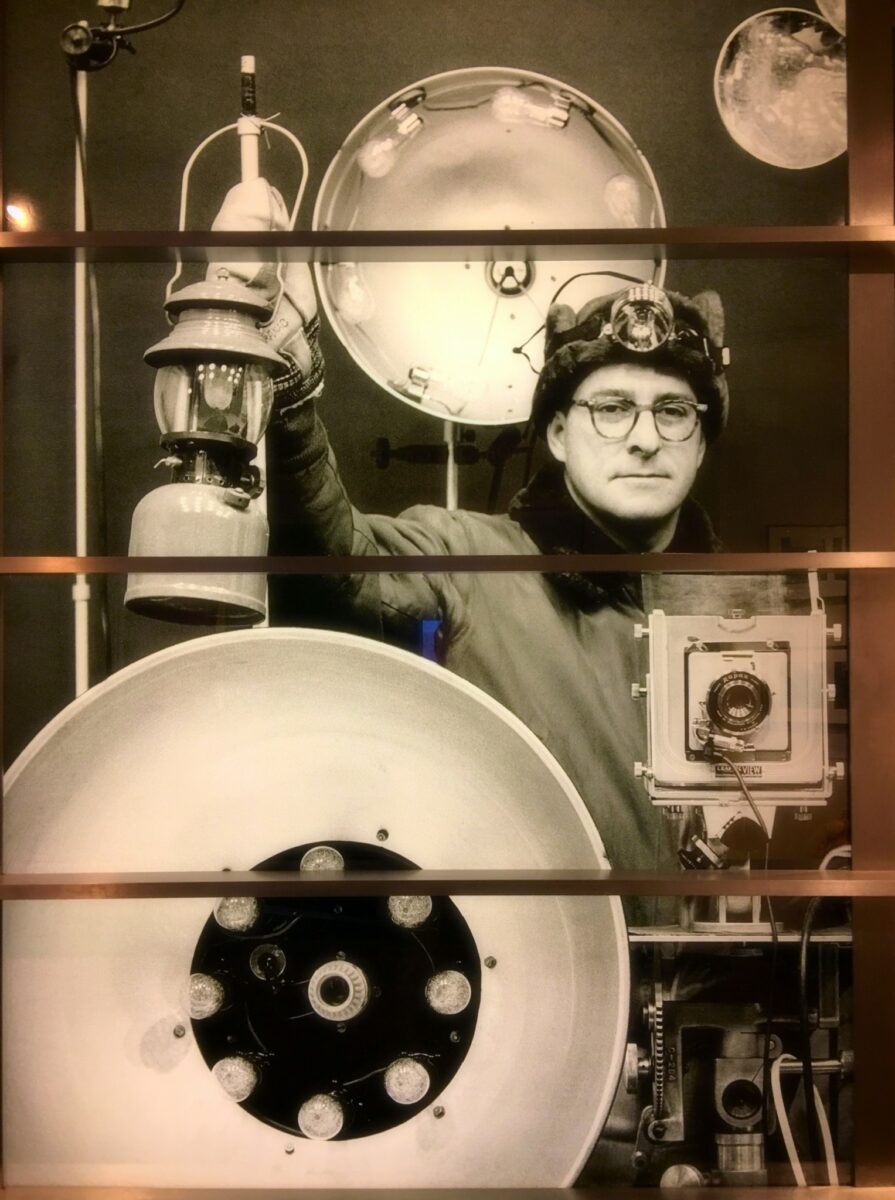
Link was a city boy, born in Brooklyn, New York, in 1914, with a lifelong love of trains. He grew up near the Brooklyn railyards and snapped photos of trains during childhood. But the vast, untamed expanses of rural America captured his imagination, and his out-of-town assignments as a commercial photographer ignited his passion to focus on visual stories in rural America.
Venturing into the American countryside while on assignment, Link saw the raw beauty of small-town life: weathered barns, endless fields, and the iron horses that connected them—the steam engine locomotive.
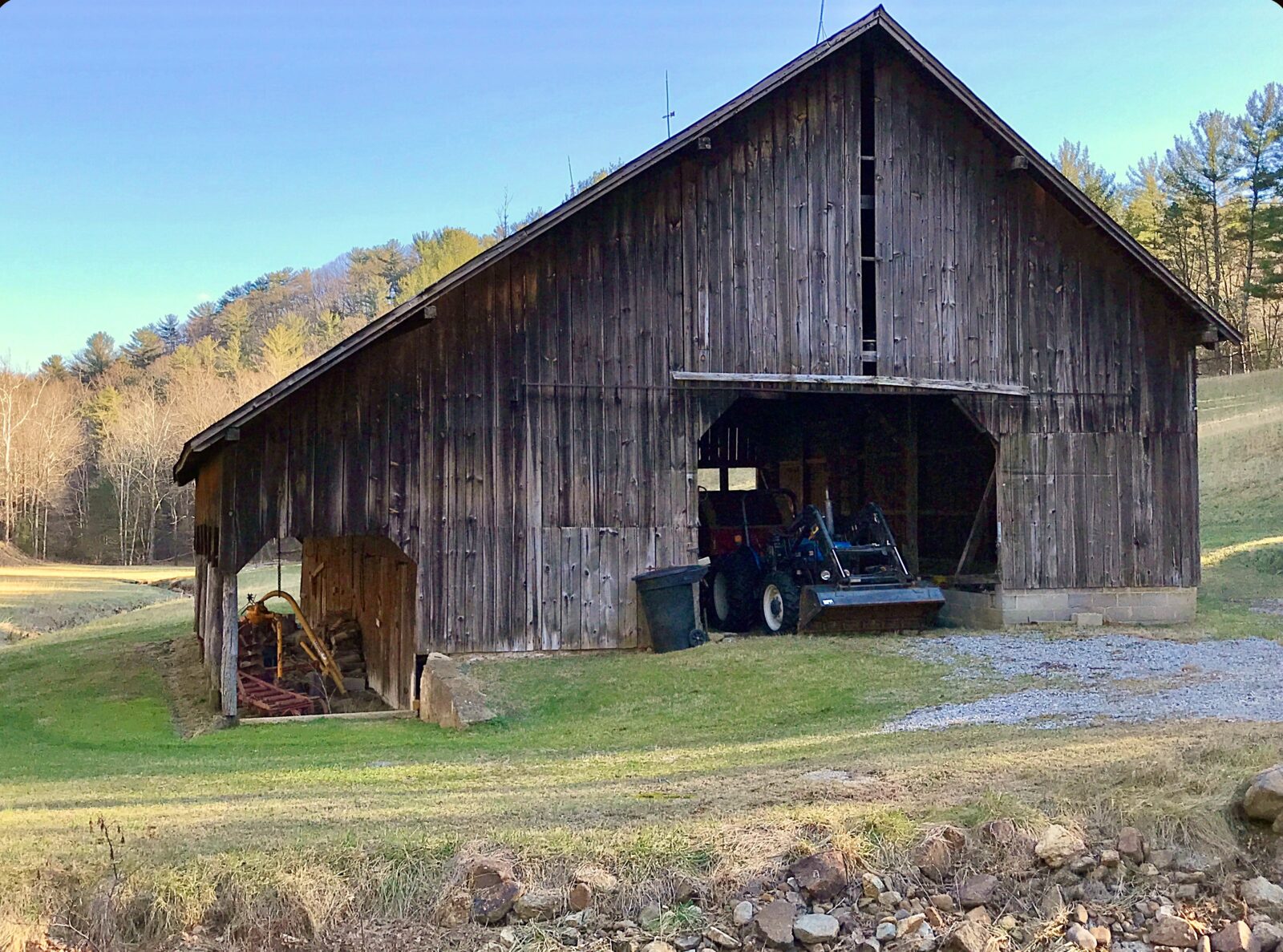
The turning point for Link came in the mid-1950s when he saw the Norfolk & Western Railway (N&W) clinging to the coal-hauling steam engine giants that powered the nation through wars and booms. These machines, symbols of America’s industrial might, were on the brink of extinction as diesel engines began to dominate the rails.
By 1955, most railroad companies had switched to diesel locomotive power. However, the rugged terrain of N&W’s operational area and plentiful coal supplies from the Appalachians made it easier for N&W to keep steam engine locomotives running until the end of the decade. Iron horse operations ended in the United States around 1960, marking the end of an era.
Sensing the urgency to capture and create a unique visual story, Link saw an opportunity to preserve the legacy of the steam engine locomotive era not through words or artifacts, but through the lens of his camera. He set out on a personal odyssey from 1957 to 1960 to document the final years of the steam engine era, pouring $286,000 of his own money (in 2025 dollars) into the project—a staggering sum for an individual artist.
Link’s Work
Black and white nighttime photography was Link’s specialty, a practice that seemed to be a crazy idea to some photographers and casual observers in the late 1950s. But his work reveals imagery of striking drama and beauty. In response to a question about his use of black and white photography versus color photography at night, Link reportedly said, ” …Locomotives are black. The coal is black. The trains are black. So what am I going to do with color?…”
Link’s photographs are renowned for their meticulous lighting and exquisite composition. They are documentary, historical, and, most of all, artistic, capturing the essence of a way of life soon to disappear.
The result is a body of work that is a tribute to an era of American industry and ingenuity. Link’s images remain iconic for their ability to evoke the raw energy of steam trains and the quiet dignity of the people who kept them running.
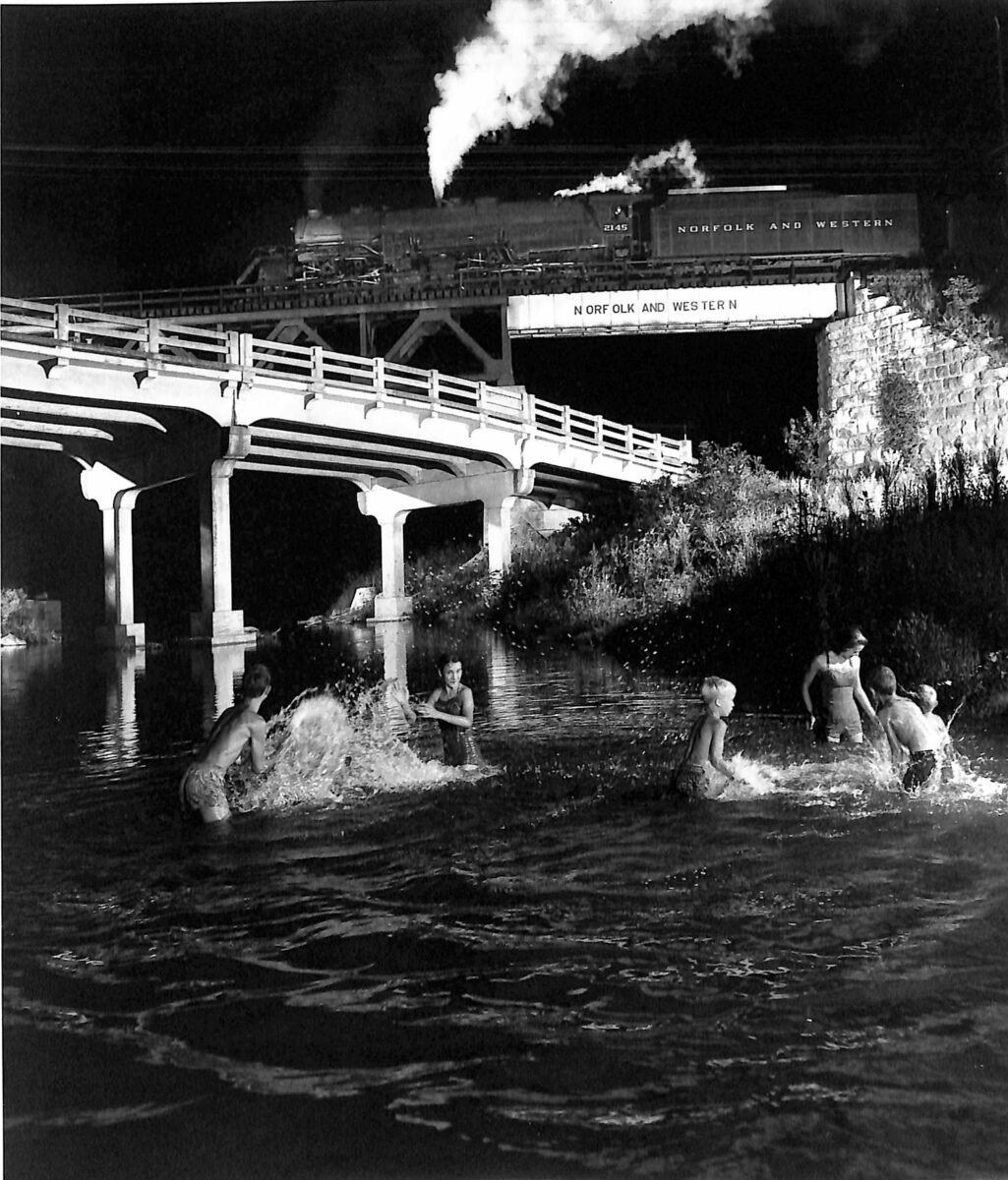
Link set up elaborate layouts of flashbulbs that would fire simultaneously to light up massive locomotives and their surroundings with stark clarity for his nighttime photo shoots. This technique created a surreal, almost cinematic quality, freezing the motion of steam engines in crisp detail against the inky blackness of the night. The steam, smoke, and glowing headlamps of the trains stand out vividly, evoking the power and nostalgia we associate with trains of this era. His images contrast the mechanical grandeur of the trains with the quiet, rural American landscapes of Virginia, West Virginia, and North Carolina, where the Norfolk and Western ran.
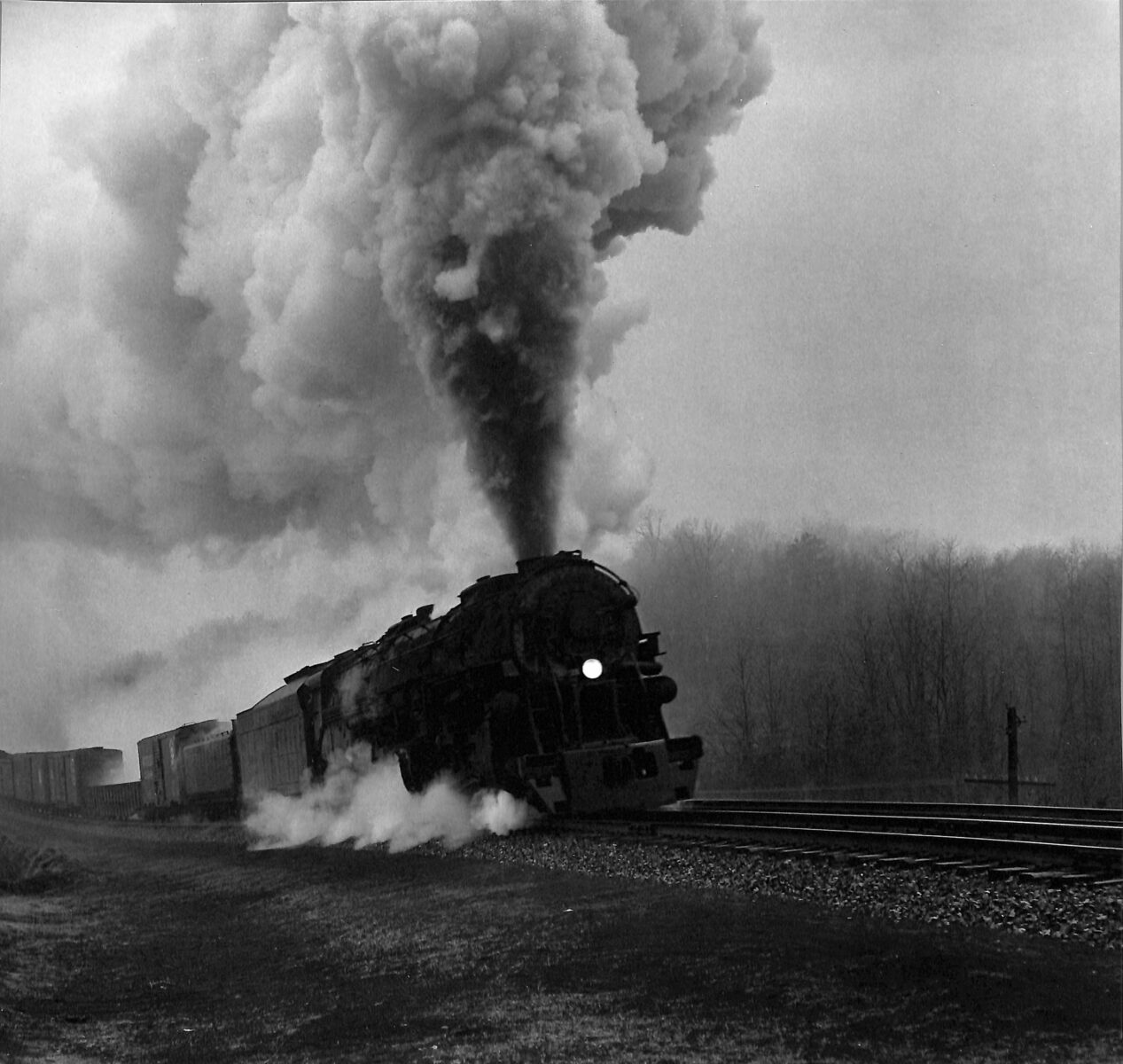
Link’s photographic images are deeply atmospheric, capturing the texture of steam—billowing clouds lit by his flashbulb layouts—and the grit of the industrial age. His use of black-and-white film heightens contrast and mood, and the gleam of black metal, the black coal, black skies, and the gritty, weathered faces of railroad workers.
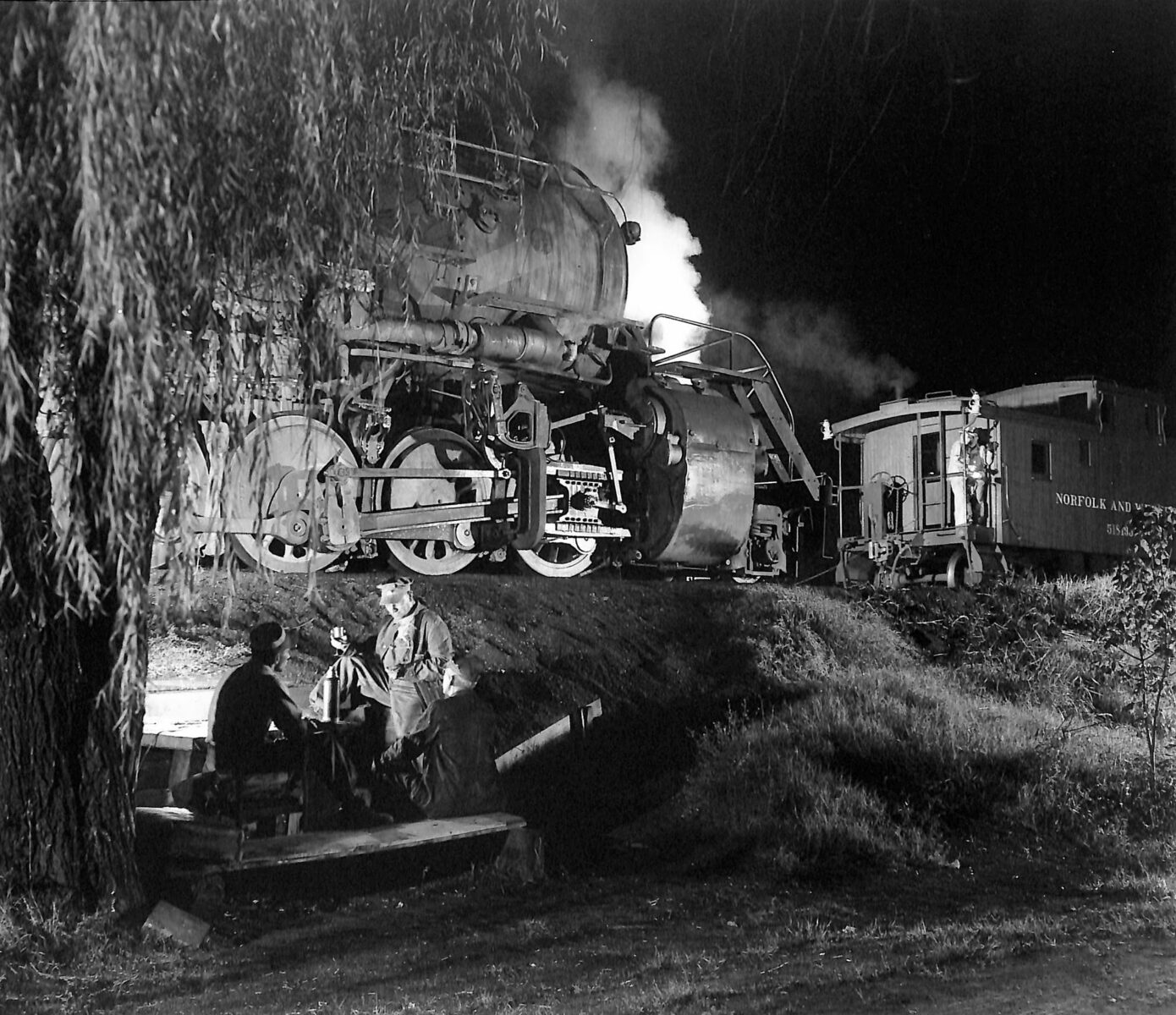
Link was methodical. His education as a civil engineer gave him the baseline knowledge to calculate and synchronize flashbulb technology with manual shutter speeds and film speeds of the era for his innovative lighting setups. He might spend a week laying out up to a mile of electrical cable for a single shot, connecting bulbs to a central trigger synced with his 4″ × 5″ format Graphic View Camera. Exploding in unison, his Sylvania Bluedot #2 flashbulbs cast an instant of light on trains to capture a dramatic, high-contrast tableau with plumes of steam curling like ghosts and wheels churning against iron rail in the black of night against rural landscapes bathed in ethereal light.
Perfectionism defined Link’s work. He’d wait for hours or days for perfect weather, ignoring discomfort in pursuit of shots planned with precision. The result is a body of hauntingly detailed black-and-white images that evoke nostalgia for an America powered by steam and sweat.
Images of railroad workers, station agents, and the small towns home to railroad tracks were also the subjects of Link’s work. Portraits and scenes, like Hot Shot Eastbound (1956), present residents in everyday moments set against the backdrop of the trains. In Hot Shot Eastbound, a couple at a drive-in theater watches a movie as a steam train roars past, blending the era’s cultural shifts with the fading dominance of rail. This photo, not on display here, is among Link’s most famous silverprints and is currently on sale at Christie’s for $6000 – $8,000.
Link The Celebrity
With its deep ties to the N&W, Roanoke was the epicenter of Link’s work. The city’s switching yards at Schaffers Crossing buzzed with engines moving railcars around and through the switchyard.
As a Brooklyn outsider arriving with crates of gear in his Buick convertible, Link became the talk of the town. He ripped the backseat out of his car to carry all his photographic gear. Some locals hailed him as a celebrity and were eager to assist him with photo shoots or pose alongside the trains. Others eyed him warily as an eccentric figure lugging miles of electrical cable, cartons of flashbulbs, and bulky camera equipment.
Link’s three-year photographic journey wasn’t solitary; it intertwined with the lives of Roanoke’s residents and railroad workers. His photo shoots often drew crowds.
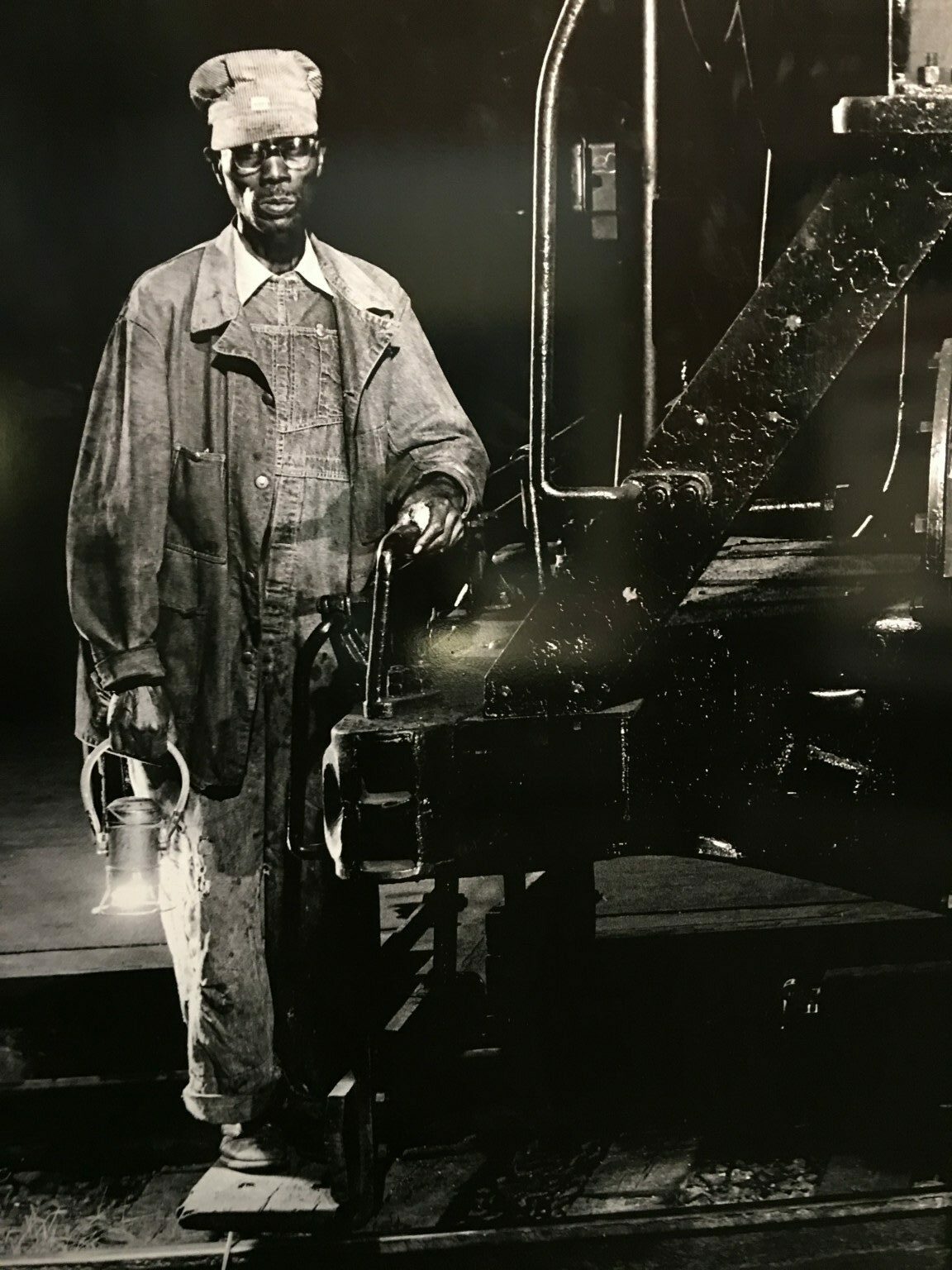
Black-and-white portraits of grizzled engineers, signalmen, and track workers reveal the grit and camaraderie of the era. One photo presents a family waving from their porch as a steam engine roars, encapsulating the symbiosis between railroads and rural life. Links’ photographs didn’t just capture machines; they celebrated humanity.
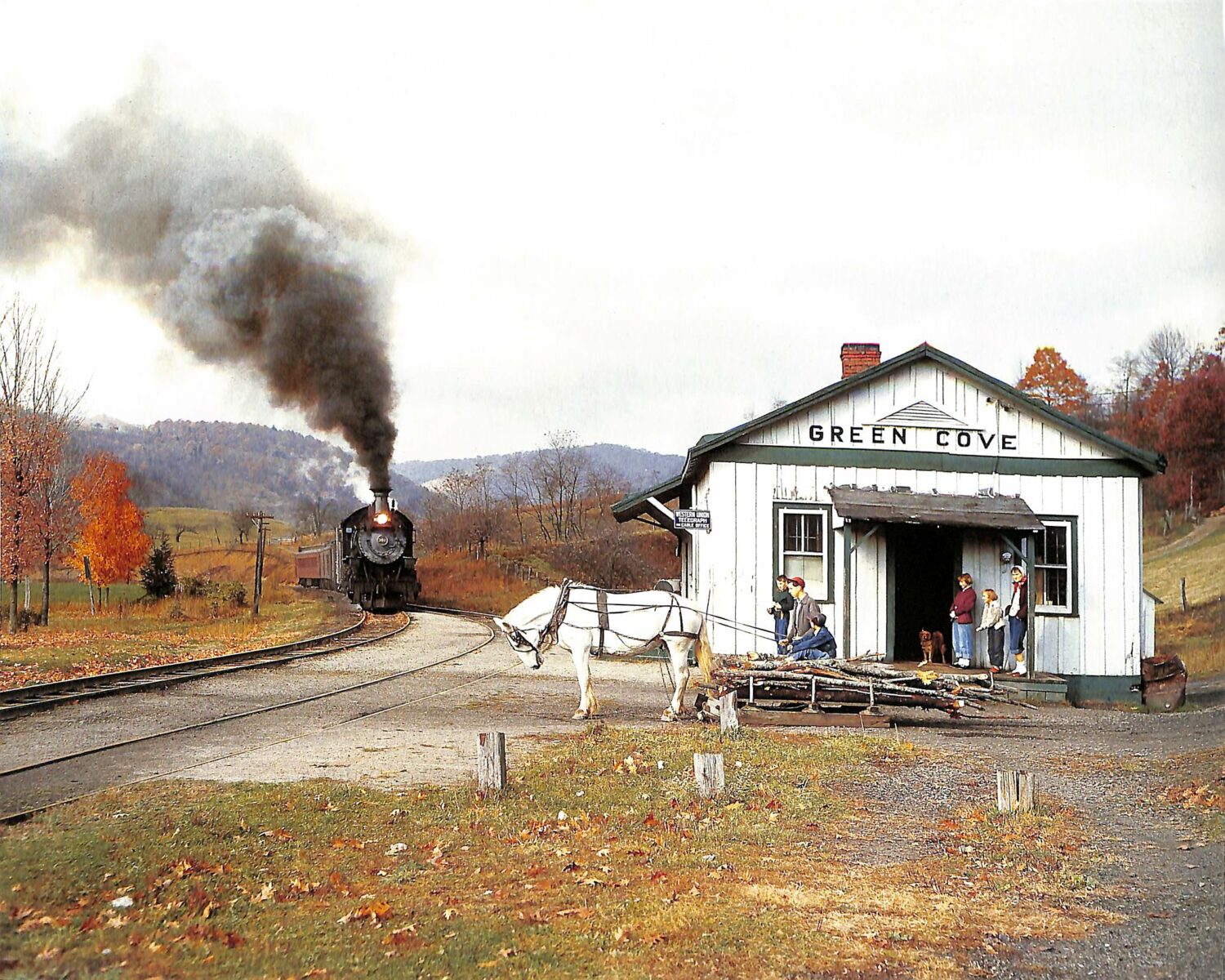
Photo shoots were in rural hamlets outside Roanoke along the N&W railways. Link coordinated with N&W engineers to time the passages of trains precisely. The railroad, recognizing the promotional value of his work, granted Link unprecedented access. They gave him a key to their train track switching stations. This allowed Link to stage scenes that blended documentary realism with artistic flair. Link shot color photos during the day, too, as seen below.
Link At Play
Link’s romance with the iron horse was not his only romantic interest. Like many overachievers, his professional accomplishments came with a personal cost. Obsessed with his craft, he sometimes faltered in other realms, notably marriages.
His first marriage ended in divorce in 1948. He married Conchita Mendoza in 1987 when he was 73 and she was 48. At first, she helped him by marketing his photographs while Link worked with an assistant, Ed Hayes, to restore a classic steam engine. Hayes and Conchita began an affair and conspired to steal Link’s prints and other assets. News reports assert that Hayes and Conchita held Link incommunicado in his basement dark room. He escaped to a neighbor’s home while Hayes and Conchita were away on travel.
A later criminal investigation after Link’s divorce from Conchita led to her arrest and conviction of grand theft in the first-degree for stealing 1,400 photographs. She was sentenced to six to twenty years in prison and served five years for her 1996 conviction.
In May 2003, Hayes and Conchita were arrested as they tried to sell stolen prints on eBay. A search of a storage unit in Pennsylvania near Conchita’s home revealed more than 1,000 4″ × 5″ signed contract prints. Conchita returned to prison, and Hayes was set free for time served.
The O. Winston Link Museum
Link didn’t live long enough to witness the recovery of his property or the 2004 dedication of the museum that celebrates his achievements—a fitting tribute in the city that inspired him.
When you visit Roanoke today, you’ll find the world’s most comprehensive tribute to the steam locomotive era in the museum that bears his name. For those fond of history, photography, or the romance of bygone eras, the O. Winston Link Museum is an unmissable destination.
The Link museum is housed in the beautifully restored 1905 Norfolk & Western Railway Passenger Station, now shared with the Roanoke Valley Visitor Center.
What You’ll See at the Link Museum
The museum offers an intimate glimpse into Link’s meticulous, nighttime photographic journeys. The exhibit, aptly titled Life Along the Line: New Selections, demystifies Link’s creations.
As you wander through galleries where enlarged prints hang like windows to the past, you’ll see a steam engine thundering past a drive-in theater with its glow illuminating couples in mid-kiss. Or you’ll see a locomotive crossing a trestle bridge, silhouetted against starry skies.
But the real magic of Link’s creations lies in the behind-the-scenes displays. You can touch the electrical cables Link used for his flash photography—thick, coiled relics that reveal the weight of history in their lines. Interactive panels explain the physics of flash synchronization, and replicas of flashbulb stations let you imagine the painstaking setup.
One display presents a mock shoot, complete with sounds of hissing steam and popping bulbs, transporting you to those chilly Virginia nights when Link captured a scene that would last forever on the walls of this museum.
Beyond stills, Link dabbled in video, capturing the engines’ rhythmic chugs, though his black-and-white photos remain his crowning achievement. Today, the museum honors this by screening rare footage, letting visitors hear the symphony of whistles and pistons that once defined the valley.
Roanoke: A Base Camp for Discovery
Roanoke presents visual reminders that the city celebrates the old while embracing the new. As you drive along a serpentine overpass near the center of the town, you’ll see the Roanoke Star overlooking the city from Mill Mountain.
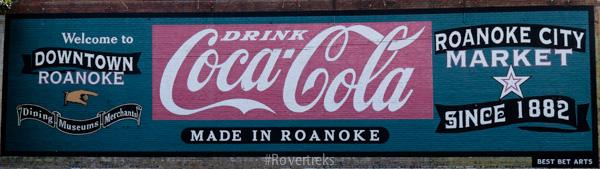
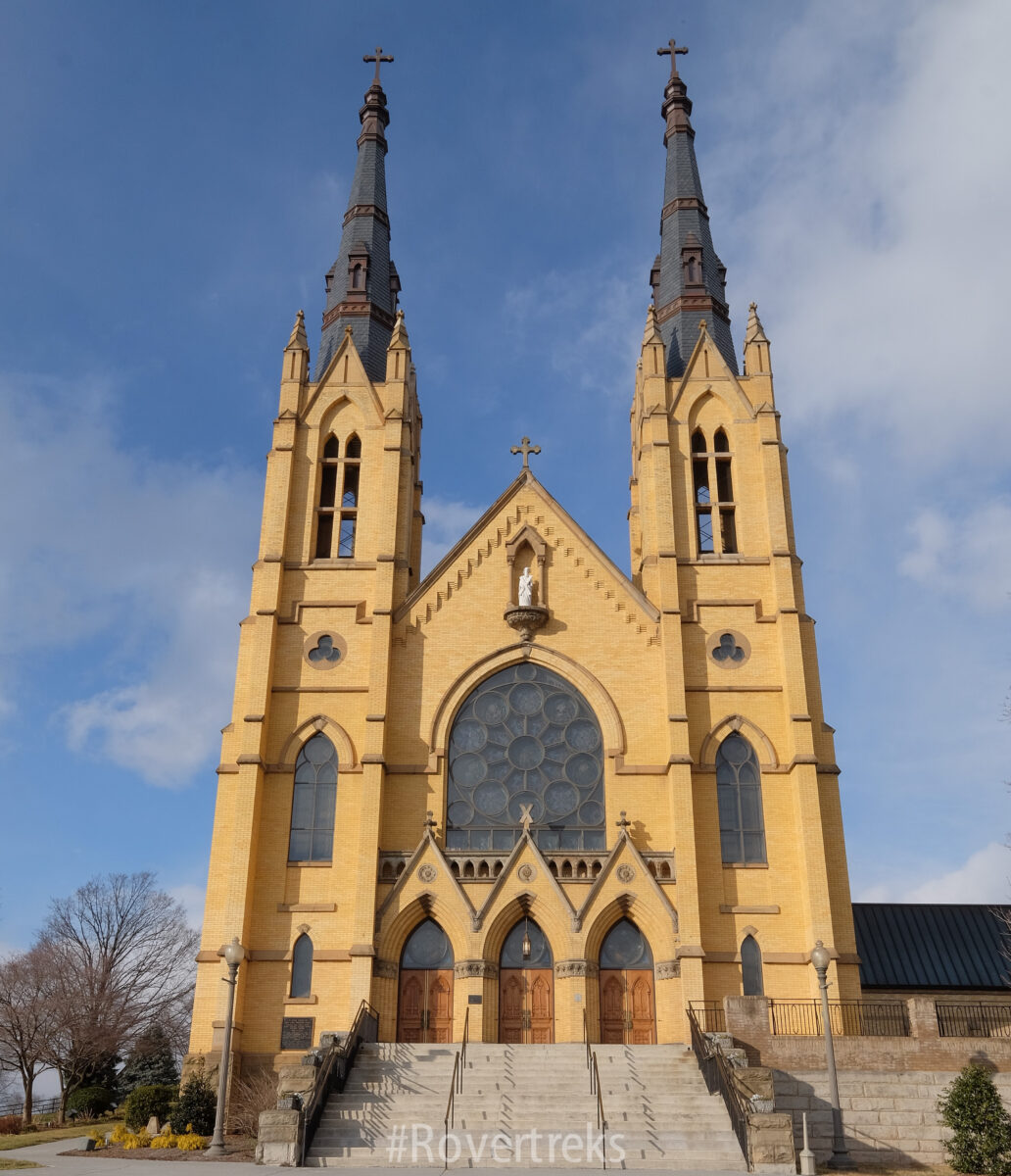
Majestic old buildings display signs from eras long gone amidst a snarl of railroad tracks through and around the city. The city is strikingly iconic. On approach via I-581 on a north-to-south track, the twin black spires over a base of gold on the St. Andrews Basilica jut skyward as the Roanoke Star seems to loom forward toward the city. At night, the Roanoke Star dominates the skyscape.
The O. Winston Link Museum anchors a broader Roanoke experience that satisfies diverse traveler interests. Since the museum shares space with the Roanoke Valley Visitor Center, it’s easy to discover and plan more adventures throughout the region.
Arts and culture lovers will see downtown Roanoke pulsing with creative energy. Art galleries, craft breweries, and the historic Grandin Theater provide evening entertainment after your museum visit.
Restaurants serve Appalachian-inspired cuisine in buildings that once housed railroad workers and their families. A farmer’s market in downtown presents fresh produce grown on local farms.
The Roanoke Pinball Museum presents many historic machines on display, and the story behind the Pinball craze, which fascinated so many Americans for years.
Railroad enthusiasts can also visit the nearby Virginia Museum of Transportation, home to the restored Norfolk & Western J-611 locomotive—the subject of Link’s work. Standing beside this massive machine, you’ll gain new appreciation for the scale and power that Link captured in his images. You can sign up for a nostalgic ride on the J-611 train tour that still runs yearly. Plus, this museum presents historic vehicles other than trains.
Outdoor lovers will discover that Roanoke sits at the crossroads of the Blue Ridge Parkway and the Appalachian Trail. After immersing yourself in railroad history and the culture of the downtown area, you can hike around the Roanoke Star atop Mill Mountain for panoramic views of the area. The same mountain vistas that provided backdrops for Link’s photographs offer visitors spectacular sunrise and sunset opportunities today.
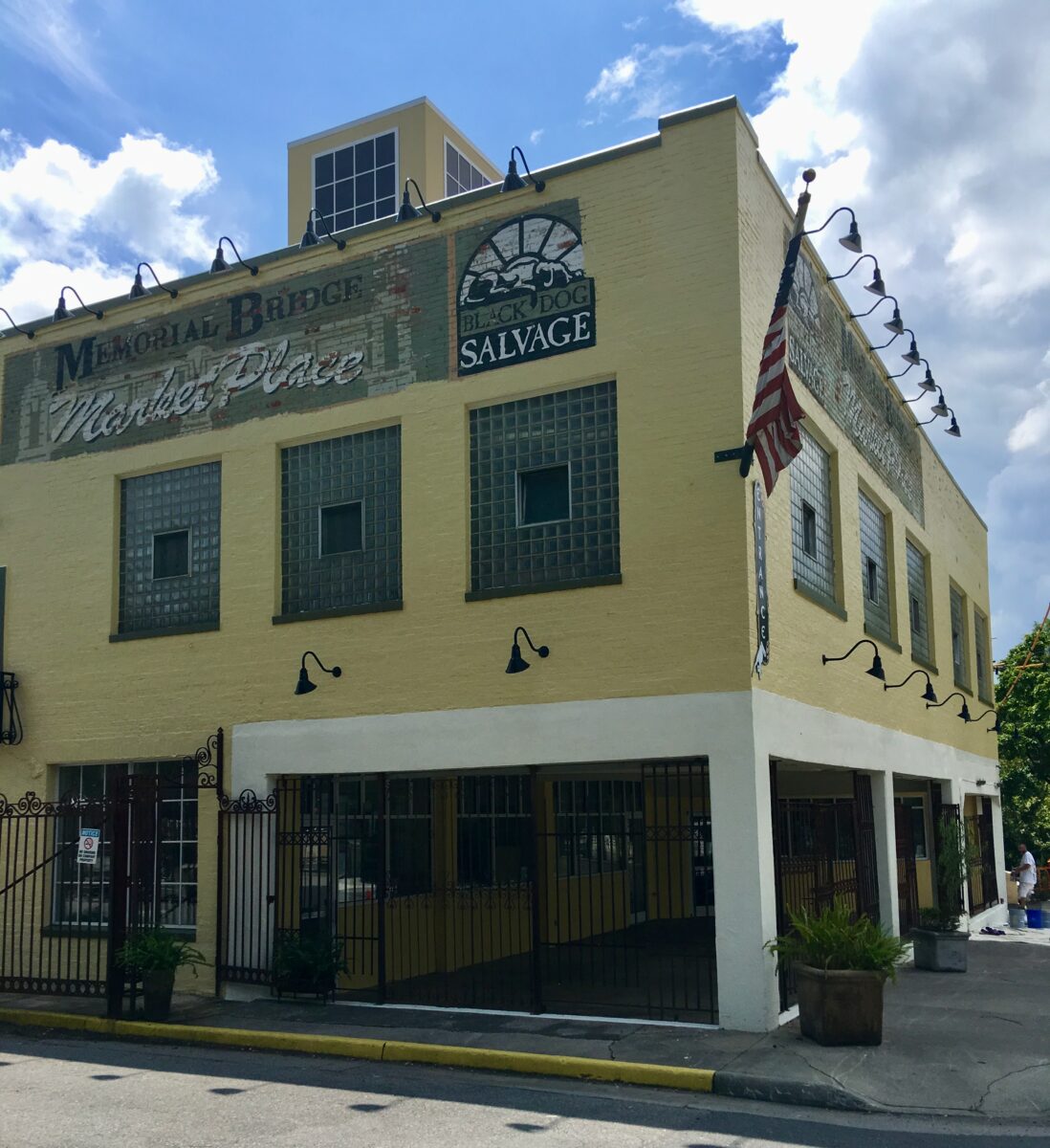
Fans of the Salvage Dogs TV show will be happy to learn that the Black Dog Salvage business is based in Roanoke. It’s a 40,000-square-foot warehouse that features a stunning variety of antiques, commercial salvage, and other unique oddities.
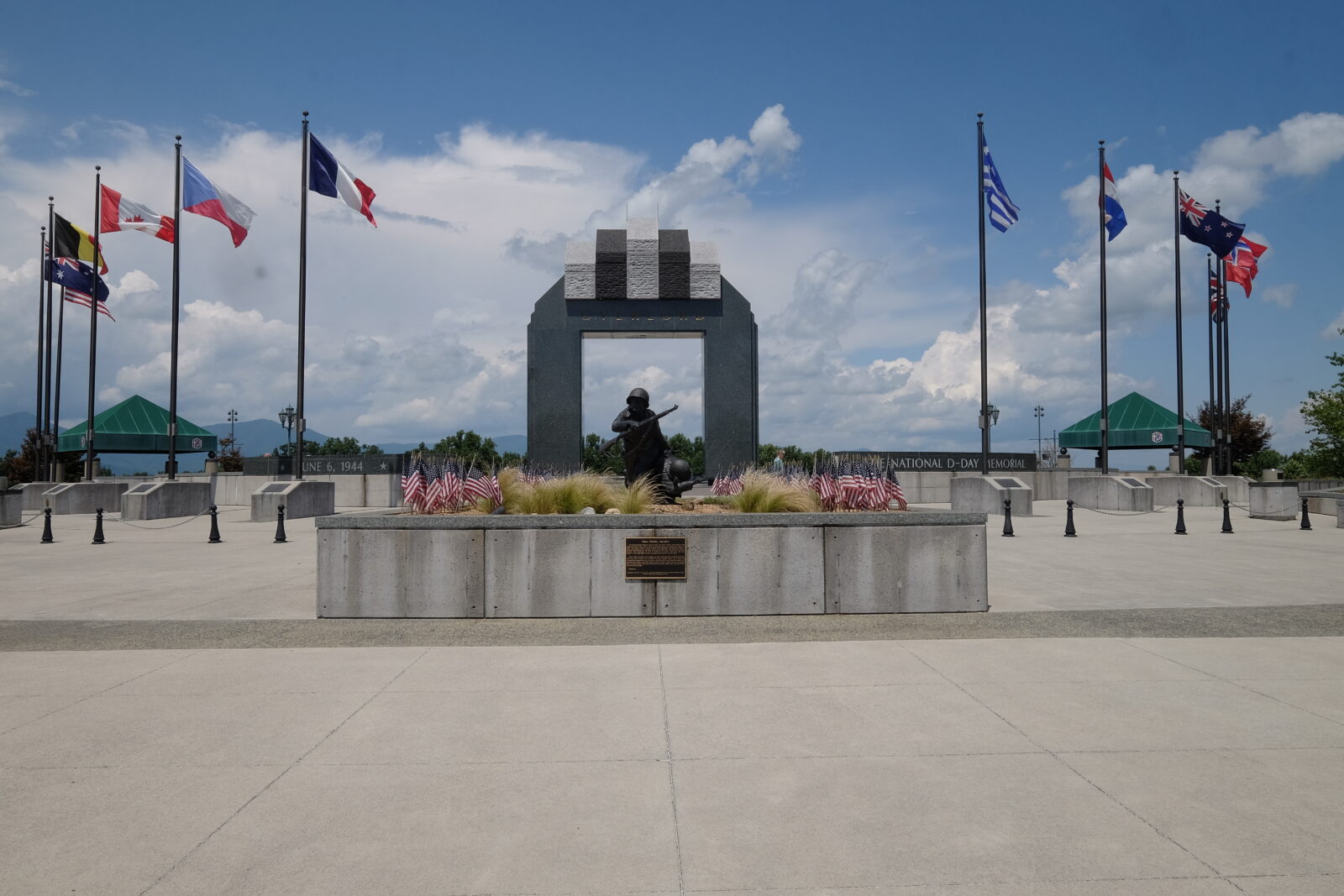
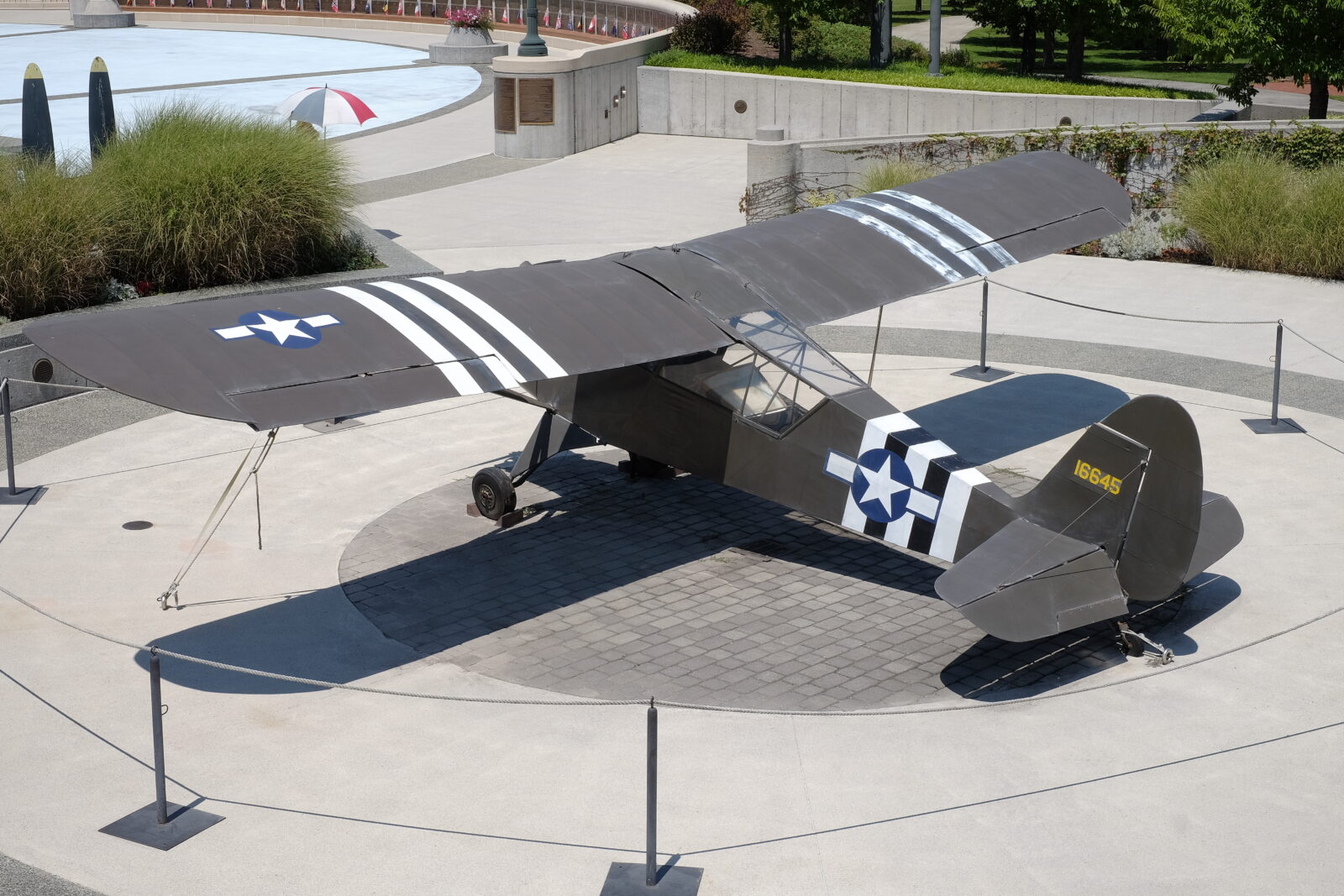
Due East of Roanoke, you’ll find the National D-Day Memorial in Bedford. This site presents notable memorabilia from World War II and highlights the sad fact that so many US servicemen slain during the war stemmed from Blue Ridge small towns and villages.
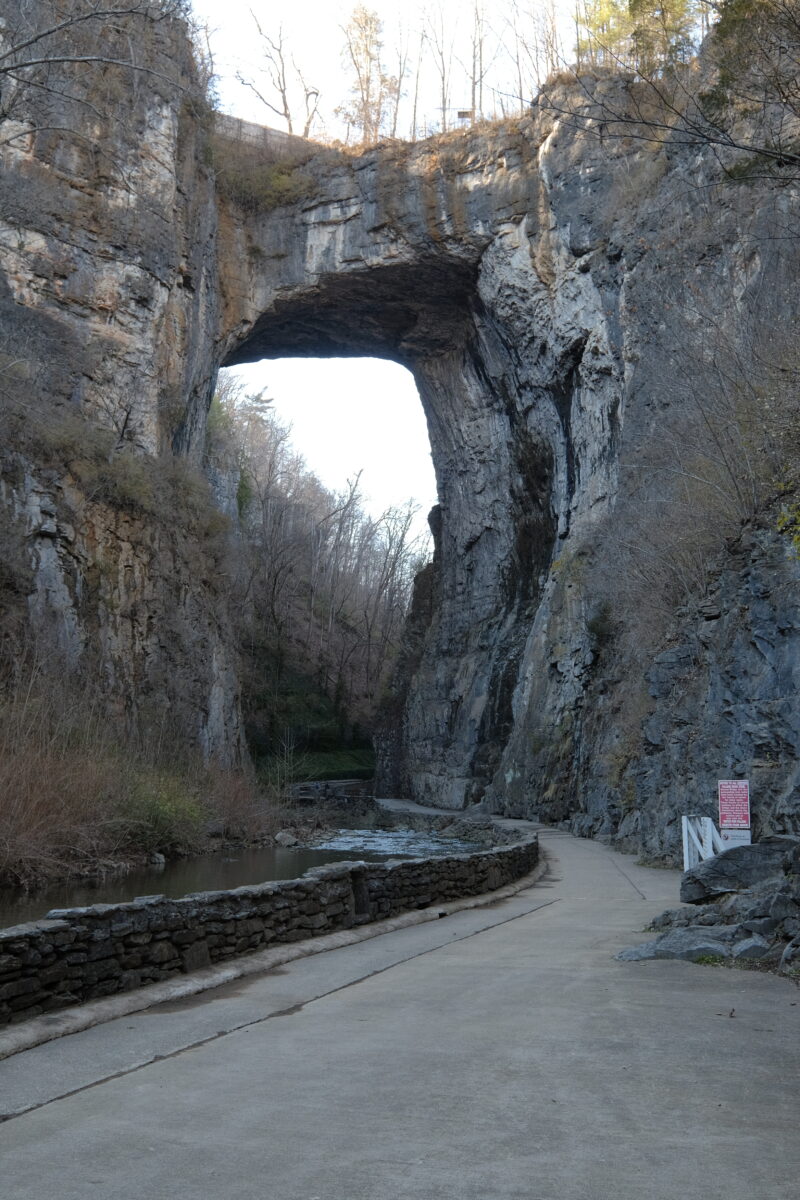
You’ll also find the Natural Bridge just off I-81, about a 40-minute drive North of Roanoke.
When to Visit
You can visit and experience all the Roanoke area has to offer year-round. The Link and other museums operate year-round, but autumn offers the most dramatic visual experience for those who wish to see the leaves turn their colors in the late Fall.
Fall colors in the Blue Ridge Mountains create the same atmospheric conditions that Link often sought for his photographs. Winter visits provide solitude and the chance to imagine those cold nights when Link set up his equipment in sub-freezing temperatures.
What to Expect
Allow at least half a day to tour the Link Museum. Photography buffs can easily spend entire days studying Link’s techniques. Admission remains affordable at around $10 for adults, making it accessible for families and solo travelers. However, you can also easily expect to spend half a day at the Virginia Museum of Transportation nearby and a full day exploring the area.
In a world of manmade tourist experiences, Roanoke offers authenticity. Roanoke’s central location makes it an ideal base for exploring Virginia’s Shenandoah Valley, the Blue Ridge Mountains, and neighboring Appalachian communities. Many visitors use their Link Museum experience to inspire their photography explorations throughout the region.
Where to Camp
You’ll find campsites for your LTV in the region’s cities, state, and private parks. There are too many to cite here, and many sites are outside Roanoke.
If you’re a member of the Elks, you’ll find the lodge in town offers two spots with electrical hookups.
Camping World presents a large facility about 5 miles outside town, just off I-81.
Your Visit to Roanoke
Whether you arrive in Roanoke as a photography enthusiast, railroad historian, or curious traveler, you’ll discover that Roanoke offers much to you, the traveler.
Have your mobile phone at the ready as you plan your route through Virginia’s Appalachian Mountains. Prepare for a journey that connects past and present through the atmospherics of light and shadow. In Roanoke, dreams and history live on and await your discovery.
Acknowledgements
The authors thank the Roanoke Valley Visitors and Information Center for granting press pass access to the O. Winston Link museum and other attractions and for permission to photograph works there.

Comments