


Editor’s Note: This post is written by a member of LTV’s sponsored content team, The Leisure Explorers. Do you own a Leisure Travel Van and enjoy writing? Learn more about joining the team.
Thirty Minutes from New Orleans, Four Centuries of Story
You await breakfast at a Cracker Barrel between Baton Rouge and New Orleans, Louisiana, coffee in hand and a map on the table in front of you, and ponder your next move. Someone mentions the Great River Road. Maybe it was the waiter. Maybe it was a guest a few tables over, talking about buying andouille while he is in the area. Maybe you saw a road sign for Oak Alley Plantation, and it remains in your thoughts.
When you drive I-10 across the great expanse of Mississippi between Baton Rouge and New Orleans, you can’t help but wonder about what goes on out of sight beyond the great river and the marsh. Maybe it’s the snarl of compact pickup trucks at water’s edge below the causeway, parked so close together it looks like a tornado blew them together. Maybe it is the skiffs full of rain-gear-clad fishers, zipping through sheets of rain so thick that you wonder how they do it when you can barely see the road in front of you. You ponder whether to check out the area.
Here is what you need to know: the detour is worth it. In fact, calling it a detour undersells it by a lot.
The Big Picture
30 minutes from New Orleans lies a stretch of River Road where four centuries of American history still shape every live oak, sugarcane field, and andouille smokehouse. Skip the detour, and you miss a most unique story of the American South. It’s a story very different from the East Coast Colonial era in America.
The Louisiana River Parishes—St. John the Baptist, St. Charles, and St. James sit along both banks of the Mississippi between New Orleans and Baton Rouge. Together, they offer some of the most layered, in-depth, and surprising travel experiences in the American South, and they are laid out for the way a Leisure Travel Van owner travels: with curiosity, and at his own pace.
Authenticity
Here’s what happens when you visit the river parishes.
You will meet people whose ancestry is French, African, Spanish, and Native American—sometimes all in one family line. They speak French, Louisiana Creole, and English by turns, often within the same sentence, with an accent you have not heard anywhere else in America.
If you speak with a local long enough, you’ll hear sentiments like this: that this place was not bought by the United States from France in the Louisiana Purchase of 1803. They’ll tell you it was sold by Napoleon to the US for the locals; Louisiana just happens to fall inside America.
The 30-Second History
Here are four centuries of history in four short paragraphs. You deserve to know the shape of the story before you dive into the culture.
The French arrived in the early 1700s. They laid out the land in long, narrow strips running straight back from the river. They called it the arpent system. Every settler got river access. You can still see it in the landscape today—houses strung along River Road in a near-unbroken chain, plots stretched long and thin rather than clustered in towns. A French surveyor made it that way 300 years ago.
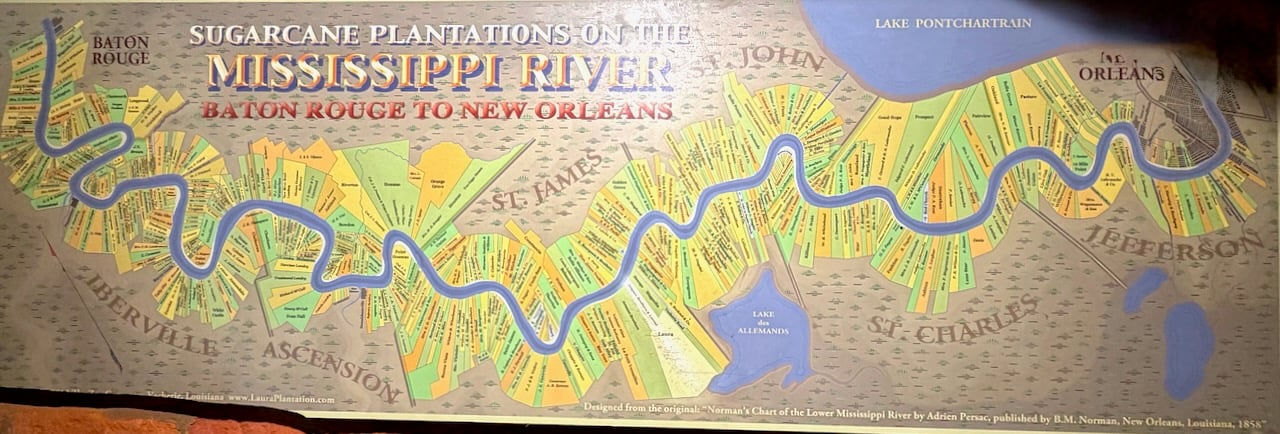
In the 1760s, French-speaking Acadian refugees arrived in St. James Parish. The British expelled them from Nova Scotia in one of history’s great acts of ethnic cleansing, driven by religious differences. After years of scattered exile—in the West Indies, the Eastern Seaboard, France, and elsewhere—they made their way to Louisiana and began a slow blending into the Creole world already in place. French and Spanish administrators, meanwhile, left their fingerprints on Louisiana’s civil law system—a hybrid still unique in the United States.
Through it all, enslaved Africans brought in by the French built the physical world of the River Parishes—the levees, the sugarcane fields, and the plantation houses. They also built the culture Louisiana still celebrates—the food, the music, and the folk traditions that make this place unlike any other in America.
The result is a thick cultural soup almost as thick as the rabbit roux you’ll find at restaurants like B&C Seafoods in Vacherie. French colonists brought West Africans into the River Parishes via the Caribbean colonies. Many Native American tribes were already here. All of them – French, Acadian, Afro-Caribbean, Germans, and Native Americans mixed on this one strip of land. The story is both uplifting and bleak, and entirely worth knowing. It makes every mile of River Road mean something when you visit.
Three Parishes, One Corridor
St. Charles Parish, closest to New Orleans, is where the German Coast began. Thousands of German immigrants arrived in the 1720s, recruited by French colonial promoters. They married into French Creole families. They were pulled so fully into the French world that their Germanic surnames changed beyond recognition. Zweig became Labranche. Wichner became Vicknair. Their descendants still live here. The parish seat of Hahnville anchors the west bank. Destrehan—home to the oldest documented plantation house in the lower Mississippi Valley — anchors the east bank with more than two centuries of unique history.
St. John the Baptist Parish is the heart of andouille country. The town of LaPlace is known across Louisiana as the andouille capital of the world, and the claim is not idle. The parish is also home to the Whitney Plantation in Wallace—the only plantation museum in Louisiana whose entire story centers on the lives of enslaved people. Evergreen Plantation sits here, too. It is one of the most intact pre-Civil War estates in the South.
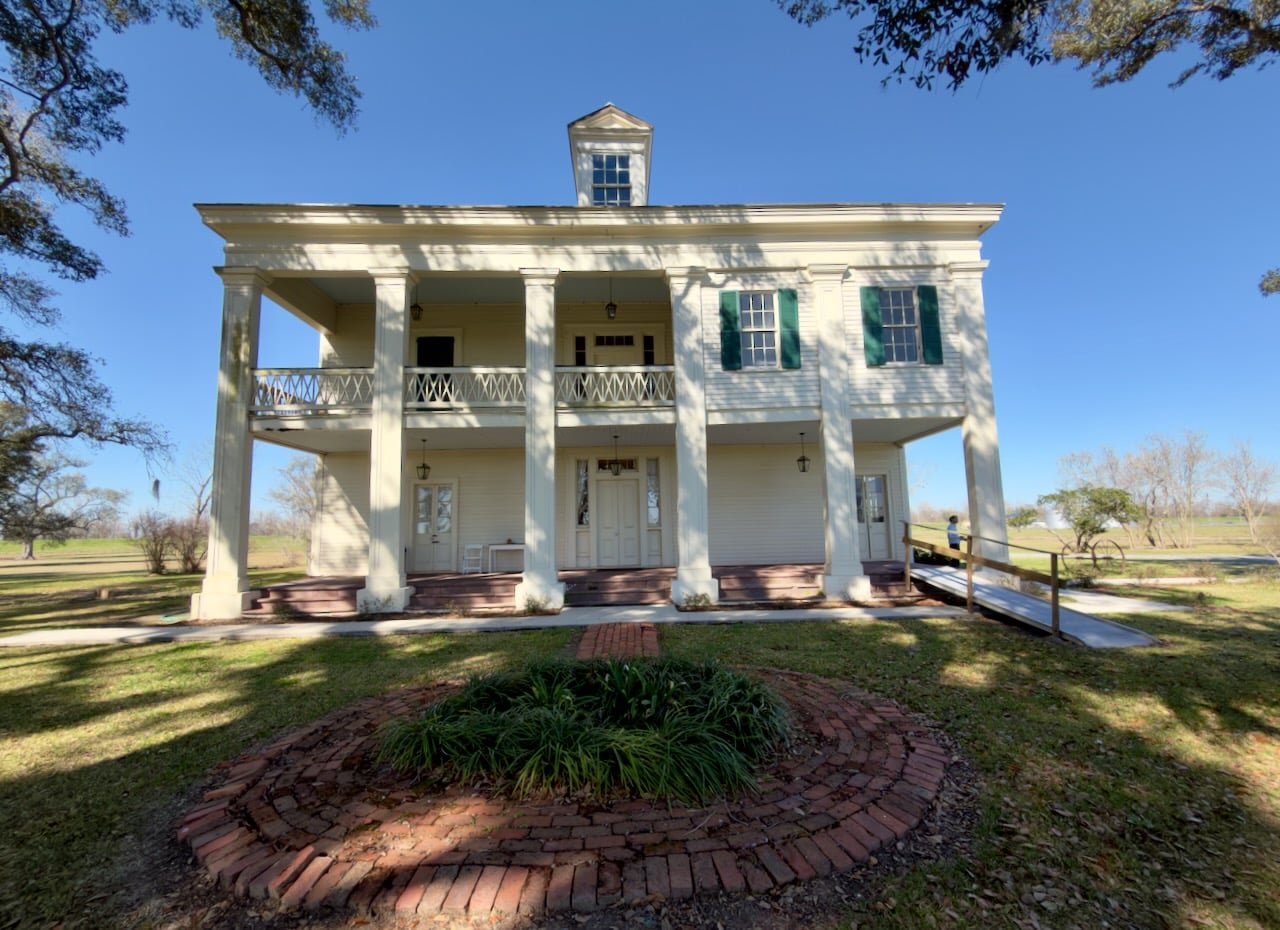
St. James Parish is where the Acadian refugees first landed in the 1760s. Their blending with French colonists, Black Caribbean Africans, and Native Americans shaped the area’s culture. The parish is also home to Oak Alley Plantation, whose quarter-mile-long tunnel of 250-year-old live oaks is one of the most photographed scenes in the American South. Laura Plantation sits here too—a Creole family compound whose story is far stranger and more interesting than its modest exterior suggests.
The towns of Vacherie, Lutcher, Gramercy, and Convent carry centuries of Creole and Acadian memory. You can find it in the church records, cemeteries, and kitchens. If you are tracing a family tree and think the area might be relevant to your research, you are in luck. The Catholic church records here are among the most complete sources of colony records in America.
The Plantation Scene
The plantation houses along River Road are grand and built for practical purposes. They are also inseparable from the lives of the people who built them. Visiting with that full awareness does not diminish their beauty. It deepens it.
For many travelers of a certain age, these houses first appeared on a movie screen.
If you saw Interview with the Vampire (1994)—Tom Cruise and Brad Pitt in a candlelit Louisiana plantation, you saw Destrehan and Oak Alley. If you saw Hush, Hush, Sweet Charlotte (1964), with Bette Davis at her most unhinged, you saw Houmas House. If you watched 12 Years a Slave (2013) and felt the physical weight of the plantation on display, you were looking at Evergreen Plantation in St. John the Baptist Parish. If you saw Django Unchained (2012), the main Louisiana location was also Evergreen.
These locations are not film sets. They are historic sites open to the public, located 30 to 45 minutes from the New Orleans airport. Visiting them to grasp the full weight of their history—not just their movie glow is one of the most worthwhile things you can do on a trip to the River Parishes.
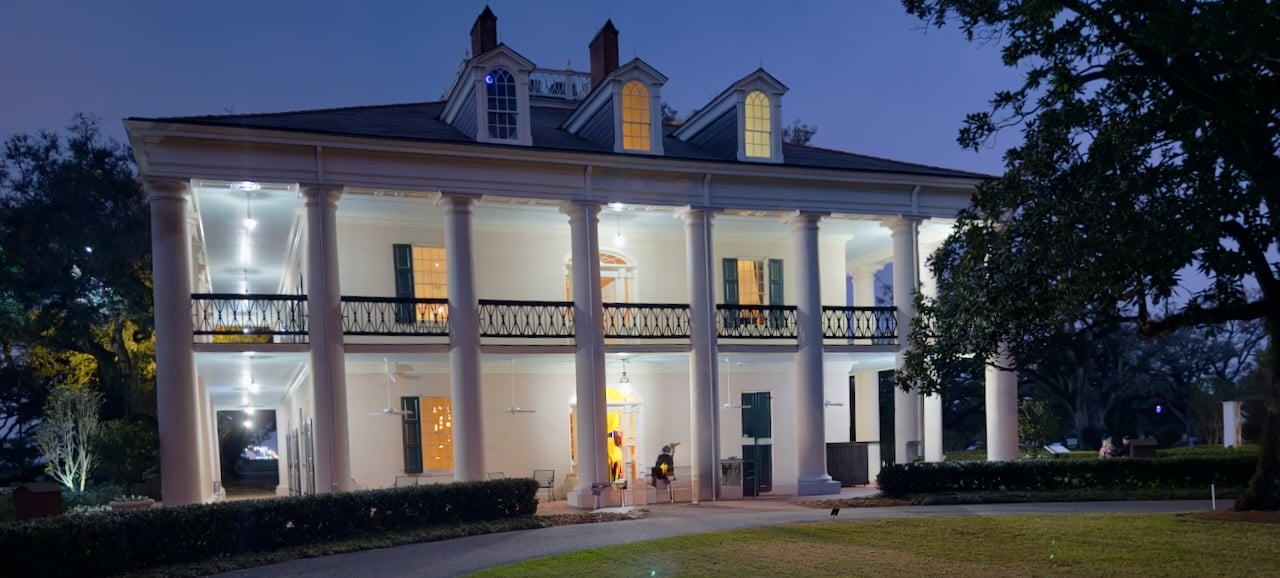
Destrehan Plantation in St. Charles Parish is the oldest documented plantation house in the lower Mississippi Valley. Parts of it date to 1787. Film fans will spot it from Interview with the Vampire (1994), where it served as the interior of Louis de Pointe du Lac’s plantation, paired with Oak Alley’s plantation exterior. More recently, Destrehan’s outbuildings appeared in 12 Years a Slave (2013). Walking the grounds with the films in mind creates a layered and memorable travel experience.
Laura Plantation in St. James Parish is the antidote to the white-columned Greek Revival plantation stereotype. Laura is a Creole plantation house—smaller, more intimate, painted in the ochres and blues of the Caribbean Creole tradition. Its story is remarkable. The Duparc-Locoul family owned it for several generations. They counted free people of color among their extended family. A memoir by the last Creole mistress of the plantation gives an unfiltered account of Creole life that historians have found invaluable.
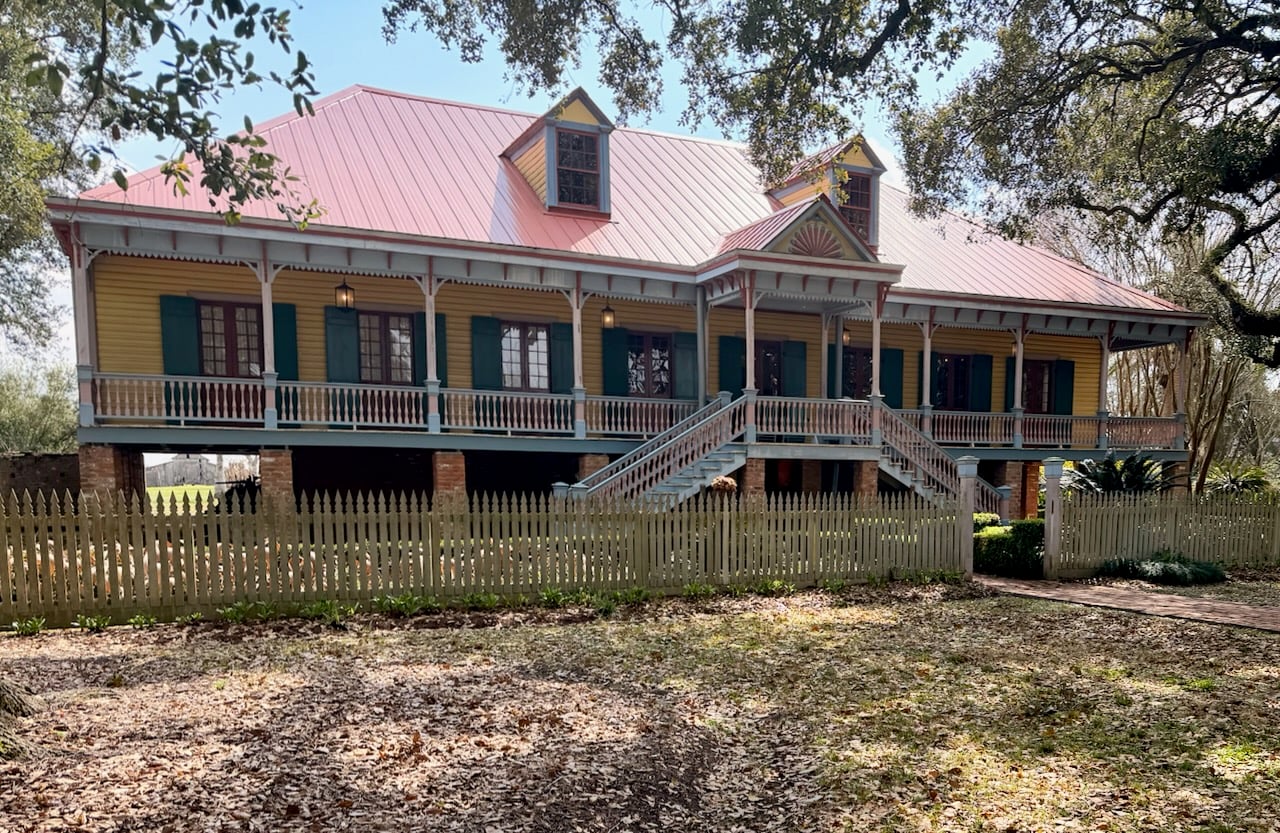
Laura is also where folklorist Alcée Fortier recorded the West African folk tales known as Compair Lapin in the 1890s. These are the Rabbit trickster stories that enslaved West Africans brought to America. They predate and feed into the broader Br’er Rabbit lineage in American literature.
Oak Alley Plantation in St. James Parish is among the most photographed scenes in the South. The quarter-mile tunnel of 28 live oaks—14 on each side, each over 225 years old, was already mature when the house was built in the 1830s. Film fans will spot it from Interview with the Vampire (1994), where it served as the exterior of Louis’ estate, and from Primary Colors (1998), among others. The trees predate the house, the plantation, and the sugar economy. They were there before America became a country.
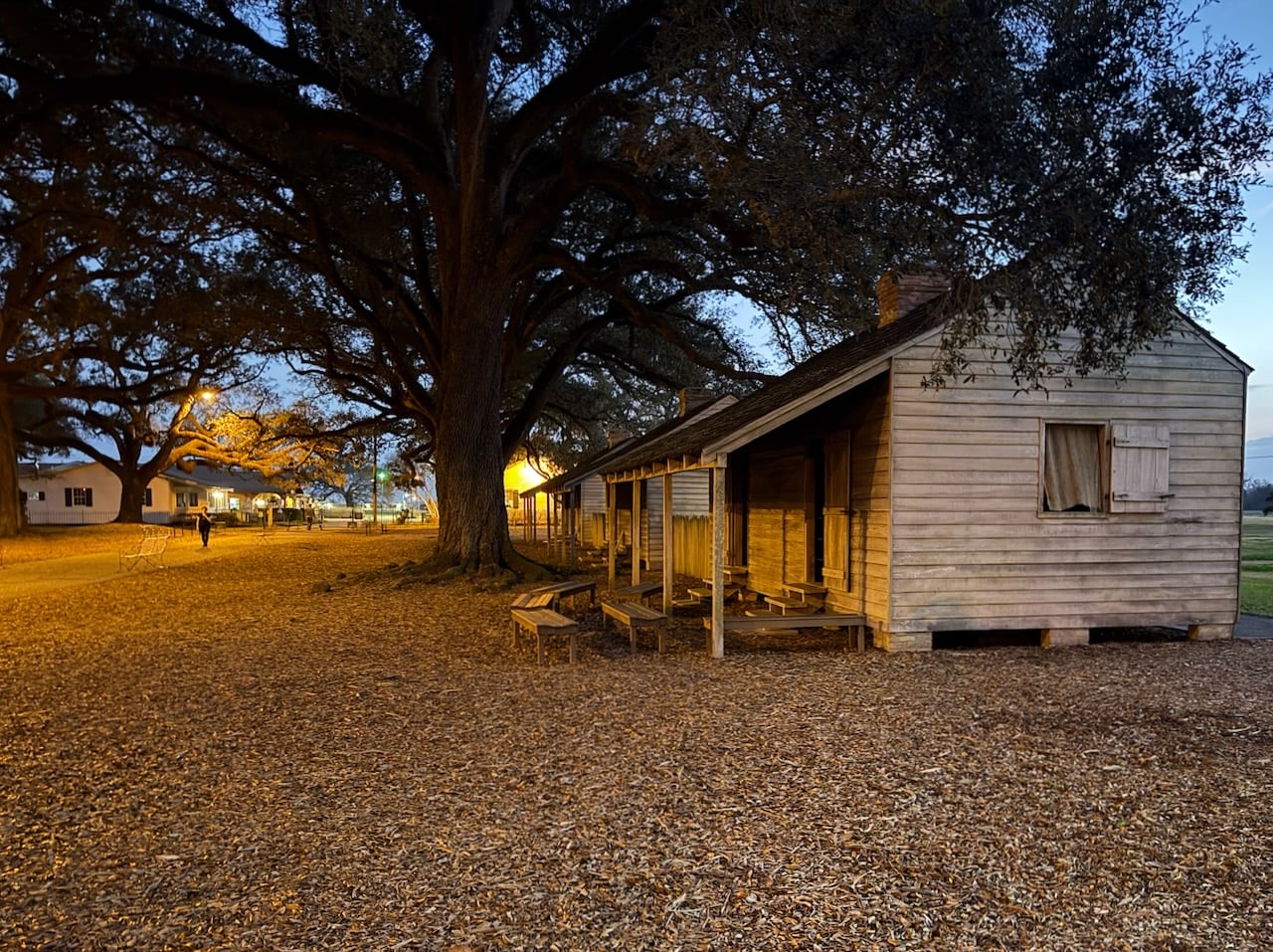
Evergreen Plantation in St. John Parish is less visited than Oak Alley or Destrehan. It may be the most important as a complete historic site. Evergreen still holds its original slave quarters—a double row of 22 cabins along with its sugar house, overseers’ house, and other outbuildings. That makes it one of the most intact pre-Civil War plantation sites in the entire South. Director Quentin Tarantino chose Evergreen as the main Louisiana location for Django Unchained (2012), drawn by its historic integrity. The film used the grounds and the original slave quarters to show plantation life with stark honesty.
The Civil War and Its Aftermath
The sugar economy shattered fast at the close of the US Civil War. Union gunboats moved up the Mississippi in 1862. Troops occupied River Road. Emancipation changed everything overnight. The great houses that had run on enslaved labor were stripped of that labor, and in many cases, stripped of nearly everything else.
Reconstruction brought a rough shift from slavery to low-wage work, often on the same fields and under the same families. That shift shaped the post-war River Parishes for generations. The descendants of the enslaved stayed. They built communities, organized churches, and kept the culture that is still alive along River Road today.
Why a Visit to the River Parishes Matters
There is a kind of travel that goes beyond sightseeing. It is the kind where you leave knowing something you did not know before—not just a fact, but a feeling of context and how the world got to be the way it is in a place. The River Parishes offer that kind of travel in full, because their history is a unique American story without soft edits.
French colonialism. Spanish Empire. The transatlantic slave trade. Native American displacement. Refugee resettlement. Cultural mixing. Vast wealth. Immense cruelty. Resistance. Resilience. It all stems from the birth of some of the most original food, music, and folk traditions on the North American continent. All of it happened here, on this narrow strip of ground. All of it left traces that a curious traveler can still experience.
Why it Works for Van Travelers
The River Parishes are 30 to 45 minutes from the New Orleans airport. The roads are open. The people of Southern Louisiana are warm to a fault with curious visitors.
The Great River Road—Louisiana Highways 18 and 44 is built for a Leisure Travel Van. Two lanes, well-kept, and easy to drive. The towns along the road are small. Parking is rarely a problem. The plantations present level lots. There are no tolls. Traffic is light compared to anything near New Orleans. The road runs along both banks of the Mississippi through all three parishes. It is not built for speed. It bends with the river. It runs through small towns. It passes between levee walls and sugarcane fields. Without warning, it drops you in front of plantation houses, old Catholic churches, family-owned daiquiri stands, and roadside smokehouses curing andouille the old-fashioned way.
You will want to drive slowly. You will want to stop a lot. That is the point. And the photo ops for you and your LTV on the levee, at the plantations, and in the eateries are as unique as the locales themselves.
On one side of the road, the land rises toward the levee—an earthen wall built and rebuilt over three centuries to hold back one of the world’s most powerful rivers. On the other side, the land drops away into cypress swamp, sugarcane fields, and the remnants of a landscape that has been flooded, drained, cleared, cultivated, and fought over since the first Europeans arrived in the early 1700s. In between, on the narrow strip of high ground the French called the natural levee, every civilization that ever tried to make a life in Louisiana left its mark.
Access and Camping
A room in the River Parishes costs a fraction of a room in New Orleans. Houmas House Plantation in Darrow offers on-site cottages and manor rooms for travelers who want to sleep on estate grounds.
RV parks and campgrounds surround the area. An LTV’s flexibility gives you options for overnight parking that larger rigs cannot offer. With enough battery power, you can boondock overnight at a Cracker Barrel or a similar spot in 100° weather. We chose Cracker Barrel for the level parking, the option to grab breakfast or dinner for the price of an RV park fee, and because we have enough battery power to do so.
Areas throughout the river parishes are flat and level—great for RV travelers.
Plan Your Stop
Take Exit 194 off I-10. Give yourself three days, not three hours—enough time to wander through one parish per day. Soak up the sunrise on the levee. Plan on andouille for lunch. Bask in the afternoon light on a plantation after you finish a tour. The River Road rewards anyone willing to slow down, ask questions, and stay for a while.
When To Go
The best time to visit the river parishes is between October and May. Summer invokes immense heat, humidity, and mosquitoes, and June through November is hurricane season. October, November, March, and April offer cooler air, fewer crowds, and the kind of golden light that makes Oak Alley look like a postcard destination.
River parish locals open up when a visitor expresses genuine interest. Ask about a family name on a cemetery headstone. Ask how a smokehouse seasons andouille. Ask what the church bell schedule was when a resident was a youngster. The residents here have generations of stories to tell, and they share them with travelers who express an interest.
What to Know Before You Go
- Mosquitoes. Worse at dawn and dusk near the swamp side. DEET is effective.
- Heat and humidity. May through September are hot and damp; carry water, hats, and bug spray. Most plantation tours include outdoor walking.
- Plantation etiquette. These are historic sites of forced labor as much as architectural home showpieces. Whitney’s interpretation centers on the enslaved; others vary. Ask what the tour includes before you book.
- Genealogy. Catholic church records in Vacherie, Convent, and Edgard are extraordinary resources; call ahead if you plan to visit a parish archive to conduct research.
- Cash. Some roadside smokehouses and stands are cash-only.
Up Next
The Louisiana River Parishes are different—there is nothing else like them in America. Yes, they are in America, notwithstanding what some locals think. The plantations are grand. But the real soul of the area lives in the culture, history, food, and language.
Our next story in this series focuses on the area’s foodie culture. Don’t miss it. Look for The Louisiana River Parishes: The Food Lovers and Festival Scene.
Acknowledgements
The authors thank the Louisiana River Parishes Tourist Commission and the organizers of Southern Travelers Explore for arranging press-pass access to historic sites, eateries, and local subject-matter experts in the Louisiana River Parishes.

Comments